

Short answer: sort by job first, then by construction. The types of bras only start to make sense in that order. A bra’s job is the day it has to survive: a run, a desk day, a sofa evening, a strapless dress. Construction is how it does that job: compression or separate cups, wire or wirefree, straps that adjust, convert or vanish. Get the job wrong and no construction saves you; get the construction wrong and the right category still disappoints by lunchtime.
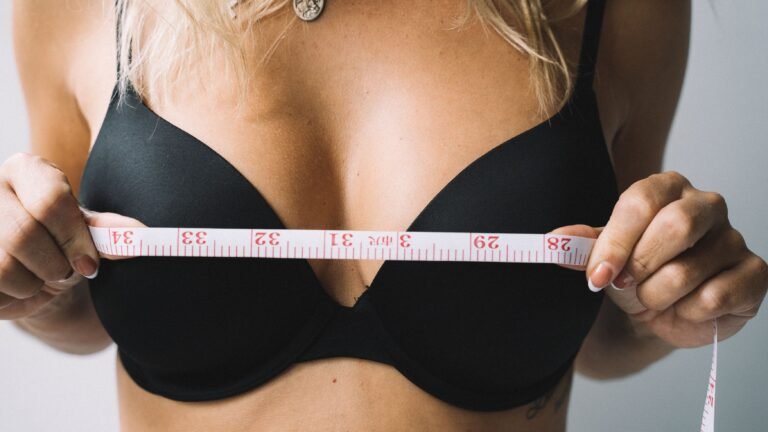
This guide maps 15 types in four families, states what each does well and where it honestly stops, and links every type to its deeper guide. One warning first: construction cannot fix a wrong size. If your band rides up or your straps dig, start with our measurement guide and come back.
Types of bras at a glance
| Type | Construction | Best job | Honest ceiling | Deep guide |
|---|---|---|---|---|
| Compression sports bra | One stretch shell presses the breasts to the chest | Training and running for small to medium cups | Support fades as cup size rises; one flattened shape | Compression vs encapsulation |
| Encapsulation sports bra | A separate structured cup for each breast, often wired | High impact for medium to large cups | More hardware, more fit points, higher prices | Compression vs encapsulation |
| Hybrid sports bra | Compression shell with per-breast structure built inside the cups | High impact with a smoother outline | The most complex fit of the three; size grids are often narrow | Compression vs encapsulation |
| Zip-front sports bra | A sports build closed by a front zip instead of hooks or a pullover | Easy on and off; changing after training; limited shoulder mobility | The zip is a closure, not a support system; fit still comes from band and cups | Zip-front sports bras |
| Back styles: racerback, cross-back, T-back, J-hook, U-back | Strap geometry at the back of any sports bra | Matching strap placement to shoulders, necks and tops | A back design, not a support rating | Sports bra back types |
| Balconette | Wide-set straps, a low straight neckline, lift from below | Square-neck and wide-neck tops | The open top edge spills at pace; a true balconette has no sports rating | Balconette sports bras |
| Plunge | A deep V at the center with height kept at the sides | Low-cut tops and dresses | Containment ends where the plunge begins | Balconette sports bras |
| Full cup | A tall cup, seamed or molded, covering the whole breast | Maximum everyday coverage and lift | Seams can show; coverage sits high under low necklines | Measurement guide |
| T-shirt bra (contour) | Smooth molded foam cups, usually on an underwire | An invisible line under fitted tops | Foam holds heat and one fixed shape; fit is breast-shape dependent | Padded vs non-padded |
| Wirefree bra | Soft or seamed cups with no wire; support from band and fabric | All-day comfort; small to medium cups; wire-sensitive wearers | Less lift and separation; larger cups get compression more than structure | Wirefree sports bras |
| Lounge bra | A soft pullover or soft-closure bra with minimal hardware | Home days, rest days, sleep-adjacent wear | A comfort tool, not a support tool | Best lounge bras |
| Crop top bra | A longline pullover with a wide band, worn as a top or under one | Low-impact training, layering, worn solo | Support tops out at low to medium; alpha sizing fits band and cup together | Best crop top bras |
| Strapless | Band, gripper silicone and cup structure, straps removed | Strapless and off-shoulder outfits | Low impact and events only; the band does all the work | Strapless sports bras |
| Convertible and multiway | Straps that detach, cross or slide on a J-hook to change configuration | One bra under several necklines | The conversion hardware is one more fit point to check | Sports bra back types |
| Padded vs non-padded | A lining choice that cuts across every family above | Padding for shape and coverage; unlined for lightness and a natural outline | Padding adds heat and wash-day fuss; unlined shows more outline | Padded vs non-padded |
Sports bras, sorted by build
Compression. The original sports bra idea: a firm stretch shell presses breast tissue against the chest wall so less mass is free to move. Best for small to medium cups and moderate impact; its failure mode is honest: as cups grow, one shell cannot control two breasts, and the shape flattens to a single shelf.
Encapsulation. Each breast gets its own structured cup, often with an underwire, so support comes from holding each breast separately rather than pressing both down. The build that scales to large cups and high impact, at the price of more seams, more hardware and more fit points.
Hybrid. Compression outside, per-breast structure inside: the good ones genuinely split the difference. Fit is the catch: two systems at once, and size grids run narrow.
Zip-front. Not a support system, but a closure choice that changes who can use the bra: no over-the-head struggle, no behind-the-back hook hunt. That matters after hard sessions and for shoulders with limited mobility. Judge it by the build underneath the zip, never by the zip itself.
Back styles. Racerback, cross-back, T-back, J-hook and the plain U-back are strap geometry, not support levels: they decide where straps sit and what tops they hide under. All five are compared in our sports bra back types guide, and the most requested gets its own racerback sports bras guide.
The wire question cuts across the family; cup size and pace answer it. We argue it out in wirefree vs underwire sports bras, with picks in our guides to the best wirefree sports bras and the best underwired sports bras.
Everyday bras, sorted by shape
Balconette. Wide-set straps and a low, straight neckline lift from below and leave the top of the breast open: exactly what a square-neck top wants, and exactly the ceiling. No containment up top means a true balconette is a neckline bra, not a movement bra.
Plunge. The neckline drops in the center, keeps height at the sides, and buys a deep V without giving away the whole top edge. One condition: full-on-top tissue will find the gap at the center, so the deeper the plunge, the smaller the margin.
Full cup. The coverage maximum: a tall cup, seamed or molded, containing the whole breast, usually on an underwire and a firm band. Seamed versions shape by pattern rather than foam, which is why they dominate large-cup ranges. Success is mostly a fitting exercise, hence its deep guide above.
T-shirt bra (contour). One bra, two names: contour is the molded foam cup, T-shirt is the job, disappearing under a fitted top. The foam gives a reliably round outline; it also holds heat, holds one fixed shape that either matches you or fights you, and dries slowest.
Soft bras: wirefree, lounge and crop tops
Wirefree. Removing the wire moves the support job to the band, the fabric and the cup pattern. Seamed wirefree cups lift more than most readers expect; soft ones trade lift for a barely-there feel. At large cups the ceiling is real: wirefree support usually means gentle compression, not structure.
Lounge bras. The softest corner of the drawer: pullovers and soft closures with nothing that digs, built for home days, rest days and sleep-adjacent hours. Buy one as the comfort tool it is. The moment a bra must hold you through a workday or an uphill walk, it has left lounge territory.
Crop top bras. A longline pullover with a wide band, cut long enough to wear as a top. The band adds a little hold over a basic bralette, and the coverage makes it a layering staple. Our sports crop vs sports bra comparison: the crop wins on versatility and loses, clearly, on support ceiling.
Situational bras: strapless, convertible, padded or not
Strapless. Straps gone, the band, gripper silicone and cup structure do everything, for events, not exercise. Bought snug and worn for an evening, a good strapless is a small engineering triumph. Bought for a run, it is a misunderstanding of the physics.
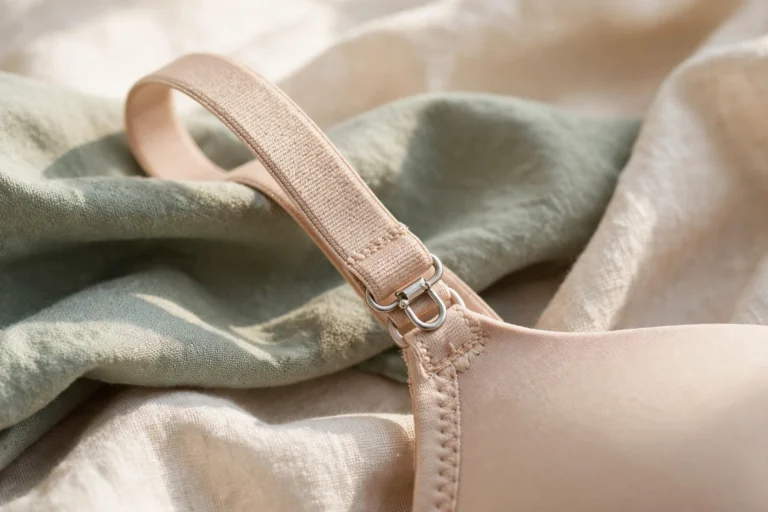
Convertible and multiway. Straps that detach, cross or slide on a J-hook let one bra serve straight straps, a racerback top and sometimes a halter. They earn their place in a small wardrobe and a suitcase. The caveat is the hardware: every slider is a place to check for slip before relying on it under a dress.
Padded vs non-padded. Not a silhouette; a lining choice inside almost every type above. Padding buys shape, symmetry and coverage, charged as drying time and wash-day care. Unlined cups are lighter, cooler and more honest about outline. Our padded vs non-padded guide prices the trade in full.
How we chose the four examples
The four modules below are illustrations, not a ranking: one emblematic bra per family, each a style this site has not featured before, each checked against manufacturer or retailer specifications and an Amazon US listing. Research-based, not wear-tested; each module states its ceiling as plainly as its strengths.
Affiliate disclosure: Stellaleah is reader-supported. As an Amazon Associate I earn from qualifying purchases, at no extra cost to you. Product data comes from the brands and retailers linked in each section. Read our full Affiliate Disclosure.



Sports encapsulation, engineered as a hybrid: CW-X Xtra Support High Impact Sports Bra
Label: the hybrid route to per-breast support. CW-X files this bra as compression, but its own description says more. CW-X builds a five-point Support Web into each cup that, in the brand’s words, supports each breast independently without wires: encapsulation executed with mesh webbing inside a compression shell, not foam and underwire. Road Runner Sports lists the build: hook and eye closure, adjustable straps, mesh crisscross racerback, 80 percent CoolMax polyester, 20 percent Lycra spandex.
Pros
- Per-breast inner web support with no underwire to dig or break
- Hook and eye band and adjustable straps, two fit controls most high-impact pullovers skip
- CoolMax body built for heat and hard efforts
- Mesh crisscross back moves with the shoulders and vents
Cons
- Combined cup sizing (B/C and D/DD share sizes) makes the cup fit approximate
- The fixed web cannot be adjusted per breast, and it ages with the bra
- Narrow band range next to specialist encapsulation brands
| Spec | Detail |
|---|---|
| Support | High impact (manufacturer rating) |
| Size range | Band and cup sizes with combined cups (B/C and D/DD), bands 32 to 38 |
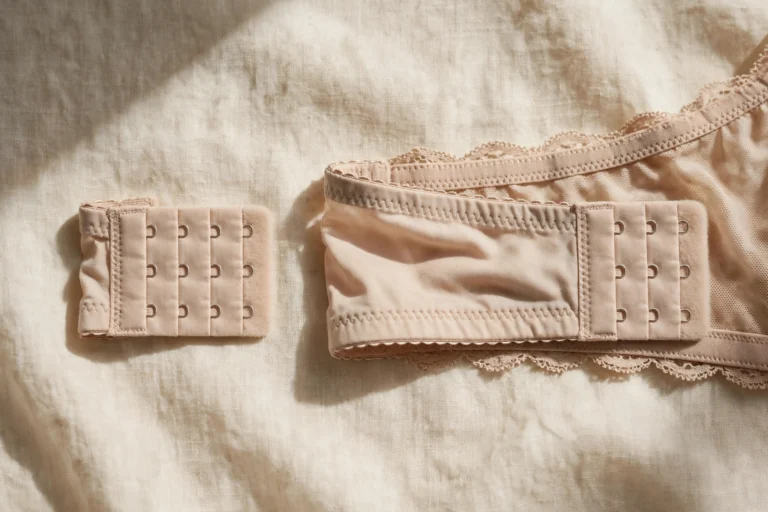
| Closure | Hook and eye back closure, 3 columns by 2 rows |
| Construction | Hybrid: compression shell with a five-point Support Web inside each cup; wirefree; mesh crisscross racerback |
| Adjustability | Adjustable straps; multi-column hook and eye band |
Verdict: the emblem for encapsulation’s separate support without its hardware; between combined sizes, molded cups fit more precisely.
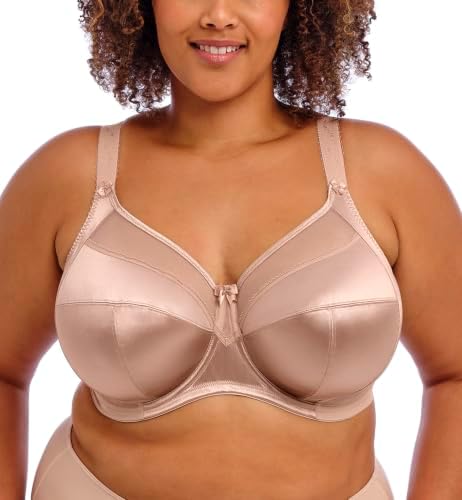
Everyday seamed: Goddess Keira Banded Underwire Bra (GD6090)
Label: the seamed full cup, at full range. If one bra explains why seams survive in a foam world, it is this one. The Keira builds its cup from three seamed sections of satin simplex plus a side panel, so the pattern, not padding, produces the lift and forward shape. Bravo Intimates details the build: unlined, non-stretch cups, sheer top cup, wide powernet wings, V-shaped leotard back. Amazon US records at CamelCamelCamel run from a 34L to a 40DDD across colors. The real selling point: US bands 34 to 46, cups DD to N, a range almost no molded bra attempts.
Pros
- Genuine seamed lift and separation with no foam bulk
- The deepest US size range in this article, built for fuller busts
- Side panel pulls tissue forward instead of letting it spread
- Two or three rows of hooks, scaled to size
Cons
- Seams and the sheer top cup can show under thin, fine fabrics
- Hand-wash care, per the retailer, is a commitment at this size
- US cup letters; UK-sizing readers should double-check their letter
| Spec | Detail |
|---|---|
| Support | Everyday underwire support; not rated for sport |
| Size range | US bands 34 to 46, cups DD to N (US sizing) |
| Closure | Hook and eye back closure, 2 to 3 rows by size |
| Construction | Underwire full cup; unlined three-section satin simplex cups with side panel; sheer top cup |
| Adjustability | Limited-stretch adjustable straps; multi-row hook and eye |
Verdict: the everyday family’s reference bra for fuller busts, and the clearest proof here that construction, not padding, is what shapes.
Soft lounge: Hanes X-Temp Wireless Bra 2-Pack (H570)
Label: the budget pullover end of the soft family. The H570 is a wirefree racerback pullover sold in a two-pack, with smooth two-ply unlined cups and Hanes’s ComfortFlex Fit four-way stretch. Listing records at CamelCamelCamel confirm it across color packs. Hanes markets it for low-impact activity too; it is a light studio bra and, for most buyers, an at-home bra. Its X-Temp temperature claim is a comfort claim, not a support one. What this bra sells is the absence of everything: no wire, no hooks, no adjusters, no decisions.
Pros
- Two bras in the pack, at the budget end of the whole map
- Nothing to dig, fasten or adjust; pull on and done
- Two-ply cups give light coverage without foam
- ComfortFlex stretch forgives small size fluctuations that defeat band-and-cup bras
Cons
- Light support only; larger cups will not hold through a full day out
- Alpha sizing cannot fit band and cup independently
- Racerback straps sit close to the neck, which some shoulders dislike
| Spec | Detail |
|---|---|
| Support | Light support (manufacturer positions it for low impact) |
| Size range | Alpha sizes S to 3XL (ComfortFlex Fit chart) |
| Closure | Pull-on |
| Construction | Wirefree racerback pullover; unlined two-ply cups; four-way stretch knit |
| Adjustability | None |
Verdict: the soft family in its simplest form; let other types do the holding.
Situational convertible: Natori Cherry Blossom Convertible Contour Bra (721191)
Label: the convertible that converts without a parts bag. Most multiway bras convert by unhooking straps you then lose in a drawer. The Cherry Blossom instead slides its straps on a J-hook, so the same bra wears straight or as a racerback at any strap height, with nothing detached. Natori describes an underwire plunge contour bra with ultra-light stretch foam cups and lace; Amazon US records at CamelCamelCamel confirm the style across colors. Its range is the honest limit: US bands 30 to 36, cups B to DDD, with G cups to a 34 band.
Pros
- J-hook conversion to racerback without removing or storing straps
- Plunge center works under low necklines that defeat a full cup
- Stretch foam cups are light and smooth rather than bulky
- Small bands start at 30, a range many convertibles skip
Cons
- Bands stop at 36 and cups at G; fuller figures are outside this style
- Lace overlay can texture through the thinnest knits
- Hand wash only, per the manufacturer
| Spec | Detail |
|---|---|
| Support | Everyday underwire support; not rated for sport |
| Size range | US bands 30 to 36, cups B to DDD; cups to G in bands 30 to 34 (US sizing) |
| Closure | Hook and eye back closure |
| Construction | Underwire plunge contour; stretch foam cups with lace overlay |
| Adjustability | Adjustable straps with a J-hook slide that converts them to a racerback |
Verdict: the situational problem-solver for small to medium bands, inside a stated size ceiling.
How to choose: three questions in order
- What is the job? Name the hardest hour this bra must survive, not the average one. A run bra worn for school runs feels like armor; a lounge bra promoted to a workday quits by noon. For training, our guide to choosing a sports bra for every activity matches impact to build.
- Which construction does that job need? Support jobs need structure: encapsulation, seams, wire or a web. Comfort jobs need the opposite. Neckline jobs need shapes: balconette, plunge, strapless, convertible.
- What is your size in that bra’s system? Band and cup, UK or US, or alpha: one body, three different labels. Measure first with our measurement guide, then read the chart of the type you are buying, not the type you own.
Common questions
How many types of bras does one person actually need? Fewer than marketing suggests: most drawers cover real life with three jobs. One structured bra for the highest-impact thing you do, one everyday bra that fits your most-worn neckline, one soft bra for home. Add a situational bra only when an outfit demands it. Rotation matters more than variety: elastic recovers between wears.
Is a bralette a type of bra, or a support level? A build description, not a category: a soft, usually wirefree bra with little or no hardware. Depending on length and band, a bralette is a lounge bra, a wirefree bra or a crop top, which is why it sits inside the soft family here.
Is a T-shirt bra different from a contour bra? No. Same bra, described twice: contour names the molded foam cup, T-shirt names the job. A listing using both words is not offering two features.
The bottom line
The types of bras stop being a blur once you sort them by job and read construction as method, not marketing. Sports builds manage movement, everyday shapes manage necklines and lift, soft bras manage comfort, and situational bras solve one outfit at a time. Pick the family by the hardest hour in the bra’s week, the type by construction, and let the deep guides do the arguing. Vocabulary first; the right purchase gets easier after that.
Sources
- CW-X and Road Runner Sports (Xtra Support); Bravo Intimates and CamelCamelCamel (Goddess Keira GD6090); CamelCamelCamel and Hanes (X-Temp H570); Natori and CamelCamelCamel (Cherry Blossom 721191). All checked October 2026.

5 Comments