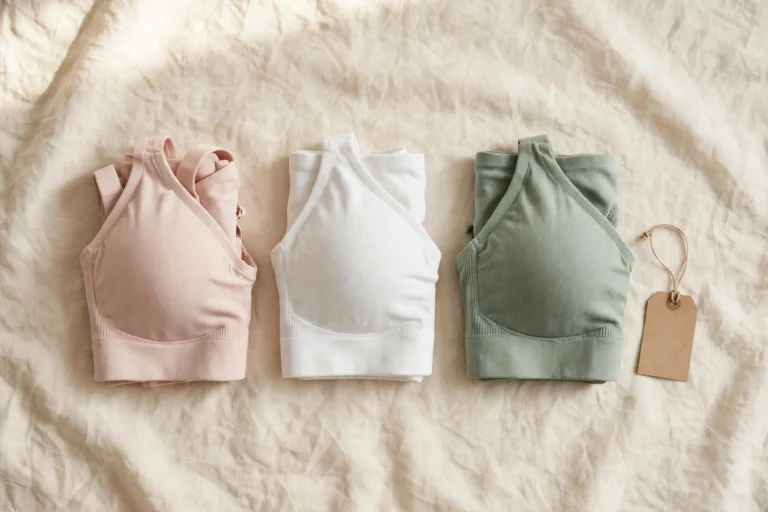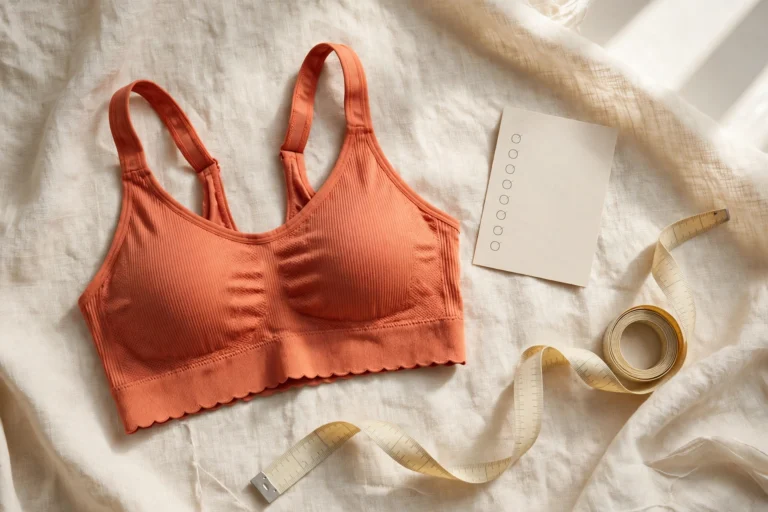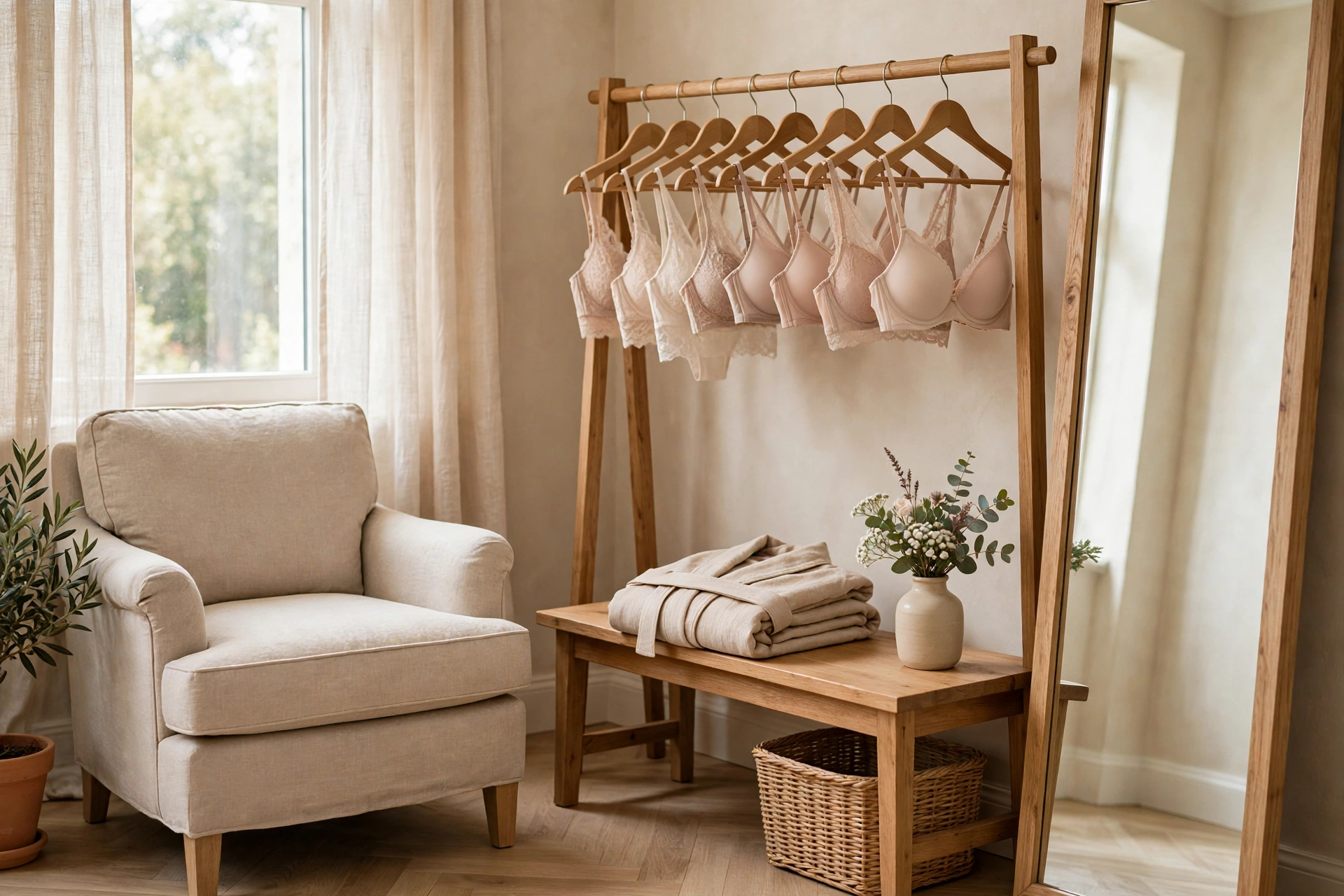
A professional bra fitting is a one to one session with a trained fitter who checks how your current bra fits, works out your size from the fit rather than from a number alone, and brings you styles to try until one sits right. Most fittings take 20 to 30 minutes, most stores offer them free of charge, and you do not need to know your size before you walk in. You will spend most of the time in a fitting room, trying on bras the fitter has chosen, while she checks the band, the cups, the straps, and the centre front.
This guide covers the fitting experience only: what happens, what to bring, what to wear, what to ask, and how to judge whether the fitting was a good one. It does not teach you to measure yourself: for that, use our guide to how to calculate your proper bra size for tape placement, or the bra size calculator for a starting size before you book.
What a Professional Bra Fitting Actually Is
A fitting is not a tape measurement and a size handed over on a card: the tape, where a fitter uses one at all, is only the starting point. The real work is the try on. The fitter watches how a bra sits on your body, changes the size or the style in response, and keeps going until the band sits level, the cups hold you without gaping or spilling, and the straps stay put.
Some fitters measure with a soft tape, around the ribcage under the bust and around the fullest part of the bust. Others fit by eye and experience, starting from the bra you are already wearing: DeBra’s fits by eye rather than by tape, and Bravissimo does the same in its virtual fittings. Neither approach is wrong. What matters is that the fitter checks the fit on your body, in a bra, and changes the size when the try on says so.
A fitting is also not a sales pitch, or at least a good one is not. You are under no obligation to buy anything. Bravissimo states that its fittings are about finding the fit, not selling. If a fitter will only show you one brand, or rushes you toward the till after a single try on, that tells you more about the shop than about your size.
A Professional Bra Fitting In Store, Step by Step
Booking, or just walking in. Many lingerie stores take walk ins, so tell the staff you are there for a fitting and they will check you in. Chains such as Victoria’s Secret offer free fittings with no appointment necessary. Specialist boutiques often prefer a booking, usually in 30 minute slots. Booking is worth it if you want a particular fitter, a quiet time, or a longer session for a fuller bust or a tricky fit.
The conversation first. The fitter will introduce herself and ask questions before anyone reaches for a tape: what you are looking for, what you wear most days, what you like and dislike about your current bras, and what your budget is, so she does not bring bras you would never wear or could never afford. Parfait describes the same opening. Answer honestly, including the complaints. A strap that slides, a band that rides up, or a cup that gaps is useful information, not a confession.
The starting size. The fitter will look at how your current bra fits, and may take measurements over your top, as Victoria’s Secret does, or ask you to remove your top in the fitting room so she can see the bra itself. You stay in control of how much help you accept. DeBra’s puts it plainly: if you prefer more privacy, the fitter waits outside while you change; if you would like hands on help, she comes in. Say which you prefer at the start.
Trying on bras. The fitter leaves the room and returns with a selection of styles and sizes, sometimes pieces from the back that were chosen for your shape. Try each one on, fasten it on the loosest hook, and let the fitter check it. Expect several rounds. A fitting where the first bra is declared perfect probably stopped too soon. The fitter will usually bring a size up and a size down in the same style, because comparing neighbours beats guessing from memory.
The fit checks. A good fitter checks the same four things every time, in roughly this order. La Peche Lingerie lists them the same way: band, cups, straps, centre front.
Band. It should sit level all the way around and feel snug on the loosest hook when new. The band does most of the support work, so a band that rides up is the first thing a fitter fixes.
Cups. They should hold your breast without gaping at the top or spilling over the edge or at the sides. Gaping in one style and spilling in another usually means the shape is wrong.
Straps. They should stay on your shoulders without digging in. If tightening the straps is the only way to get support, the band is too loose.
Centre front. In an underwire bra, the small panel between the cups should sit flat against your chest. If it floats, the cups are usually too small.
Move in each bra before you judge it: sit, raise your arms, bend forward, and twist. A bra that looks right standing still can shift the moment you move.
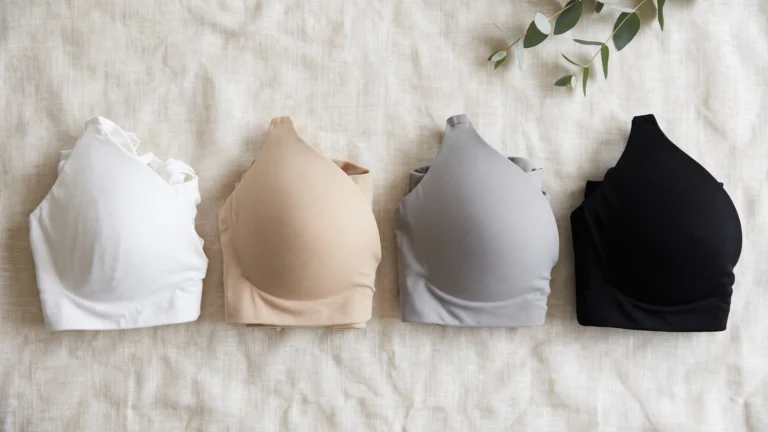
Style recommendations and the decision. Once a size settles, the fitter will suggest styles that suit your shape and your wardrobe: a smooth cup for t-shirts, a balconette for a lower neckline, a plunge for a close set shape. Our breast shape and bra fit guide explains why shape changes which cup to try first. Try the recommended bra under the top you will actually wear with it, and check the outline from the side as well as the front. Buy one bra in the new size first, wear it for a full day, and only then replace the drawer.
What Happens in a Virtual Bra Fitting
A virtual fitting is the same conversation and the same fit checks, done over a video call from your home, for anyone who lives far from a good lingerie shop, is short on time, or prefers her own bedroom to a fitting room.
The session usually runs 20 to 30 minutes. Rose & Thorne puts most sessions at 20 to 30 minutes, and DeBra’s runs its virtual fittings the same way as its in-store ones, just over video. You book a time, join from a link the shop emails you, and meet your fitter one to one. The call is private, it is not recorded, and you control how much you show, though the fitter will ask to see the bra you are wearing, because that is her starting point.
Without a tape, the fitter works from what she can see and what you tell her, asking the same questions as in store: do the straps dig or slip, does the band ride up, does the underwire sit flat, do the cups gape, wrinkle, or spill. She will guide you through simple checks and talk you through styles and sizes on a shared screen. After the call, most shops send a written summary with your recommended size and style suggestions.
A virtual fitting cannot do one thing an in-store fitting can: hand you the next size to try. If you have bras at home in nearby sizes, have them ready before the call, because trying them on while the fitter watches is the closest a video call gets to a fitting room. Some services send bras to your home first and review the fit in a second call. Either way, the final verdict still belongs to a try on.
What to Bring, and What to Wear
You do not need to bring much. Wear the bra you wear most to the appointment. How it fits today tells the fitter more than any measurement. Bring a second bra that fails you, if one does, because two failures in different places narrow the problem faster than one. Bring the tops you wear most often, a smooth t-shirt, a work blouse, a low neckline top, so the fitter can check the bra under real clothes. And bring your budget, stated out loud: fitters ask because they do not want to bring you bras outside it.
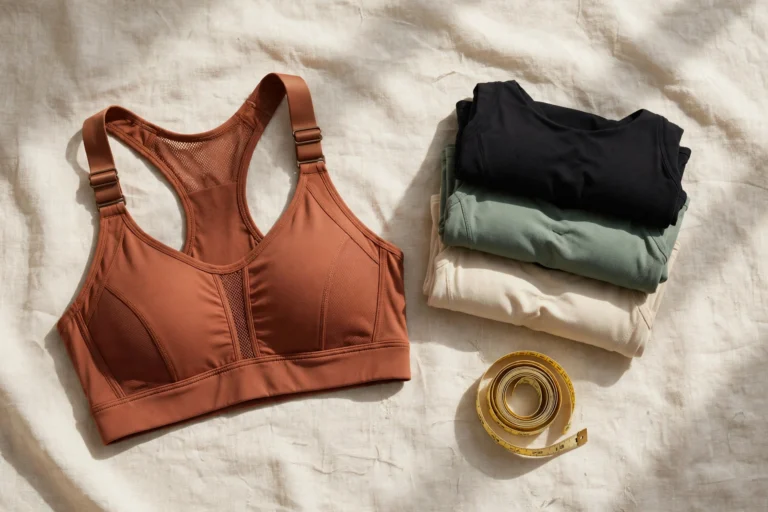
Wear a lightly lined or unlined bra, not a padded or push up one. Thick padding changes the measurement, which is why most fitters ask for a lightly lined or unlined bra, and a sports bra will skew it too. Save the sports fitting for its own session, and read our guide to signs your sports bra is the wrong size before you book that one.
Wear a comfortable, form fitting top: loose clothing gets in the way of the checks and hides the band line the fitter needs to see. If the appointment is virtual, wear the same, and sit facing a window with a mirror nearby, so the fitter can see your back as well as your front. Good light matters more than a good camera.
Questions Worth Asking Your Fitter
A fitting is a consultation, not an exam. These five questions pay off most.
- “What size am I in this brand, and does it change in other brands?” Sizes vary between brands, and a fitter who works across labels can tell you which run snug and where your size shifts by a step.
- “Is this a size problem or a shape problem?” If the same size fits in one style and gaps in another, the cut differs, not your body. Knowing which stops you buying the same wrong style in a new size.
- “What is my sister size, and when should I use it?” A sister size holds roughly the same cup volume on a different band. Our sister sizes guide explains the one step rule.
- “Which hook should I fasten it on, and how will I know when it is worn out?” A new bra belongs on the loosest hook, with tighter rows left for later as the elastic relaxes.
- “When should I come back?” Bodies change and elastic ages. Ask the fitter when she would recheck you, and what change would bring you back sooner.
Ask about anything that feels uncomfortable, even if it seems small. A wire that pokes, a strap that slips on one side only, a cup that wrinkles when you sit: each one points somewhere, and a fitter would rather hear it in the room than have you discover it at home.
How to Tell Whether the Fitting Was a Good One
Judge the fitting by what you walk out knowing, not by how many bras you walk out carrying.
A good fitting leaves you with a size you can repeat. You should know your band and cup in at least one brand, your sister sizes, and which styles suit your shape. If you leave unsure of your size, the fitting did not finish its job.
A good fitting tries more than one size. The fitter should have shown you neighbours of your starting size, up and down, and at least one different style. A single bra, declared perfect in five minutes, is a guess.
A good fitting checks movement, not just the mirror. You sat, raised your arms, and bent forward, and the fitter rechecked the band and cups after you moved.
A good fitting respects your boundaries. You chose how much help you wanted, you were not rushed, and you felt free to say no to a style or a price. Pressure to buy is a reason to leave.
A good fitting gives you a next step. That may be one bra to try for a full day, a written size summary after a virtual call, or a date to come back. It should not be a drawer full of bras bought on the spot before any of them has been worn for a day.
If the fitting failed on any of these, try a different shop, or a different fitter in the same shop. Fitters vary as much as brands do, and a second opinion costs nothing when the fitting itself is free.
How Much It Costs, and How Often to Get Fitted
Most fittings are free, with no purchase required: Victoria’s Secret, Bravissimo, and DeBra’s all offer theirs free of charge, in store and virtual. A few independent fitters charge a consultation fee, sometimes redeemable against a purchase, so check before you book.
The usual guidance is a refit every 6 to 12 months, and sooner after any change that moves your size: a noticeable weight change, a new exercise routine, or a size that used to fit and now fails everywhere. Our guide to signs your bra does not fit lists the nine checks that tell you a refit is due, and our US bra size chart shows how the size is built from two measurements.
Frequently Asked Questions
Do I need an appointment for a professional bra fitting?
Not always. Many stores take walk ins, and chains such as Victoria’s Secret fit without an appointment. Book if you want a particular fitter, a quiet slot, or a longer session. A booking also guarantees a fitting room is free when you arrive.
Do I have to buy anything after a fitting?
No. Most stores state plainly that there is no obligation to buy. Buy one bra in the new size first, wear it for a full day, and decide from that. A fitting that ends in pressure to buy a full set on the spot is a fitting to walk away from.
Will the fitter see me undressed?
Only as much as you allow. The fitter needs to see how the bra sits, which usually means removing your top in the fitting room, but you choose whether she stays in the room or waits outside while you change. In a virtual fitting you control the camera and can keep a fitted top on.
What if the fitter gives me a very different size from the one I wear?
That is common, and it is usually the point of the visit. A different size is a starting point for try ons, not a verdict. Try the new size and its neighbours, and judge by the fit checks: level band, contained cups, flat centre front, straps that stay put. If the new size fails those checks, say so: a good fitter will change the size again rather than defend the first guess.
Your Next Step
Book the fitting, wear your most worn bra, and bring the top you live in. Tell the fitter what fails in your current bra, let her bring you sizes to compare, and leave knowing your size, your sister sizes, and the styles that suit your shape.
A professional bra fitting is not a test you can fail. It is thirty minutes, a few try ons, and an expert second pair of eyes on a problem you have been solving alone. The size on the label matters less than the fit you walk out in.