

If you are asking why are my breasts sore, the honest starting point is that breast pain is extremely common and usually driven by hormones or mechanics, not disease. Clinicians group it into a short list of cause families, and your pain’s pattern, timing, and one breast or both, usually points at the family. This guide cannot diagnose you. Persistent, one sided, or changing pain belongs with a clinician, not with a search result.
The sources’ reassurance is real but narrow. Cleveland Clinic states that breast pain is not usually a sign of breast cancer, and Mayo Clinic notes it is rare for cancer to cause breast pain. That is not a personal clearance, and it is why the red flag list below matters more than the reassurance.
The cause map
| Cause | Pattern | What usually helps (per sources) | When to book |
|---|---|---|---|
| Cyclical, hormone related | Both breasts, dull and heavy, builds before a period | Supportive well fitting bra, warm or cold compress, over the counter pain relief | Pain that stops following the cycle; new pain after menopause |
| Non cyclical, breast based | One breast, one spot, sharper or burning | A clinician identifies and treats the cause (cyst, infection) | A new lump, or one spot pain that persists |
| Chest wall pain | Starts in chest muscle or rib cartilage | Rest the strained muscle; clinician guided measures | Redness, swelling or fever over the breast |
| Exercise induced | During or after movement, worse unsupported | High support bra matched to the activity | Pain that continues at rest or changes character |
| Medicines and hormone therapy | Began after a new medicine or dose change | Tell the prescriber; never stop a medicine alone | Any red flag sign alongside it |
Why are my breasts sore before a period? The cyclical pattern
Cyclical pain is the most common kind, and it follows the menstrual cycle. Mayo Clinic describes it starting the week before a period and ending when the period starts. Cleveland Clinic adds the texture: breasts feel tender, swollen and heavy. Both breasts are usually involved, and the same hormone shifts can produce cyclical lumpiness and fluid filled cysts. The pattern is the information: pain that keeps an appointment with your cycle and then leaves is behaving cyclically; pain that stops keeping it deserves a clinician’s eyes.
Non cyclical pain: often the chest wall
Non cyclical pain does not follow the cycle. It is often sharper, more local, and one sided. Cleveland Clinic describes it as pain in one specific area, sometimes burning or stabbing. Some of it is genuinely in the breast: a cyst, an infection, an unsettled injury, or surgical scar tissue. Much of the rest is not in the breast at all. Mayo Clinic calls this extramammary pain: a pulled chest muscle, or costochondritis, inflammation of the cartilage where the ribs meet the breastbone, can be felt as breast pain. The distinction matters: a strained chest wall needs rest, not a new bra.
Exercise induced breast pain: movement is its own cause
A third pattern is pain that arrives with movement. The University of Portsmouth Research Group in Breast Health reports that more than half of women experience breast pain, with unsupported bounce central to this pattern. Mayo Clinic makes the same point mechanically: a lot of activity without proper breast support can stretch the Cooper ligaments, producing sharp pain. Portsmouth lab work found high support significantly reduced it. Our guide to how exercise impacts breast health covers the support side in full. Support addresses movement pain. It does not explain pain at rest.
Your bra as a contributing factor
A badly fitting bra does not cause breast disease. What the sources support is narrower: clinician guidance lists a well fitted, supportive bra among the comfort measures for breast pain, and fit failure concentrates load on straps and allows excess movement. A riding band, digging straps, or spilling cups add mechanical irritation even when the root cause is hormonal. Our sports bra fitting problems guide works through them in order. Load for larger breasts has its own evidence check: do large breasts cause back pain. Fix the fit for comfort, not as a treatment.
Medicines, caffeine, and weaker claims
Some pain is pharmacological. Mayo Clinic lists hormonal contraception, hormone therapy, some antidepressants, some blood pressure medicines and some antibiotics: all can cause breast pain. Report soreness that began with a new prescription or dose change. Caffeine sits in a weaker tier, and the sources disagree: Cleveland Clinic notes research suggesting a link with heavy intake, while MyHealth.Alberta.ca states plainly that studies have not proven caffeine causes breast pain. Cutting back is a harmless experiment. It is not a diagnosis, and it is not a treatment. Supplements and oils sold for breast pain carry the same caution: none is a proven remedy.
The red flags: stop reading and book a clinician appointment
Most breast pain is not dangerous. These signs, drawn from Breastcancer.org, BMJ Best Practice patient guidance and Cleveland Clinic, are the exceptions:
- A new lump, growth, or area of thickened tissue, in the breast or underarm: book an appointment promptly.
- Pain fixed in one area of one breast, or daily pain beyond about two weeks: book an appointment. That two week line is Cleveland Clinic’s.
- Skin changes: dimpling, redness, or a change in breast shape: book an appointment promptly.
- Nipple changes: a nipple that turns inward, a rash on the nipple, or any discharge: book an appointment promptly.
- Fever with a hot, painful, swollen area of breast: get medical advice the same day. That combination can be mastitis, including outside breastfeeding.
- Pain after an injury that does not settle, and new pain after menopause: book an appointment.
Comfort preferences, not treatments
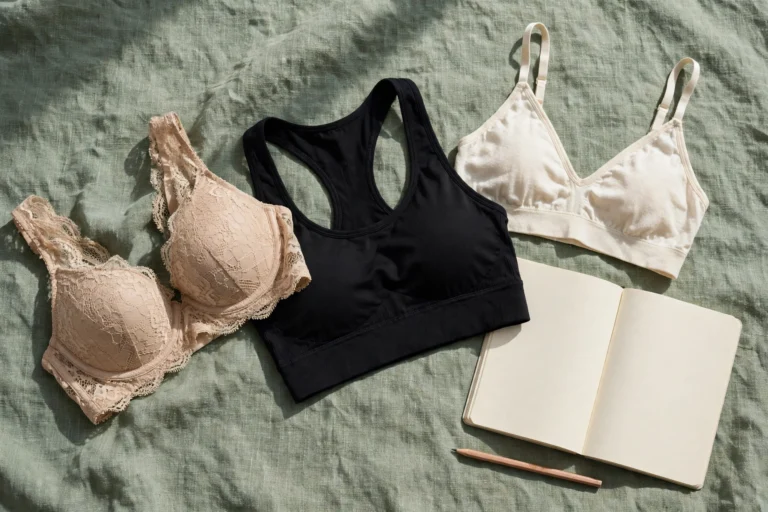
The three bras below share one logic: on sore days, women prefer soft fabrics, no digging hardware, and no hard edges. Sources list a supportive, well fitting bra among comfort measures; nothing below treats or prevents breast pain. Our best lounge bras guide covers that category in full.
Affiliate disclosure: Stellaleah is reader-supported. When you buy through links in this article, we may earn an Amazon Associate commission at no extra cost to you. That is how the research behind guides like this gets funded. Product details below come from manufacturer and retailer specifications checked at the time of writing.
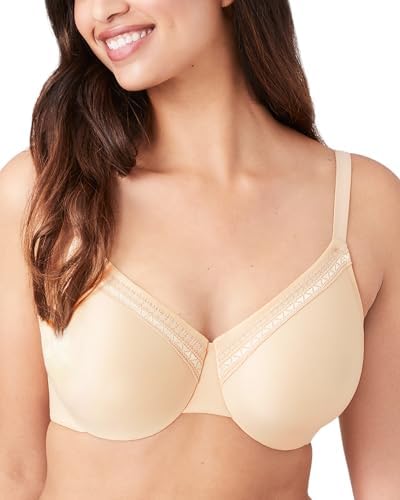


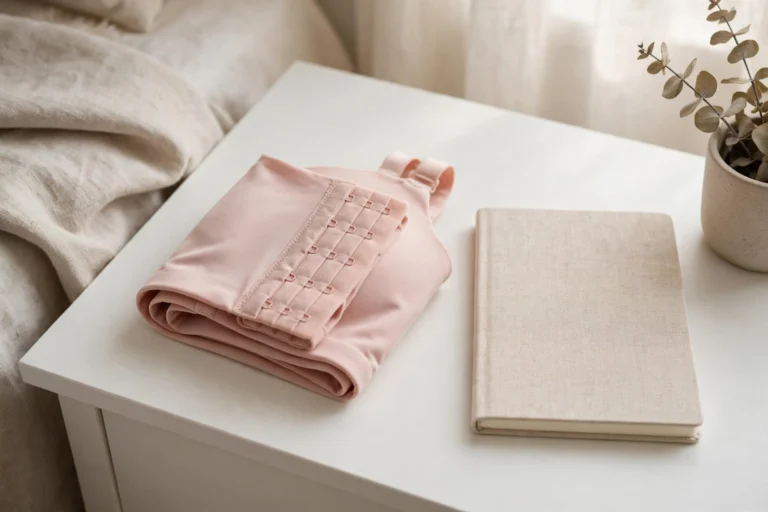
Wirefree comfort: Playtex 18 Hour Side & Back Smoothing Wireless (US4049)
If soreness makes any wire feel like an insult, the Playtex US4049 removes the wire entirely. Macy’s lists the manufacturer spec: wireless contour cups, seamless leotard back, thickly padded back adjustable straps, triple hook and eye closure, Cool Comfort wicking fabric. Higher sides and fuller cups mean fewer pressure points. It is an everyday bra, not a sports bra.
Pros
- Fully wirefree: no wire ends pressing tender tissue
- Wide cushioned straps and a smooth, high back
Cons
- Everyday support only: not built for exercise
- Contour cups give a less separated shape
Key Specs
| Row | Detail |
|---|---|
| Support | Light everyday, wirefree (not impact rated) |
| Size range | US sizes to DDD (endpoints to confirm) |
| Closure | Hook and eye, three rows |
| Construction | Wirefree seamless cups, leotard back, wicking fabric |
| Adjustability | Back adjustable straps; hook and eye band |
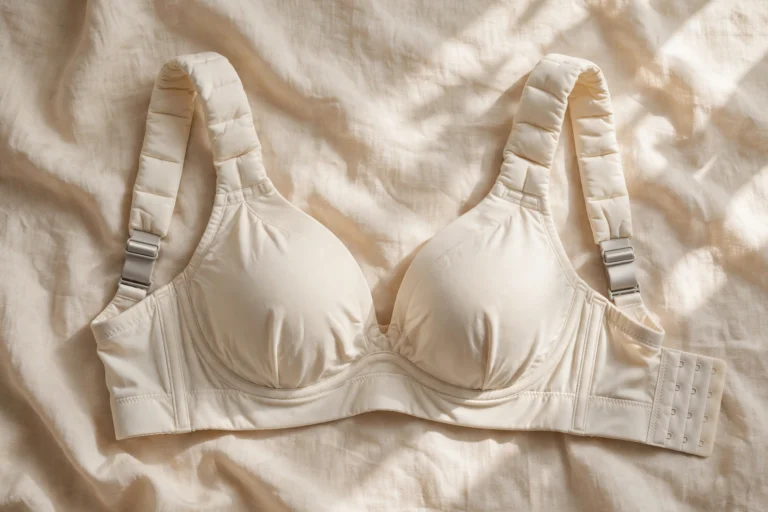
Soft cup everyday: Wacoal Perfect Primer Underwire Bra (855213)
Some women want structure on sore days, without the hard edges. Wacoal describes super soft, supple two ply cups, a hidden inner sling, and the underwire encased in double layer fabric, so the wire channel is padded. Bare Necessities confirms fully adjustable close set straps and a closure that grows with size, in 72% nylon and 28% spandex. The wire is still a wire: if pain is worst where wires sit, choose the Playtex above.
Pros
- Encased wire and soft two ply cups remove hard edges
- Hidden inner sling adds support without extra hardware
Cons
- Still an underwire: not the pick if wire pressure is your trigger
- Hand wash only
Key Specs
| Row | Detail |
|---|---|
| Support | Medium everyday (full coverage underwire) |
| Size range | US sizes to I cup (grid to confirm) |
| Closure | Hook and eye, 3 by 2, grows with size |
| Construction | Encased underwire, soft two ply cups, hidden sling, 72% nylon, 28% spandex |
| Adjustability | Fully adjustable straps; hook and eye band |
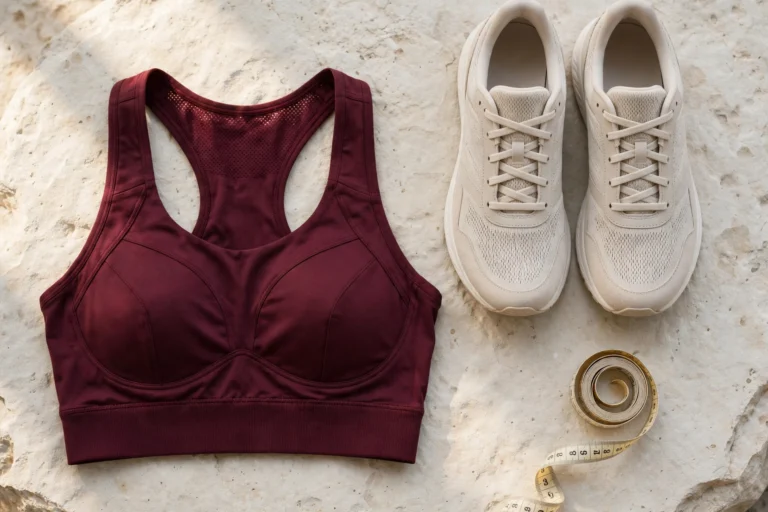
Gentle support sports: Amazon Essentials Active Sculpt V-Neck Sports Bra (AEW30306F23)
For walking, gentle yoga, and no hardware days, this pull on style removes all of it. The Amazon listing spec for style AEW30306F23: wire free racerback, light removable padding, 74% polyester and 26% elastane. Amazon rates it medium support: motion control for gentle activity, by smooth compression rather than structure. It is a comfort choice, not a running bra and not a pain remedy.
Pros
- Zero hardware: no wire, hooks, or sliders
- Wirefree compression with light, smooth padding
Cons
- Medium support ceiling: not for running
- No adjustability: fit depends on the alpha size
Key Specs
| Row | Detail |
|---|---|
| Support | Medium (brand rated), wirefree |
| Size range | Alpha sizes (endpoints to confirm) |
| Closure | Pull-on |
| Construction | Wirefree, light removable pads, racerback, 74% polyester, 26% elastane |
| Adjustability | None |
Common questions
Is breast pain a sign of breast cancer? Not usually: Cleveland Clinic answers with exactly that, and Mayo Clinic calls cancer a rare cause of breast pain. That is population level reassurance, not a verdict on your pain. The red flag list above still applies in full.
Should I give up caffeine? The evidence does not prove caffeine causes breast pain, and the sources disagree on the link. Treat it as an optional two cycle experiment, not as an answer.
Can a better bra fix sore breasts? No bra treats breast pain, and any product claiming to should be distrusted. A well fitted, supportive bra is a comfort measure the sources commonly suggest for the movement and load share of soreness. Pain that persists in a good bra has earned a clinician, not another purchase.
The bottom line
Track the pattern before you chase the cause. Note two cycles: when it hurts, one breast or both, and what changed, including new medicines. Most patterns land in the cyclical or mechanical families, where the suggested measures are honestly labelled comfort. The red flags are the point of the map: a new lump, persistent one spot pain, skin or nipple changes, fever with a hot area, or pain after menopause goes straight to a clinician. That division is the most useful thing this page can give you.

One Comment