Most lists of facts about breasts recycle the same dozen claims, and some do not survive a source check. This one is different: every fact below names a source we actually opened, and the famous claim that failed the check gets retired, with its corrective source, at the end.
Twelve facts about breasts, each with a source
1. Your two breasts are not twins
Perfect symmetry is the exception. In a 2024 photographic study, about 77% of women had a wider breast and chest wall on the left side, and cited research found some degree of asymmetry in every participant of one normal population study (Aesthetic Surgery Journal Open Forum). For fit: fit the larger side first; a stretch top cup absorbs the difference.
2. There is no muscle inside the breast
The breast is glandular tissue in a matrix of fat and fibrous tissue, sitting on top of the pectoralis major chest muscle, not inside it (Osmosis). Beneath it, the loose retromammary space lets it slide over the chest wall; the only muscle present is the tiny smooth muscle in the nipple. For fit: no workout firms the breast itself, and that sliding plane is part of why breasts bounce.
3. Breast tissue reaches into your armpit
That extension has a name: the tail of Spence. Osmosis describes part of the breast extending along the chest muscle’s edge toward the armpit, so its footprint runs from breastbone to mid armpit line. For fit: that side tissue is breast, not fullness to squeeze away, and it is why breast health awareness checks include the armpit.
4. One breast can hold 48 mL, or 3,100 mL
In a 3D scanning study of 356 women, one breast measured anywhere from 48 mL to 3,100 mL (Centre for Surgery). At roughly a gram per millilitre, that is one breast weighing about 50 g to more than 3 kg. For fit: a range that wide is why serious size grids run to dozens of sizes.
5. A cup letter cannot tell you what a breast weighs
Surgeons weighed 395 breasts removed at mastectomy: the cup letter alone was not a reliable predictor of weight, while band and cup together, with BMI, did much better (Centre for Surgery). The same letter holds far more on a 38 band than a 30. For fit: a letter is half a size, never the whole size.
6. Your breasts change across the month
Cycle hormones make breast tissue feel lumpier, tender, sore or swollen, worst just before a period (Mayo Clinic). Among elite athletes surveyed, 63% reported breast pain linked to their cycle (Journal of Sports Sciences). For fit: if your best bra feels wrong a few days a month, your tissue has changed, briefly. The third pick below is built for it.
7. You cannot feel breast density
Summa Health puts it plainly: nearly 50% of women have dense breasts, and you cannot tell by their feel or size. Density is a mammogram finding, a ratio of gland and connective tissue to fat, which matters because dense tissue and tumors both show white on a mammogram. For fit: honestly, it changes nothing. A firm feeling breast is not a dense one, and no fitting room test replaces screening.
8. Breasts are modified sweat glands
The National Cancer Institute’s SEER Training module puts it in one line: structurally, they are modified sweat glands. Each breast holds 15 to 20 lobes of glandular tissue in connective tissue and fat, and the fat mostly decides size and shape. For fit: the gland is the fixed part; the fat changes with weight, so size tracks weight more than age.
9. Nipples and areolae come in a wide normal range
In a measurement study of 605 patients and 1,210 breasts, the areola averaged 3.8 cm across, with a full centimetre of spread either side being typical, and nipples averaged 1.3 cm (PLOS ONE). About 3 in 100 nipples were inverted from birth, a normal variant. For fit: with no standard nipple position, apex placement varies by brand. A newly inverted nipple, though, is a change worth reporting.
10. After menopause, gland trades places with fat
As oestrogen falls, the milk glands shrink and fat replaces them. In a study of 7,007 screening mammograms, dense breasts appeared in 74% of women in their 40s but only 36% in their 70s (Centre for Surgery). For fit: a softer breast fills a cup differently, with less upper fullness, so styles that suited you at 40 may gap at 60. Remeasure rather than trusting an old size.
11. Exercise induced breast pain is strikingly common
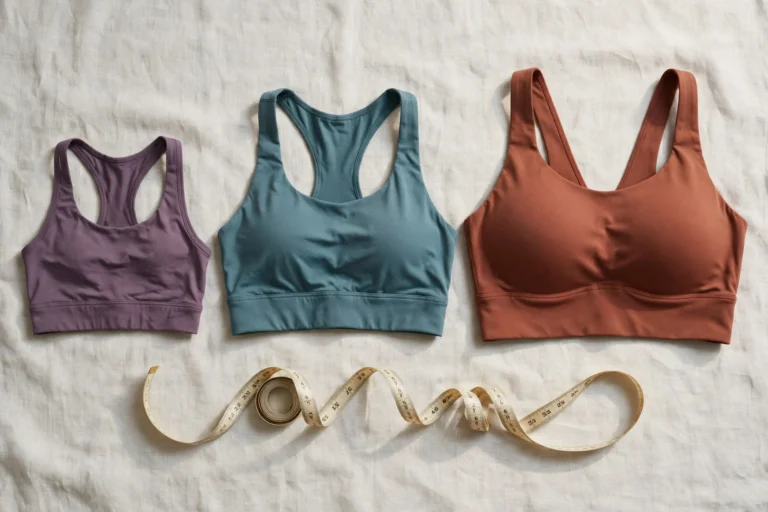
In a survey of 540 elite female athletes across 49 sports, 44% reported exercise induced breast pain, and 32% said it negatively affected their performance (Journal of Sports Sciences). For fit: support is performance equipment, and breast size and exercise interact in ways worth planning around.
12. The first sports bra was two jockstraps, sewn together
In 1977, Hinda Miller, Lisa Lindahl and costume designer Polly Palmer Smith were prototyping a jogging bra. At the suggestion of Lindahl’s husband, they sewed together two men’s athletic supporters, and it beat every prototype they had made (Smithsonian Magazine). For fit: the category began as a fit fix; our history of the sports bra tells the full story.
A myth to retire before we finish
Bras do not cause breast cancer. The old claim: bras block lymph flow and trap toxins. The American Cancer Society is blunt: there is no scientific or clinical basis for it, and a 2014 study of more than 1,500 women found no association with bra wearing. Wear the bra that fits.
Three bras that put the facts to work
Each pick answers one fact above.
Disclosure: this article contains affiliate links. If you buy through a link on this page, Stellaleah may earn a commission from Amazon at no extra cost to you. Picks were researched from manufacturer and retailer specifications; we have not wear tested them.


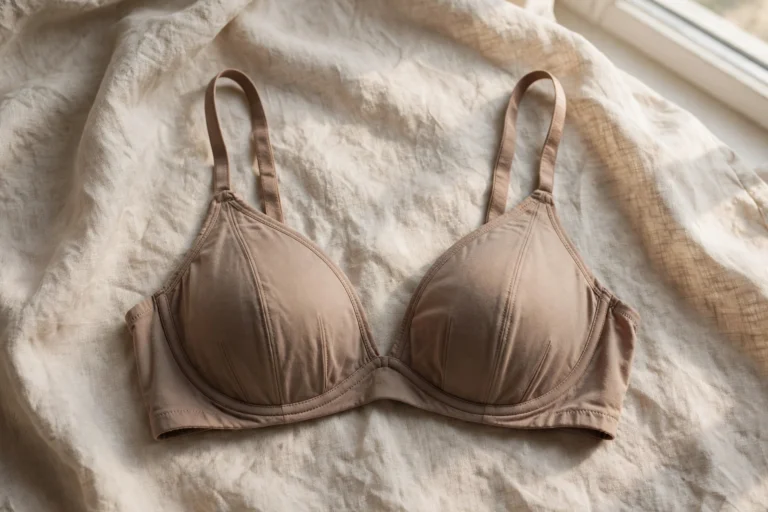
For fact 1, the asymmetry fix: Panache Ana Plunge Bra (9396)
Asymmetry forgives nothing in a molded cup, so the answer is a cup that can give. The Ana’s stretch lace top cup flexes over the fuller side without cutting in, while stabilised lined lower cups and an inner side sling keep the support underneath, per the spec sheet at Brava Lingerie. Fit the larger breast; the lace takes up the difference.
Pros
- Stretch lace top cup adapts when one side is fuller
- Inner side sling brings tissue forward, not wide
- Lined lower cups keep support under the flexible top
Cons
- Plunge neckline gives less coverage under low cut tops
- UK sizing needs a conversion check before ordering
- Hand wash only
Key Specs
| Row | Detail |
|---|---|
| Support | Underwired plunge, stabilised lined lower cups |
| Size range | UK bands 28 to 38, cups D to J |
| Closure | Back hook and eye, 2 hooks in D to G, 3 in GG to J |
| Construction | Three piece non padded cup, stretch lace top, side sling, powermesh wings |
| Adjustability | Fully adjustable straps |
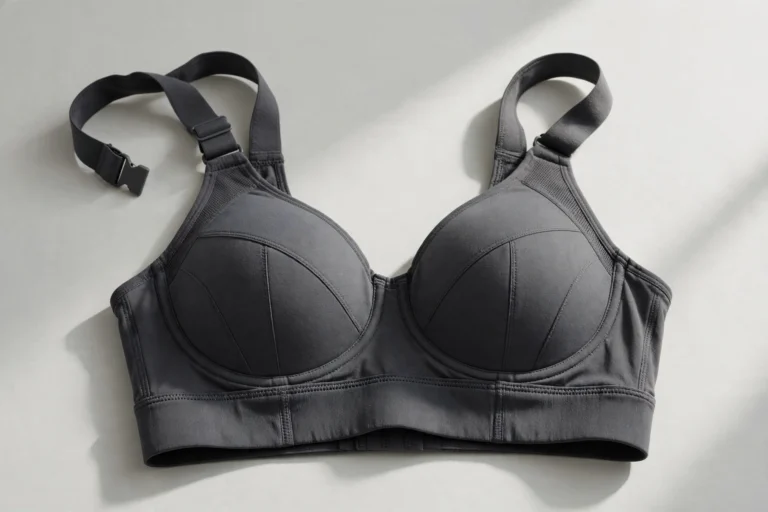
For fact 4, the wide range answer: Goddess Alice Soft Cup Bra (GD6040)
A sixtyfold volume range needs a grid with real reach. The Alice runs from 34 to 48 bands and up to an N cup in US sizing, among the widest grids in a mainstream soft cup. Support is engineered, not wired: a four section cup, an M frame for separation, flexible side boning and powernet wings, per Victoria’s Attic. The underwire Alice is a different style, GD6041; this is the soft cup.
Pros
- Grid reaches 48 bands and N cups, sizes most brands skip
- Four section cup shapes and separates without a wire
- Side boning and powernet wings anchor larger volumes
Cons
- Full coverage cut sits too high for low necklines
- Lace can texture through thin, clingy tops
- Hand washing recommended
Key Specs
| Row | Detail |
|---|---|
| Support | Wirefree, four section cup with M frame and side boning |
| Size range | US bands 34 to 48, cups C to N |
| Closure | Back hook and eye |
| Construction | Four section soft cup, all over lace, opaque lower cup, powernet wings |
| Adjustability | Adjustable straps |
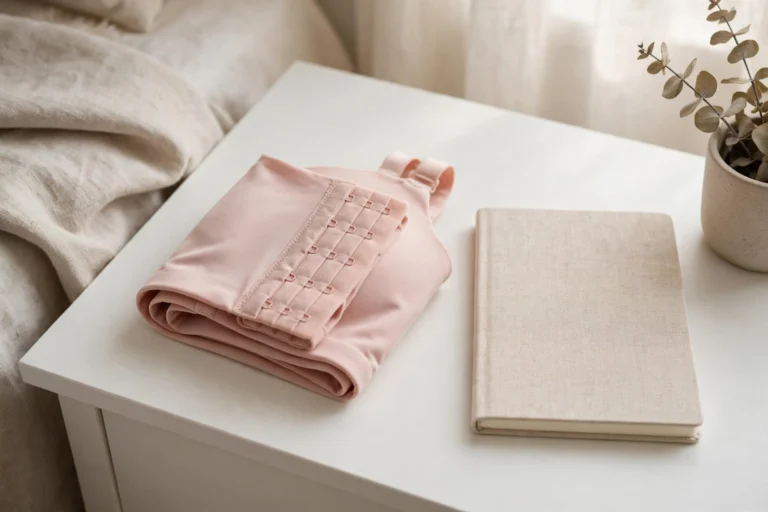
For fact 6, the tender week bra: Bali Comfort Revolution Wirefree Bra (DF3463)
For swollen, tender pre period days, structure is the problem, not the solution. The Comfort Revolution has no wire at all, and its ultra thin foam cups stretch for a flexible fit, with two ply side and back support and a Comfort U back, per the manufacturer copy at Macy’s. A comfort day bra, not a workout bra.
Pros
- Wirefree, so nothing digs into tender tissue
- Foam cups stretch as monthly swelling comes and goes
- Smooth, seamless look under T shirts
Cons
- Light support only; not built for exercise
- Foam cups give a smoother, less separated shape
- Hand wash only
Key Specs
| Row | Detail |
|---|---|
| Support | Light wirefree support |
| Size range | 32B to 46DD on the maker size chart (XS to 3XL) |
| Closure | Dual back hook and eye |
| Construction | Seamless knit, ultra thin foam cups, two ply side and back support, Comfort U back |
| Adjustability | Adjustable straps; hook and eye band |
Common questions
Is it normal for one breast to be bigger than the other?
Yes. Studies find some asymmetry in effectively everyone, usually wider or larger on the left. A difference that appears suddenly, though, is a change to report.
Can I tell whether my breasts are dense by how they feel?
No. Density shows only on a mammogram, and nearly half of women have dense tissue. Firm feeling is not dense.
Why does my bra fit worse just before my period?
Cycle hormones make tissue swell and feel tender, lumpy or sore before a period, then ease off. The bra has not changed; the tissue has, temporarily.
The bottom line
Breasts are variable, asymmetrical, mostly fat and gland, and far stranger than the average listicle suggests. Twelve facts, twelve sources, one myth retired. When a claim about breasts cannot name its source, treat it as a story, not a fact.