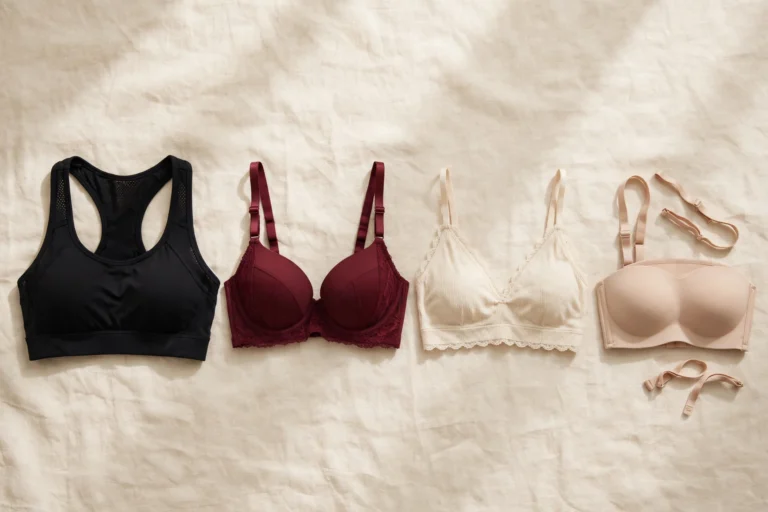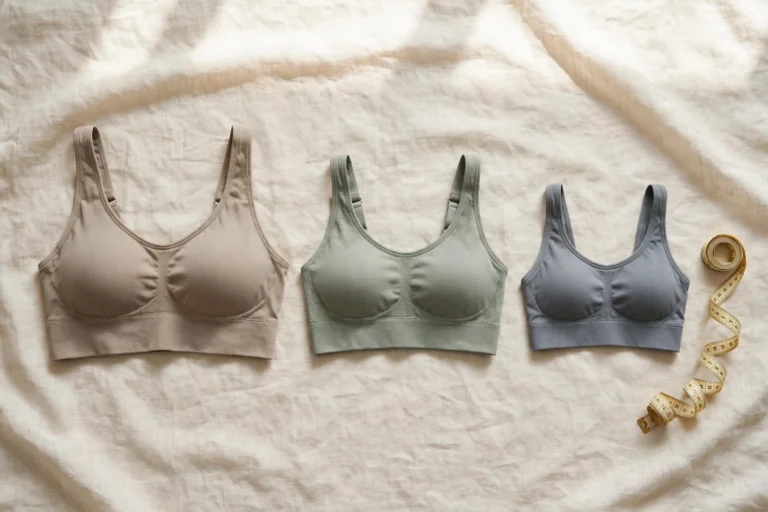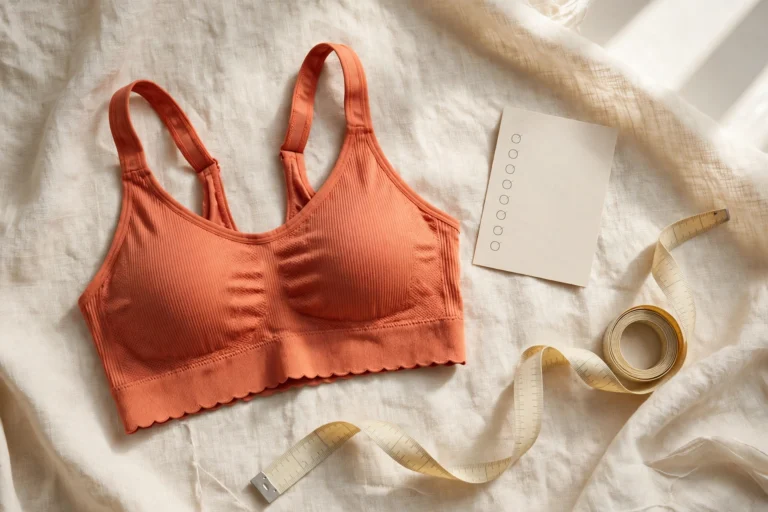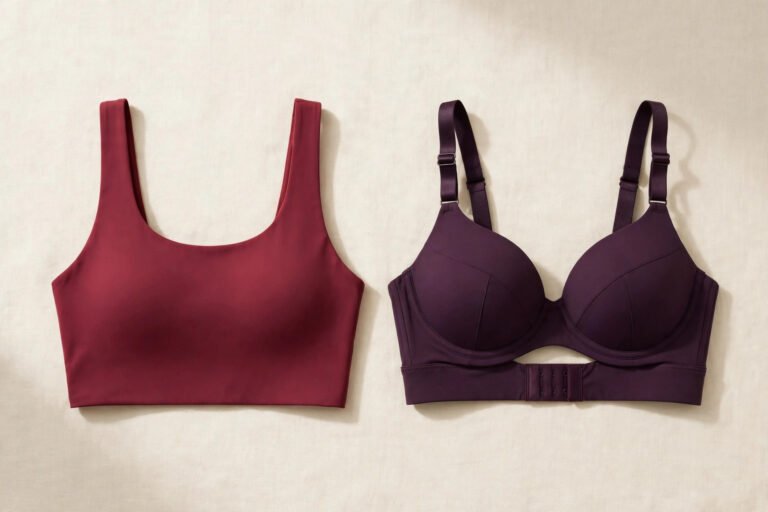
If your daughter embarrassed about bra shopping is the problem in front of you, here is the reassuring part: embarrassment is the normal response, not a sign that something has gone wrong. Most girls feel awkward about bra shopping, and most parents feel awkward about it too. Your job is not to remove the embarrassment. It is to lower the pressure around it until the shopping gets done anyway, quietly and without a scene.
Quick Answer
Treat the embarrassment as ordinary, keep everything small, and let her control the pace. A daughter who is embarrassed about bra shopping needs three things: privacy, a choice about how the shopping happens, and a parent who does not turn the trip into an event. Offer a low pressure first step, such as browsing online together or buying two soft styles to try at home. If she refuses, leave the door open and come back to it in a few weeks. The trip that happens calmly on the second try beats the trip that happens tearfully on the first.
Daughter Embarrassed About Bra Shopping: Why It Happens
Embarrassment about bra shopping has a simple cause: the shopping makes a private change public. A bra is the first garment that announces a body change to other people, and a girl who is already self conscious about that change does not want an audience for it. Nemours KidsHealth lists wanting more privacy and caring a great deal about what peers think among the normal emotional changes of puberty. The embarrassment is not a character flaw, and it is not a rejection of you. It is the age doing what the age does.
Three things usually feed it at once. First, the body change itself. HealthyChildren, the parent site of the American Academy of Pediatrics, puts the usual start of puberty for girls somewhere between the ages of 8 and 13, and breast development is often the first visible change. A girl can feel exposed by a change she did not choose and cannot hide. Second, the peer audience. Friends are watching, classmates change together for physical education, and being the first or the last to need a bra both feel conspicuous. Third, the shop itself. A bra department is a public place with mirrors, fitting rooms, and staff who ask questions, and none of that feels private to a girl who wants this whole subject to stay quiet.
Knowing this changes your job. You are not persuading her that bras are nothing to be embarrassed about. She will not believe you, because her embarrassment is real to her. You are removing the parts of the experience that make the embarrassment worse: the audience, the ceremony, the commentary, and the rush.
The Four Situations Parents Actually Face
Embarrassment does not arrive in one shape. It usually arrives as one of four situations, and each one has a different fix.
1. She refuses to go shopping at all
This is the most common version. She says no, changes the subject, or agrees and then finds a reason not to go on the day. A refusal usually means not like this, not never. The shopping she is picturing is probably the worst version: a special trip, announced in advance, to a shop full of strangers, with a parent narrating the whole thing.
What helps: shrink the ask until it fits. Offer to look at styles online together for ten minutes, with no promise to buy anything. Or offer a gift card and let her shop with a friend’s mum, or on her own if she is old enough for that. Or buy two soft pull-on styles in her clothing size, let her try them at home with the door locked, and return what does not work. A first bra bought quietly at home counts exactly as much as one bought in a shop. If she still says no, say so once, plainly: “Whenever you want one, we will get one. You can tell me, or just put it on the shopping list.” Then stop asking for a few weeks. Pressure now buys resistance later.
2. She is afraid of being teased
Teasing is the fear that sits underneath most bra-shopping embarrassment, and it is worth taking seriously rather than dismissing. A girl who has heard a classmate mocked for a bra strap showing, or who has seen a locker-room joke land badly, is not being dramatic. She is doing risk assessment.
What helps: solve the teasing problem as a practical problem, not a feelings problem. Ask what exactly she is worried about, and answer that exact worry. If the worry is a strap showing at school, the fix is a style with straps that sit flat under her usual tops, or a camisole layer. If the worry is changing for physical education, the fix is a soft pull-on style she can change into quickly, or a sports top she puts on at home under her school shirt. If the worry is a specific classmate, the fix is a conversation about that classmate, not about bras. Never promise that nobody will tease her. She knows that is not a promise you can keep. Promise instead that you will deal with teasing together if it happens, and mean it.
3. The locker room and PE changing
For many girls, the bra is not the problem. Changing in front of other people is the problem, and the bra is just the garment that makes the changing visible. A girl who was happy changing in a group at nine can dread it at eleven, because privacy has become important to her in a way it was not before. That shift is normal: Nemours KidsHealth lists wanting more privacy as a standard part of puberty.
What helps: give her a changing strategy before you give her a bra. A sports top or soft bralette worn under her school shirt means she never has to change her top layer in front of anyone. A camisole with a built-in shelf layer does the same job with less fuss. If her school allows it, she can change in a toilet cubicle, and that is a reasonable choice, not a failure of confidence. Talk to her about what her school actually allows, because the practical answer depends on the school. The goal is a routine she can repeat every PE day without dread, not a brave performance in the locker room.
4. She is embarrassed in front of you, or in front of Dad
Some girls are embarrassed in front of everyone, and some are embarrassed in front of one person in particular. A daughter who will happily shop with her mum may freeze at the idea of her dad knowing, and a daughter who is fine with her dad may not want her grandmother told. Both are fine. Embarrassment is specific, and the fix is specific too.
What helps: ask who she is comfortable with, and arrange that, without making the question itself a drama. One sentence is enough: “Would you rather do this with me, or with Aunt Sarah, or just look online first?” If she would rather her dad handled the driving and the paying while someone else handled the shop floor, that is a good plan, and our single dad’s guide to bra shopping covers exactly that split. If she does not want relatives told, agree the news policy with her: her size and her choices are hers to share, not family updates. Privacy she can rely on is worth more than any reassurance you can give her.
Seven Ways to Make Bra Shopping Easier
These are the tactics that lower embarrassment in practice. Use the ones that fit your daughter, and skip the rest.
1. Make it ordinary, not special. Fold the shopping into a normal errand, not a dedicated event. A bra bought on the way home from practice carries no ceremony. A special trip announced a week in advance carries a week of dread. Ordinary is the whole technique.
2. Let her choose the shop, or skip the shop. Some girls want a familiar department store. Some want to browse online first and only then go in. Some want to order two styles home and try them with the door locked. All three are real shopping, and the one she chooses is the one she will actually do. Our bra shopping checklist for parents covers the practical side of whichever route she picks, from fit checks to returns.
3. Go at a quiet time. A Saturday crush in the bra department is the worst version of this trip. A weekday evening, or the first hour a shop opens, means fewer people, shorter queues, and a fitter with time to be gentle. Quiet is a kindness, not a luxury.
4. Give her the words in advance. Most first-bra dread is dread of the unknown. Tell her, at home, what will happen: she tries styles in a fitting room, a fitter may ask to check the band and straps, and the whole thing is short. Tell her she can say no or stop at any point, and you will back her immediately. Tell her she chooses who is in the room. Our guide to how to talk to your daughter about bras covers the conversation itself, including what a fitting looks like and how to prepare for it.
5. Let her pick, and do not comment on her body. Colour, style, and fabric are her call. A bra she picked herself gets worn; a bra chosen for her gets left in the drawer. And say nothing about her changing body, even approvingly. Any remark that scores her development tells her that her body is being watched and assessed, however warmly it was meant. Talk about how a style feels and whether it stays put, not about how she looks in it.
6. Buy two, not ten. A first purchase of two soft styles is enough: one to wear, one in the wash. A drawerful bought on the first trip raises the stakes, costs more to get wrong, and turns a small errand into a big decision. She can add more once she knows what she likes.
7. Leave on a high note, or leave with nothing. If she does not like anything, that is a successful trip, not a failed one. The first visit is often about feeling out the experience, and the second or third visit is the real one. Walking out empty-handed with no fuss teaches her that shopping is low stakes, which is exactly the lesson that makes the next trip easy.
What Not to Do
Some mistakes make embarrassment worse, and they are all avoidable.
Do not tease her about it. Not even gently, not even affectionately. A joke about growing up, a comment in front of siblings, a funny story told to relatives: each one teaches her that this subject is not safe with you. If you have teased her before, a plain apology works better than pretending it did not happen.
Do not announce it. Telling relatives, posting about it, or making it a milestone to share hands her private development to an audience. The news policy is hers. If she wants to tell her grandmother, she will.
Do not make it a ceremony. A big announcement, a special lunch, a gift wrapped like a birthday present: all of these tell her this is an enormous event, and enormous events are embarrassing. Keep it as close to buying socks as you can.
Do not force the fitting. A store fitting is optional, not required. If the idea of a fitter makes her freeze, start with pull-on styles in her clothing size, or shop online with a good return policy. A fitting she was forced into is a fitting she will remember badly, and it will make the next one harder.
Do not rush her, and do not wait forever either. Rushing says her feelings do not matter. Waiting silently says you have forgotten, or that the subject is too awkward even for you. The middle path is a light offer, repeated every few weeks, with no penalty for saying not yet.
Common Mistakes
Mistake 1: Treating embarrassment as the problem to solve.
Embarrassment is the normal response to a private change going public. The fix: solve the practical problems around it, the audience, the ceremony, the unknown fitting, and let the feeling fade on its own.
Mistake 2: Dismissing the teasing fear.
“Nobody will tease you” is a promise you cannot keep, and she knows it. The fix: answer the exact worry with a practical fix, and promise to deal with teasing together if it happens.
Mistake 3: Making the first trip a special event.
A dedicated trip announced in advance builds a week of dread. The fix: fold it into a normal errand, go at a quiet time, and keep the stakes low.
Mistake 4: Commenting on her body, even kindly.
“You are really filling out” tells her she is being watched. The fix: talk about how a style feels and whether it stays put, never about how she looks in it.
Mistake 5: Forcing a fitting she does not want.
A forced fitting is remembered badly and makes the next one harder. The fix: start with pull-on styles or online shopping, and let her choose the fitting when she is ready.
Common questions
My daughter refuses to even talk about bras. What now?
Stop talking about bras, and keep the door open. One sentence, once: “Whenever you want one, we will get one. You can tell me, or just put it on the shopping list.” Then leave it for a few weeks. HealthyChildren is direct that some children simply do not want to talk to their parents about this, and that is okay, as long as she knows you are available and has trusted resources. A written route helps too: some girls will write what they cannot say, so a note or a message, or permission to add items to a shared shopping list, lets her request things without a face-to-face conversation.
She is embarrassed about changing for PE. Is a bra the answer?
Partly. A soft pull-on style or a sports top worn under her school shirt means she never has to change her top layer in front of anyone, and that removes most of the problem. But the changing itself is the other half: talk about what her school allows, whether a toilet cubicle is an option, and whether she wants a friend alongside her. The goal is a routine she can repeat every PE day without dread.
She was teased once and now refuses to wear a bra at all. What helps?
Take the teasing seriously first, and the bra second. Find out what was said, by whom, and where, and deal with that through the school if it needs dealing with. Then solve the practical side: a style that stays invisible under her usual tops, a camisole layer, or a different colour that does not show. Do not tell her to ignore it. A girl who was teased and then told to ignore it learns that adults will not help, and she stops asking.
Should I just buy her one without asking?
No. A surprise bra lands as a message about her body, delivered without her consent, and it is usually the wrong style anyway. The one exception is a camisole or a soft layer bought as ordinary clothing, with no announcement and no comment. Anything that is clearly a bra should be her choice, even if the choice is only between two styles you picked out.
When does embarrassment become something to raise with a doctor?
Embarrassment on its own is normal, and it usually fades as the shopping becomes routine. What calls for a professional is a change in the pattern: if she stops activities she used to enjoy, avoids school, or seems distressed in a way that goes beyond shopping. Her pediatrician is the right first call for that, not a bra shop. And the timing thresholds still apply: HealthyChildren advises contacting a pediatrician if puberty changes appear before age 8, or if there are no changes by age 13.
Key Takeaways
Embarrassment is normal, not a problem to fix. It comes from a private change going public, and it fades as the shopping becomes routine.
Shrink the ask until it fits. Online browsing, two styles tried at home, or a gift card all count as real shopping.
Answer the exact worry. Teasing, the locker room, and the shop floor each have a practical fix, and a practical fix beats reassurance.
Privacy is the method. No audience, no announcements, no comments on her body, and her right to stop any fitting at any point.
A refusal means not like this, not never. Leave the door open, come back in a few weeks, and let the calm second try do the work.