
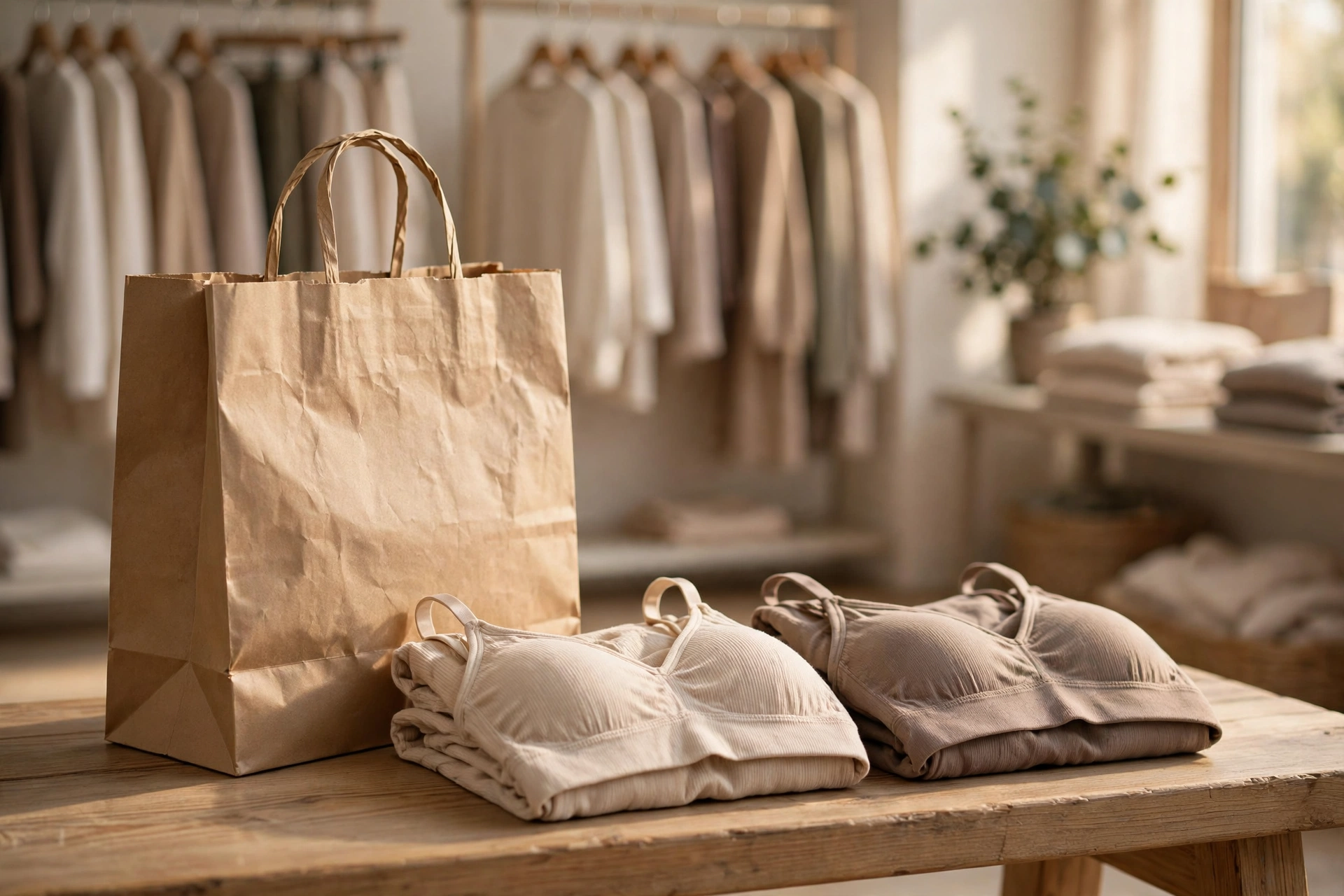
If single dad bra shopping is the task in front of you, here is the good news first: you do not need to be a bra expert to get this right. Your daughter does not need you to know cup letters, or to have opinions about underwire. She needs you to treat the shopping as ordinary, to arrange the help she actually wants, and to handle the practical parts, the driving, the paying, the returns, without making her body the topic of conversation. This guide is the practical plan for doing exactly that.
Quick Answer
Your job is logistics, not expertise. Arrange one trusted woman she is comfortable with if she wants one, or a store fitter if she does not. Start with two or three soft, wire-free styles, let her choose, and buy them the way you would buy school shoes: quietly, without ceremony, and with the receipt kept. If she is embarrassed, the fix is privacy and a smaller ask, not a better speech. The dads who handle this well are the ones who make it boring.
What your daughter actually needs from you
It helps to be clear about what the job is, because the job is smaller than most dads fear. She needs four things, and only one of them involves bras at all.
She needs the subject to be normal. The single most useful thing a dad can do is treat a bra like any other item of clothing she has outgrown. Calm voice, no jokes, no big announcement, no visible discomfort of your own. If you act as though this is an enormous event, she will believe you. If you act as though it is a shopping errand, she can believe that too.
She needs a choice about who helps. Some girls want their dad to handle the whole thing. Some want a mum figure, an aunt, a grandmother, or an older cousin. Some want a store fitter and nobody they know. HealthyChildren, the parent site of the American Academy of Pediatrics, is direct on this point: some children simply do not want to talk to their parents about this, and that is okay, as long as they know you are available and have trusted resources. Ask her who she would like, arrange it, and step back gracefully. What she will remember is that her dad treated the subject as normal, not that he delivered every word himself.
She needs the practical parts handled. Driving, paying, checking the return policy, keeping the receipt, knowing the shop’s opening hours. These are the parts you are already good at, and they are the parts that matter most on the day.
She needs her privacy protected. Her size and her choices are not updates for relatives, and they are not dinner-table conversation. Agree the news policy with her: what she buys is hers to share, not yours to report.
Who can help, and how to ask them
If your daughter wants a woman’s help with the shopping, arranging it is your job, and it is a straightforward one. The best helper is whoever she is already comfortable talking to about her body: a mother, stepmother, aunt, grandmother, godmother, older cousin, or a family friend. HerRoom puts it plainly for single dads: find a female family member or an adult female she is comfortable with to help her, and otherwise stand back and let her choose, with a saleswoman’s guidance if needed.
How to ask the helper: keep it short and practical. “Maya is ready for her first bras. Would you take her shopping one afternoon this week? She would rather do the shop floor with you, and I will cover the cost.” That is the whole ask. Do not add commentary about her development, and do not ask the helper to report back on sizes or details. If your daughter wants to tell you what she bought, she will.
If there is no obvious helper: a store fitter is a professional option, not a last resort. Most department stores and bra shops fit first bras every day, and a good fitter keeps the appointment brief, private, and led by your daughter. Call ahead, say it is a first bra for a young girl, and ask what the fitting involves and whether a parent waits outside. Or skip the shop floor entirely: our guide to how to buy the first bra for a tween covers the styles and the practical choices, and pull-on styles in clothing sizes need no fitting at all.
If she wants to shop with a friend’s mum: that is a valid plan too. BraBar notes that shopping with a friend, a different family member, or on her own with a gift card are all completely valid ways to handle it. Offer the gift card, agree the budget, and let her go.
If she wants you, and only you: good. You are enough. The rest of this guide is written for that case, and every part of it works for a dad handling the trip alone.
Single Dad Bra Shopping: Three Routes, Pick One With Her
There is no single right way to buy a first bra. There are three routes, and the right one is the one she will actually do.
Route 1: Online first, try at home
This is the lowest-pressure route, and the best starting point for an embarrassed daughter. Browse styles together on a laptop, or let her browse alone and send you links. Buy two or three soft styles in her clothing size, let her try them at home with the door locked, and return what does not work. Check the return policy before you pay, including whether worn or tried-on items can be returned, and keep the receipt. A first bra tried on at home counts exactly as much as one tried on in a shop.
Route 2: A quiet trip to a shop
If she is willing to go in, make the trip as low-key as possible. Go at a quiet time, a weekday evening or the first hour a shop opens, not a Saturday crush. Fold it into a normal errand rather than announcing a special trip. Let her pick the shop, and let her lead on the shop floor while you wait nearby. If she wants a fitter, ask the staff; if she does not, nobody needs to measure anything. Buy two or three, not a drawerful.
Route 3: A gift card and a trusted adult
Hand her a gift card and a budget, and let her shop with whoever she chose: an aunt, a friend’s mum, or on her own if she is old enough. Agree the budget and the number of bras in advance, and agree that she will show you the receipt, not the bras. This route works well for girls who are embarrassed specifically in front of their dad, and it is not a failure on your part. It is a plan that respects her comfort.
Whichever route you pick, agree it before you leave home. Who is coming, which shops, how long you will stay, who helps in the fitting room, and what the budget is. Clear choices, agreed in advance, prevent most fitting-room disagreements. Our bra shopping checklist for parents covers the same ground in checklist form, including fit checks and returns, and it is worth a read before the trip.
What to buy first
You do not need to learn the whole bra market. The first purchase is a short list, and it stays short on purpose.
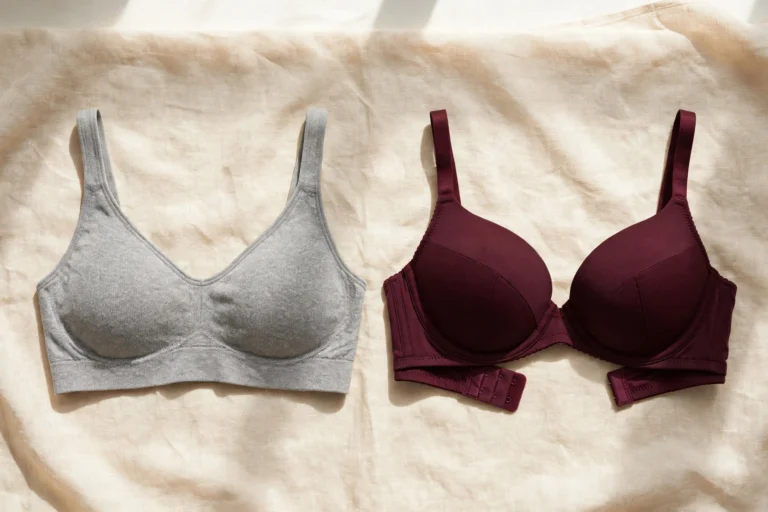
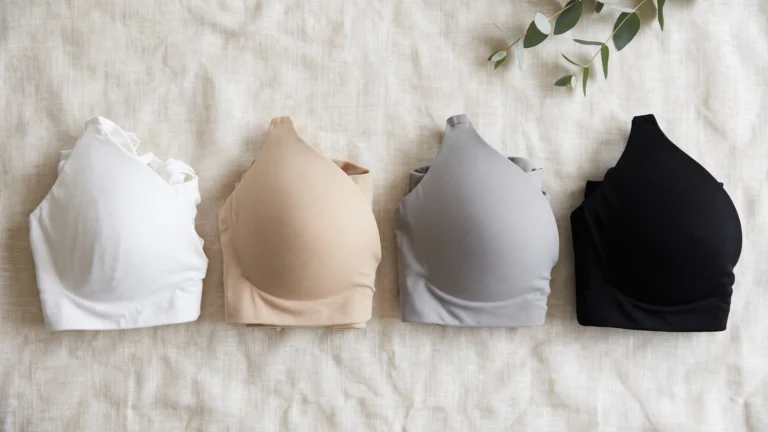
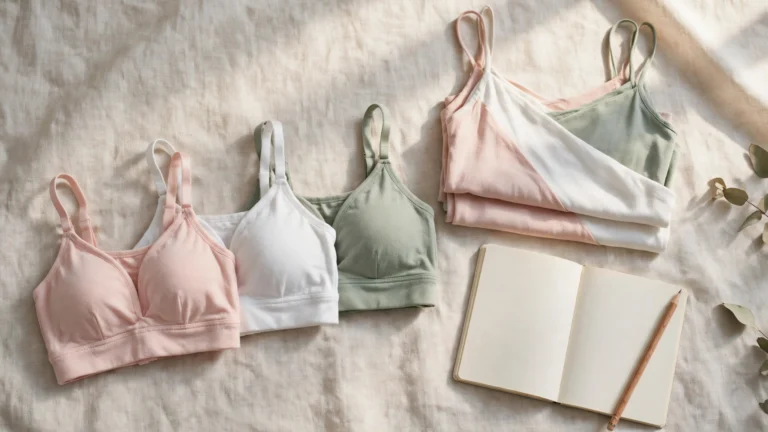
Start with soft, wire-free styles. A soft bralette, a pull-on training bra, or a camisole with a built-in shelf layer. No underwire, no padding, no push-up. These are the styles built for this stage, and they are the ones she is most likely to wear comfortably. Our guide to how to buy the first bra for a tween sets out the style choices in more detail.
Buy two or three, not ten. One to wear, one in the wash, one spare. A drawerful bought on the first trip raises the stakes and costs more to get wrong. She can add more once she knows what she likes, and her size will change as she grows, so a small first purchase is the economical choice as well as the calmer one.
Let her choose the colour and the style. A bra she picked herself gets worn; a bra chosen for her gets left in the drawer. Within the budget you set, her call. A neutral or skin tone is the practical default for school, but if she wants a colour she loves, let her have one.
Skip the sizing lecture. Bra sizes work on a chart, not on age, and no size is predicted from how old she is. If she is starting with pull-on styles, they come in clothing sizes, and there is nothing to work out. If she moves to sized styles later, our training bra size chart explains how the chart itself works, which is the useful thing to know before anyone talks numbers. A size is a garment measurement, the way a shoe size is, and it will change as she grows.
Check the fit with four quick questions, not a lecture. Does the band sit level, not riding up at the back? Does the fabric lie smooth, with no gaping or spilling? Do the straps stay put without digging in? Does it still feel comfortable after ten minutes of moving around? If a style fails one, try a different size before ruling out the style. Our bra shopping checklist for parents walks through these checks in full.
What to say, and what not to say
The words matter more than the shopping, because she will remember the words longer than the bras. Keep them short, practical, and about comfort, never about her body.
Lines that work:
“Whenever you want a bra, we will get one. You can tell me, or just put it on the shopping list.”
“Want to look at a couple of soft ones together, or would you rather do it with Aunt Sarah?”
“This is ordinary shopping, like school shoes. We can take a break whenever you like.”
“You pick the ones you like. I will handle the paying and the returns.”
Lines to avoid:
-
Any comment on her changing body, even approving ones. “You are really filling out” tells her that her body is being watched and assessed, however warmly it was meant.
-
Any joke about growing up. Teasing about bras, even affectionate teasing, teaches her that this subject is not safe with you.
-
Any announcement. Telling relatives, or making it a milestone to share, hands her private development to an audience. The news policy is hers.
-
Any pressure disguised as reassurance. “There is nothing to be embarrassed about” dismisses a feeling she genuinely has. Say instead, “It is okay to feel awkward about it. We can go slowly.”
If you do not know an answer, say so. “I do not know, and I will find out” is a complete and respectable answer. Then find out, and come back with it within a day or two, unprompted. A returned answer teaches her that questions to you get resolved, not deflected. Our guide to how to talk to your daughter about bras covers the conversation in full, including the openers that work and the settings that do not.
If she is embarrassed specifically in front of you
This is the situation dads worry about most, and it is also the easiest to solve, because it is specific. A daughter who is embarrassed in front of her dad is not rejecting her dad. She is managing a private change, and her dad is the person it feels most awkward to manage it in front of. That is normal, and it is not permanent.
What helps: name it once, lightly, and then act on it. “If you would rather do the shop floor with someone else, that is completely fine. I can drive, and pay, and wait outside.” Then do exactly that, without visible disappointment. BraBar makes the same point for dads and other caregivers: you do not need to be a bra expert, and handing the practical help to someone she is comfortable with works just as well, and may feel more comfortable for everyone involved.
What does not help: insisting on being the one to help because you are her parent, or treating her preference as a rejection. It is neither. It is a girl choosing the arrangement that lets her get the shopping done, and the shopping getting done is the goal.
The long view matters here. Puberty runs for years, and the door you leave open now is the one she uses for bigger topics later. A dad who handled the first bra calmly, without fuss and without taking her embarrassment personally, is a dad she will come back to. That is the real purchase.
The practical details dads usually ask about
Budget. A first bra does not need to be expensive, and a higher price does not guarantee a better fit. Comfort, fabric, and a closure she can manage matter more than a brand name. Set the budget before you go, agree it with her, and stick to it. Two or three soft styles is a sensible first spend.
Returns. Check the return and exchange policy before you pay, including whether tried-on items can be returned and how long the window lasts. Keep the receipt somewhere easy to find, and keep tags on until she is sure. If a bra feels uncomfortable after a few wears, return or exchange it if you can. A bra that sits unworn in a drawer is not a saving.
Washing and care. Teach her the basics at home, once, without a lecture: wash in a laundry bag or by hand, do not tumble dry, and replace a bra when the band no longer stays level or the fabric has lost its stretch. Our bra shopping checklist for parents covers the care points in brief.
When to buy more. When she outgrows a style, when one wears out, or when she asks. Not on a schedule, and not because a drawer looks empty. Sizes change as she grows, sometimes several times, and that is the system working, not a problem.
When to ask a professional. If she is uncomfortable during sport in a way a soft style does not fix, or if you are unsure whether a style fits at all, a store fitter can help in a few minutes. And for anything about her development itself, her pediatrician is the right call, not a bra shop. HealthyChildren advises contacting a pediatrician if puberty changes appear before age 8, or if there are no changes by age 13.
Common Mistakes
Mistake 1: Treating this as a test of your parenting.
It is a shopping errand, not an exam. The fix: handle the logistics, arrange the help she wants, and let the shopping be boring.
Mistake 2: Insisting on being the one to help when she would rather have someone else.
Her preference is not a rejection. The fix: drive, pay, wait outside, and let the person she chose handle the shop floor.
Mistake 3: Making it a special event.
A dedicated trip announced in advance builds a week of dread. The fix: fold it into a normal errand, go at a quiet time, and keep the stakes low.
Mistake 4: Commenting on her body, even kindly.
Any remark that scores her development tells her she is being watched. The fix: talk about how a style feels and whether it stays put, never about how she looks in it.
Mistake 5: Buying a drawerful on the first trip.
Sizes change as she grows, and a style that felt good in the shop may feel different after a full day. The fix: buy two or three, test them, then buy more of what worked.
Common questions
My daughter will not talk to me about bras at all. What now?
That is normal, and it is not a failure. HealthyChildren is direct that some children do not want to talk to their parents about this, and that is okay, as long as they know you are available and have trusted resources. Offer the practical route instead: a trusted woman to shop with, a gift card, or two styles ordered online for her to try at home. One sentence, once: “Whenever you want one, we will get one.” Then leave the door open and come back to it in a few weeks.
Do I need to be in the fitting room?
No. You do not need to be in the fitting room, and in most cases she would rather you were not. Wait outside, or wait in another part of the shop. If she wants you to check a fit, she will ask, and the check is four quick questions: band level, fabric smooth, straps staying put, comfortable after moving around. If she does not ask, your job is the paying and the returns.
What if I buy the wrong size?
Then you exchange it, which is why the return policy matters more than getting the size right first time. Pull-on styles in clothing sizes are the safest first buy, because there is no size to get wrong. For sized styles, buy the same style in two sizes if the shop allows returns, and keep the one that passes the fit checks. Labels vary between brands, so a different label is not a failure.
She wants a bra, but nothing has started developing yet. Is that a reason to say no?
No. Wanting what friends have is a social comfort issue, and a camisole with a shelf layer or a soft bralette answers it completely. A first bra bought early for confidence also teaches her that asking you for body-related things gets a calm yes, a lesson worth having installed before she needs it for something bigger.
How do I handle this if her mum is in the picture but lives elsewhere?
Ask your daughter who she would like to shop with, and arrange it without making the arrangement a negotiation between adults. If she wants her mum, help make that happen. If she wants someone else, arrange that instead. The shopping belongs to her, not to the co-parenting arrangement, and the less it becomes a message between adults, the better it goes for her.
Key Takeaways
Your job is logistics, not expertise. Driving, paying, returns, and arranging the help she wants are the whole task.
Let her choose who helps. A mum figure, an aunt, a fitter, or you: the right helper is the one she is comfortable with.
Start small and ordinary. Two or three soft, wire-free styles, bought quietly, with the receipt kept.
Say nothing about her body. Talk about how a style feels and whether it stays put, never about how she looks in it.
Privacy is the method. No audience, no announcements, and her choices are hers to share, not yours to report.

One Comment