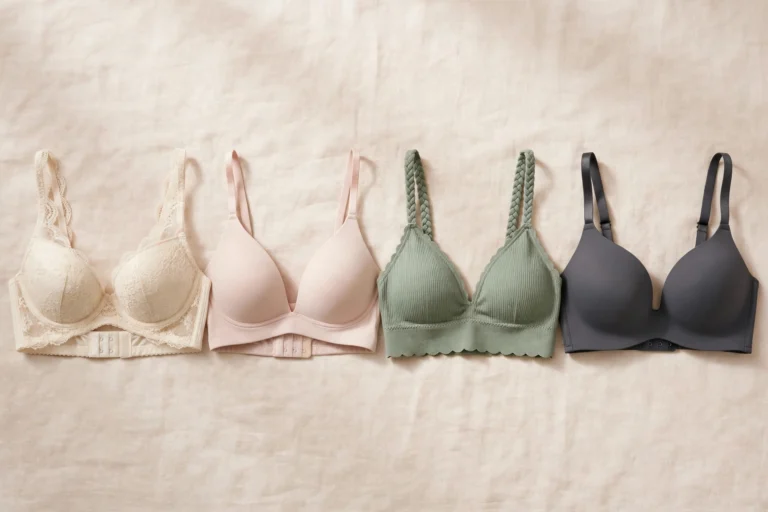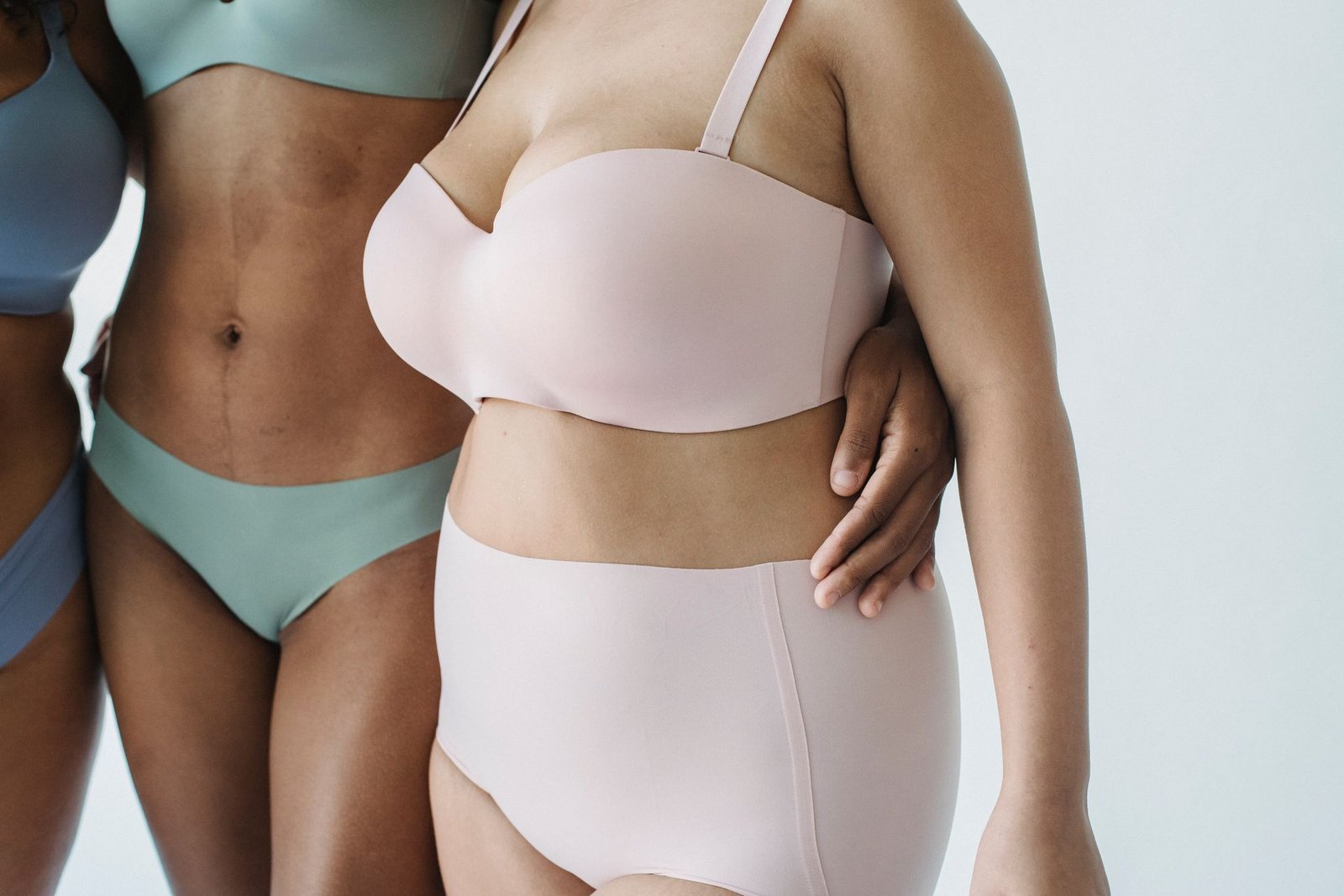
If you are shopping for a bra for petite frame proportions, or for a tall torso, narrow shoulders or a broad athletic build, your size is only half the story. Two people can wear the same size, say 34C, and need completely different bras. Body type here means frame and proportion, not breast shape, and this guide stays on that side of the line.
Quick Answer
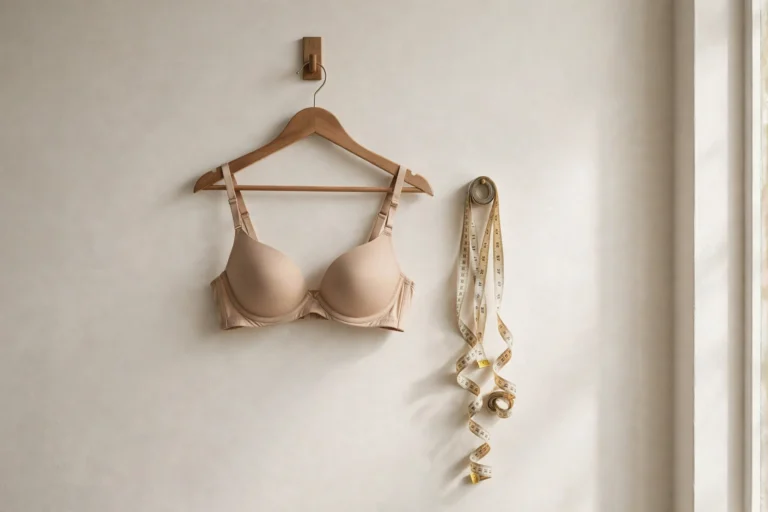
Start with your measured size, then shop for your frame. The band should sit level and snug on the loosest hook, the cups should contain without gaping or spilling, and the straps should stay put without digging. Then your frame decides the details: petite frames need shorter bands and closer-set straps, tall frames need longer bands and more strap length, and narrow shoulders need centre-pull or racerback straps. There is no single ideal frame, and no bra cut fits every frame.
How Your Frame Changes Bra Fit
Most bras are cut for an average frame: average torso length, shoulder width and ribcage. If your frame sits outside that average, the same size can fit in the band and still feel wrong everywhere else. That is a mismatch between the pattern and your proportions, not a flaw in your body.
Three parts of a bra are affected by frame. Band length and wing height decide where the bra sits: a short torso can make a tall wing dig at the underarm, while a long torso can make a short band sit too high. The band does most of the support work, so a mismatched band cannot be fixed by tightening the straps. ThirdLove puts it plainly: a correctly fitted bra stays secure with the band doing the heavy lifting.
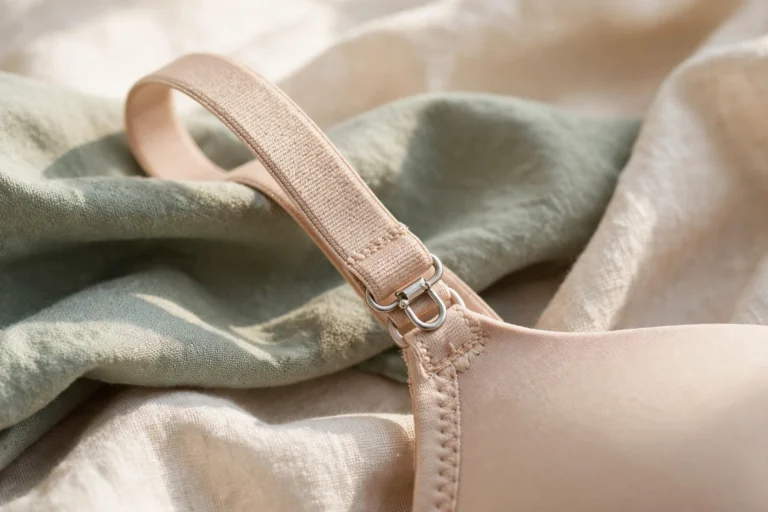
Strap placement and length are set for an average shoulder width: narrower shoulders let wide-set straps slide off, broader shoulders pull close-set straps toward the neck. Cup height and wire length follow torso length: a full-coverage cup can gape at the top on a petite frame, and a standard wire can poke at the underarm on a short torso. None of this changes your size. It changes which cut of your size to try. When a bra fails in the same place across two or three styles in your size, stop changing sizes and start changing the cut. Our US bra size chart gives you the starting size.
A Bra for Petite Frame: Shorter Bands, Closer Straps
A petite frame is usually described by height, often under 5 feet 4 inches, but in bra fitting it is really about proportion: a smaller ribcage, a shorter torso, and narrower shoulders. The Little Bra Company makes the point directly: its proportions are based on a petite frame, and petite in intimate apparel does not necessarily mean 5 feet 4 inches and under, because taller customers with a smaller ribcage or bust frame can also find a better fit in petite proportions.
What usually goes wrong: everything feels slightly too big all over, even in the right size. Straps slide off because they are set too wide and run too long. The band wraps too far around and the wings sit too high at the underarm. Full-coverage cups reach too high and gape at the top, which looks like a cup problem but is a height problem.
What to look for: petite-specific lines, which scale the whole bra down rather than just shrinking the size label. Look for straps set closer together, a shorter wing height, a narrower centre gore, and a shorter cup. Demi and balconette cups often suit a petite frame better, because their shorter cups follow a shorter torso. A petite bra is not the same as a small cup size. A petite frame can carry any cup size; the point is the frame, not the bust. Shorten the straps fully before you judge a bra: if they are already at their shortest and still slide, the placement is wrong. Verdict: shop the frame, not the height label.
Tall Frame and Long Torso
A tall frame, or a long torso at any height, shifts the whole bra downward relative to where the pattern expects it to sit. The cups can feel too short, the band can sit higher than it should, and the straps can run out of length. The classic sign is a bra that fits in the shop and feels wrong by midday: the band creeps up at the back, or the cups sit lower than they should.
What to look for: styles with a longer strap adjustment range, which usually means longer slider travel rather than a different strap. Full-coverage cups are often a better starting point on a long torso, because their taller cups match the longer shoulder to underbust distance. A band with three or four hook rows gives more room to adjust as the band relaxes. Do not size up in the band to gain strap length. A bigger band will ride up, and the straps will still run out of travel. Verdict: buy strap length and cup height, not a bigger band.
Narrow Shoulders
Narrow shoulders are one of the most common reasons straps slip, and they are often misread as a size problem. If your shoulders slope downward from your neck, the effect is the same: less flat surface for a strap to sit on, so a wide-set strap slides outward and off. Tightening the straps does not fix it, because a tighter strap on a sloping shoulder just slides faster. Wacoal lists wide-set straps as a direct cause: straps set too far apart slide off more readily on smaller shoulders, especially when you move.
What to look for: centre-pull straps, which sit closer to the middle of the back and neck and stay on narrow shoulders. Racerback and convertible styles work the same way, pulling the straps together across the upper back to remove the outward slide. HoneyLove describes the mechanism: racerback straps converge between the shoulder blades, which prevents slipping and spreads weight more evenly across the shoulders and back. Check the band first. If the band rides up as well, the size is part of the problem. Verdict: bring the straps inward, either by the cut or by a clip, and do not tighten your way out of a placement problem.
Broad Shoulders
Broad shoulders change bra fit in the opposite direction from narrow shoulders: the straps sit too close together for the width they have to cover, so they pull toward the neck or dig at the inner shoulder. The band can also feel tight across the back even when the size is right. On a broad frame, a narrow band with thin straps concentrates pressure in a small area, so discomfort shows up even when the size is correct.
What to look for: wider straps, set further apart, and a band with firm, wide wings that spread the load across the back. Wider straps are not just a comfort feature: in a laboratory study of 23 active women with D+ cup sizes, straps about 4.5 cm wide caused less discomfort than standard-width straps (Coltman, McGhee and Steele, Sports Medicine Open, 2015). That study tested sports bras, so treat it as a pointer, not a promise for everyday bras. Do not size up in the band to relieve strap pressure. A bigger band will ride up and hand the work back to the straps. Verdict: widen the load path and let the band carry the weight.
Short Torso
A short torso is the frame where cup height and wing height cause the most trouble. The distance from shoulder to underbust is shorter than the pattern expects, so the wing digs at the underarm or folds at the waist, the wire can poke because a standard-length wire is too long for a short side seam, and full-coverage cups can reach toward the collarbone and gape at the top.
What to look for: a shorter wing height, a shorter wire, and a demi or balconette cup. Soft, unlined cups can also work well, because the fabric follows the body. Check the side seam: the wire should end before the underarm crease, and the band should sit flat. A short torso is not the same as a petite frame, although the two often travel together. A tall person can have a short torso with long legs, and the bra advice follows the torso, not the height. Verdict: shorten the bra, not the size.
Athletic Build
An athletic build usually means broad shoulders, a wider back, and a firmer ribcage, often with less soft tissue at the band. The band can feel loose around a firm ribcage even in the right size, because there is less soft tissue for the elastic to grip, and the bra can shift during movement.
What to look for: a firm band with wide wings and a racerback or cross-back strap arrangement. Adjustable straps matter more on an athletic build, and a band with more hook rows gives finer adjustment as the band relaxes. Fit the band to the ribcage, not to the shoulders. If the band is right and the straps still move, the strap placement is the fix, not a smaller band. Verdict: anchor the band across the back and let the straps follow, not lead.
Plus-Size Frame: A Fit-Check Pointer
A plus-size frame brings its own fit rules, and they deserve a full guide rather than a paragraph. The short version: support at larger bands comes from the band, not the straps, so wide wings, hook rows that increase with size, and structured cups matter more as the band number rises. Our guide to plus-size bras that actually support covers the full picture. A plus-size frame can also be petite, tall, narrow-shouldered or broad-shouldered, so read both guides together.
Small Bust: A Fit-Check Pointer
A small bust on any frame has one common complaint: cups that gape at the top. The fix is usually a shorter cup, such as a demi or balconette, rather than a smaller size. This is a pointer only: the full small-bust guide is a future article. If the cups fit and only the top edge gaps, try the same size in a shorter cup before you change size.
The Try-On Check That Works for Every Frame
Use this check in the fitting room, in order, whatever your frame. It follows our guide to signs your bra does not fit, shortened to the frame points.
| Check | What right looks like | If it fails |
|---|---|---|
| Band level | Level all the way round, snug on the loosest hook | Riding up means too loose |
| Wing height | Sits flat at the side without digging or folding | Digging means the wing is too tall for your torso |
| Strap placement | Stays on the shoulder without sliding or pulling | Slipping means straps too wide; pulling means too narrow |
| Strap length | Cups lifted with adjustment room left | At full extension and still low means straps too short |
| Cup height | Top edge follows the bust without gaping | Gaping at the top often means the cup is too tall |
| Wire length | Ends before the underarm crease | Poking means the wire is too long for your frame |
| Movement | Band and cups stay put when you raise your arms | Shifting means the band is not anchoring |
Change one thing at a time. Change the band or the cup or the cut, try the bra for a full day, and only then change the next thing. Judge the fit at the end of the day, not in the shop mirror: a band that is borderline loose in the morning will ride up by evening.
Frame, Shape and Size: How the Three Fit Together
Frame, breast shape and size are three different questions, and mixing them up is the most common reason a bra search stalls. Size is a measurement: band plus cup volume. Frame is proportion: torso length, shoulder width, ribcage. Breast shape is where volume sits and how far it projects. Start with size, using our US bra size chart. Then use your frame to choose the cut and your breast shape to choose the cup style, using our breast shape and bra fit guide. If a bra fails in the same place in two sizes, the problem is probably frame or shape, not size. Our bra glossary defines the construction terms used here.
Common questions
Can I be more than one frame type at once?
Yes, and most people are: a petite frame with broad shoulders, or a long torso with narrow shoulders. Use the section that matches the problem: slipping straps point to narrow shoulders, a digging wing to short torso, and a riding band to the band checks first. The labels are a shortlist, not a diagnosis.
Does my frame change my bra size?
No. Size is a measurement: band plus cup volume. Frame changes which cut of that size fits you. Two people in 34C can need different bras, one petite and one tall, but both are still 34C. Do not change your size to fix a frame problem. Change the cut, the strap placement or the cup height first.
What if no bra seems to fit my frame?
Try a different cut before a different size, and check our breast shape and bra fit guide. If every style in your measured size fails the same way, recheck your size against our US bra size chart before buying more bras in the old size. A professional fitting can also help: bring the tops you wear most and say what feels wrong.
Key Takeaways
Size is a measurement. Frame is proportion. Start with your measured size, then shop the cut.
A bra for petite frame proportions needs shorter bands and closer straps; petite is about ribcage and torso, not only height.
Torso length sets cup height and strap length. Long torsos need longer straps and taller cups; short torsos need shorter wings, wires and cups.
Shoulders set strap placement. Narrow shoulders need centre-pull or racerback straps; broad shoulders need wider straps set further apart.
The band does the holding. If the band rides up, fix the band first.
Change one thing at a time, and judge the fit at the end of the day.