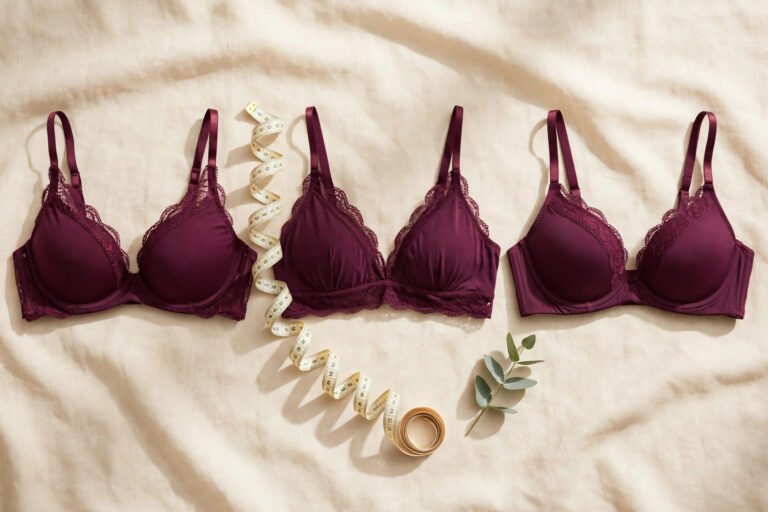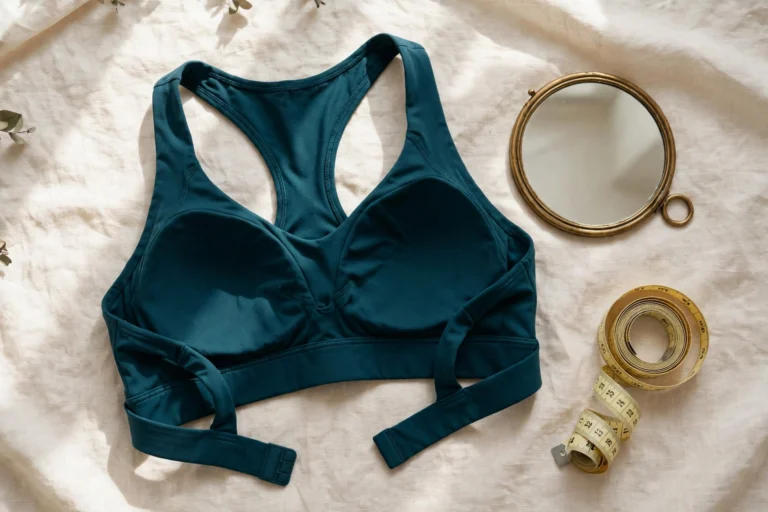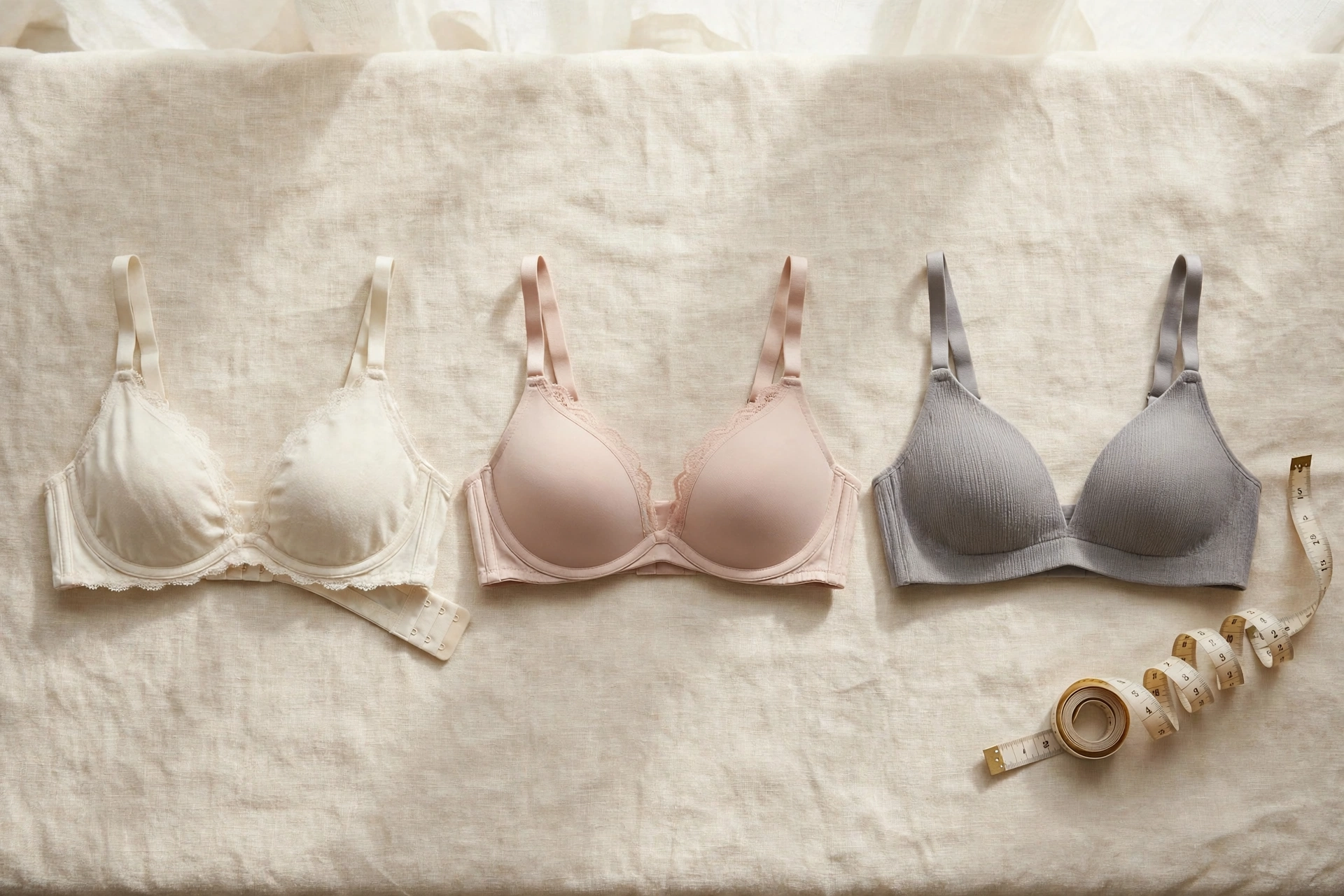
Bra terms explained in plain words: a bra size is a band number plus a cup letter, a style name tells you how the cups are cut, and a construction term tells you how the bra is built. Once you know those three groups, a product page stops reading like a code. This guide defines 25 terms.
Look up the word on the tag in front of you, read its practical line, and move on. If you need a starting size, use our guide to how to calculate your proper bra size or the bra size calculator. This article defines terms only. It does not teach a measuring method.
Bra Terms Explained: Sizing Terms
Sizing terms describe the number and the letter on the tag.
Band size
The band size is the number in a bra size, such as 32, 34 or 38. It is the fit around your ribcage, just under your bust, and it does most of the support work.
What it means when you shop: if the band rides up at the back, the band is usually too loose. Our US bra size chart shows how the two combine.
Cup size
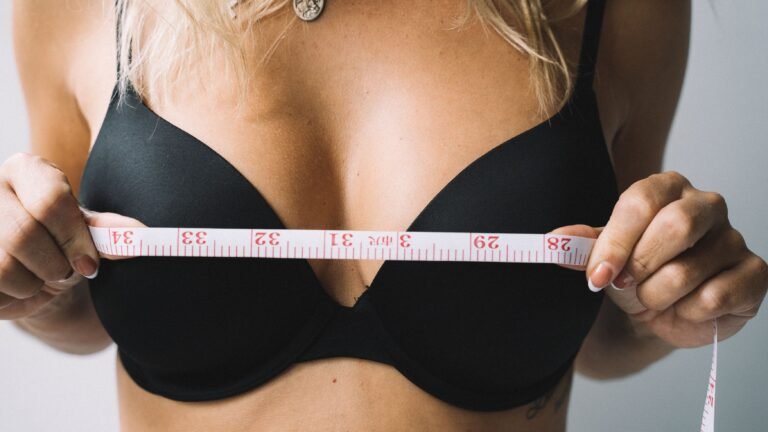
The cup size is the letter in a bra size, such as B, C or D. It stands for the volume of the cup, the amount of breast tissue the cup is made to hold. The letter reflects the difference between the bust and underbust measurements, so it describes a relationship rather than a fixed amount.
What it means when you shop: if the cups gape, the cup may be too large; if tissue spills, it may be too small.
Sister size
A sister size is a different band and cup combination that holds roughly the same cup volume. 34C, 32D and 36B are sister sizes: the band changes by one step and the cup letter moves one step the other way, so the volume stays about the same.
What it means when you shop: if the cups fit and the band feels tight, try one band up and one cup down, or the reverse. Our sister sizes explained guide works through the rule.
Alpha sizing
Alpha sizing is the letter-only system used for many bralettes, sports bras and soft bras: XS, S, M, L, XL and beyond, sometimes with plus sizes such as 1X and 2X. One letter covers a range of band and cup combinations, so alpha sizes feel simpler but fit less precisely than band and cup sizes.
What it means when you shop: use alpha sizing for comfort-first bras, and band and cup sizing when you need a precise fit. Our alpha sizes vs bra sizes guide shows how the two systems line up.
Cup letter sequence (DD, DDD, E, F and beyond)
The cup letter sequence is the order of cup letters after D in the US system: DD, then DDD, then G, then H, and so on. Some brands use single letters instead, so a US DD may be labelled E and a US DDD may be labelled F.
What it means when you shop: read the cup letters on the brand’s own chart before you order above a D cup. Our guide to what is the biggest bra size explains how far the US sequence runs.
Cup letter is relative
A cup letter is relative, which means the same letter holds a different volume on different bands. A C cup on a 32 band is not the same volume as a C cup on a 38 band: the 38C cup is larger, because the cup is scaled to the wider band. ThirdLove makes the same point, showing that a 34B shares its volume with a 30D, a 32C and a 36A.
What it means when you shop: never buy by cup letter alone. Compare full sizes, band and letter together, and try the sister sizes around your usual size.
How a Bra Is Built
Construction terms describe the parts of a bra and how they are made.
Underwire
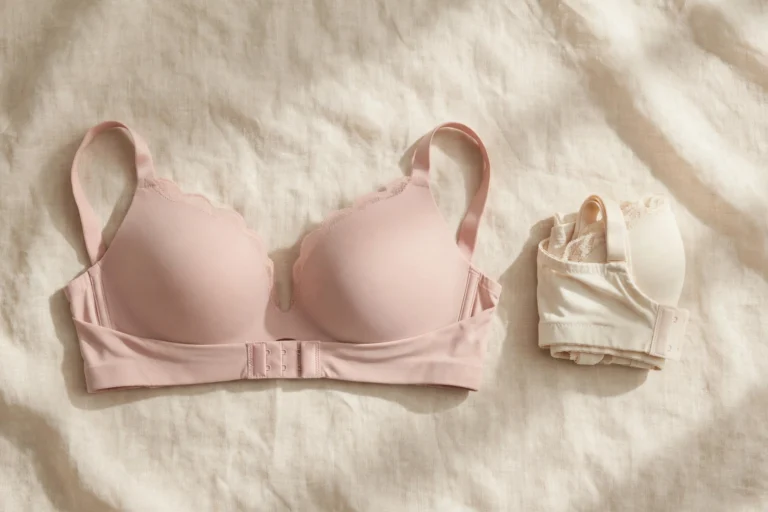
An underwire is a thin, curved wire sewn into a channel under each cup, usually made of metal or a firm flexible plastic. It shapes the cup, separates the breasts, and helps the band carry support.
What it means when you shop: if the wire digs in or pokes, the size or the shape is usually wrong, not the wire itself. Try a different cup size or shape before giving up on underwire.
Wirefree
Wirefree, also written wireless, means a bra built without underwires. The bra supports through the band, the cups, the fabric and sometimes a wide underband or side panels instead. Wirefree bras suit long days and lounging, and modern designs can support a wide range of sizes.
What it means when you shop: if underwires bother you, try a structured wirefree bra in your band and cup size before dropping to a bralette. The band still needs to fit snugly for the bra to work.
Center gore
The center gore, often just called the gore, is the small panel of fabric between the two cups at the front center of the bra. On an underwire bra it sits flat against the sternum and anchors the two cups apart.
What it means when you shop: check the gore after you fasten the bra. If it floats, the cups are usually too small. Our guide to signs your bra does not fit lists the gore check with the other fit checks.
Wing
The wing is the side part of the band, running from the outer edge of each cup around to the back closure. Its height and width affect how smooth the bra looks under clothes.
What it means when you shop: if the band cuts in at the sides, look for a style with a taller wing rather than a larger band. The wing is often the difference between two bras in the same size.
Hook and eye
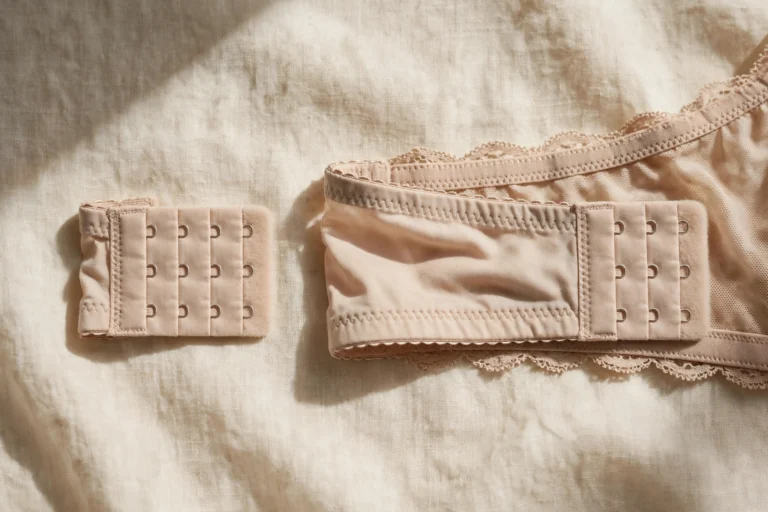
The hook and eye is the fastener at the back of most band and cup bras: small metal hooks on one side catch onto loops of fabric, called eyes, on the other. Most bras have two or three rows of eyes, so you can tighten the band as the elastic relaxes over time.
What it means when you shop: always try a new bra on the loosest hook; if that already feels tight, the band is too small. Our bra hook and eye settings guide explains which row to use, and a bra band extender can add a little length.
Molded cup
A molded cup is made from a single piece of material shaped on a mold, so it holds its rounded shape even when the bra is not being worn. Molded cups have no seams across the cup, which makes them smooth under t-shirts and thin tops, and they are usually lightly lined or padded.
What it means when you shop: choose a molded cup when you want a smooth, invisible outline under clothes. If it gaps at the top, the shape is usually wrong, so try a seamed cup instead.
Seamed cup
A seamed cup is made from two or more pieces of fabric stitched together, with the seams shaping the cup. The seams let the maker build lift, rounding and separation into the cup, and seamed cups are common in fuller sizes and in unlined bras.
What it means when you shop: if molded cups gape or feel like the wrong shape, try a seamed cup in the same size. It is the construction most fitters reach for when the shape, not the size, is the problem.
Padding
Padding is extra material inside the cup, usually foam or fiberfill, added for shape, modesty or lift. Light padding smooths the outline, while thicker padding at the bottom and sides creates a push-up effect.
What it means when you shop: decide how much padding you want before you choose a size. Padding takes up room inside the cup, so a heavily padded bra can feel a cup size smaller than the same style unpadded.
Bra Styles
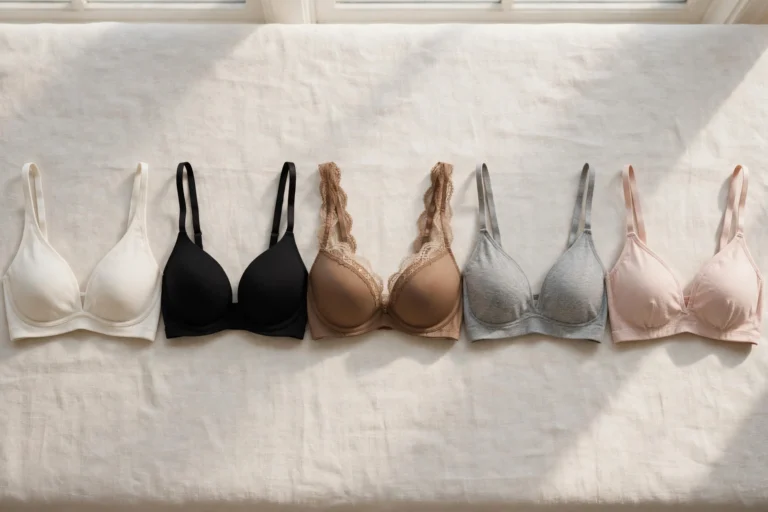
Style terms describe the shape of the cups and the neckline the bra is made for. The style decides the coverage, the strap placement, and which tops the bra works under. Our guide to types of bras gives the wider picture.
Balconette
A balconette is a bra with cups cut straight across the top, creating a wide, open neckline and a lifted, rounded shape. The wide-set straps suit wide and square necklines.
What it means when you shop: pick a balconette for wide necklines and a lifted shape under tops that show the upper chest. If the straps slip, the band may be too loose rather than the straps being too wide.
Plunge
A plunge bra has a deep V shape between the cups, with a very low center gore, made to disappear under low cut and plunging necklines. The cups angle inward, bringing the breasts together for tops with a deep front opening.
What it means when you shop: buy a plunge for the neckline it serves, not as an everyday default. Check that the low gore still lets the cups contain you fully before you trust it under a low top.
Demi cup
A demi cup, from the French word for half, is a cup that covers roughly half to three quarters of the breast. It sits lower than a full coverage cup, giving a natural lift and a little cleavage.
What it means when you shop: try a demi when a full cup feels like too much coverage and a plunge feels like too little. Judge it by where the top edge sits on you, not by the name on the label.
Full coverage
A full coverage bra, also called a full cup bra, covers most of the breast with a higher top edge and a taller cup. It is the most containing everyday style, and it is the usual recommendation above a D cup, where coverage and support matter most.
What it means when you shop: choose full coverage when you want containment and a secure fit above all else, especially in larger cup sizes. It is the safest starting style if you are unsure what suits you.
T-shirt bra
A t-shirt bra is a smooth, seamless bra made to disappear under thin and close fitting tops. The cups are usually molded or lightly lined, with no seams, lace or texture that could show through fabric.
What it means when you shop: own one smooth t-shirt bra for thin tops, and check it under the actual top, in daylight, before you trust it.
Bralette
A bralette is a soft, lightweight bra, usually without underwires and often without padding, made for comfort rather than shaping. Bralettes are usually sized by letter, such as S or M, and many pull on over the head.
What it means when you shop: buy a bralette for comfort and easy days, and check the brand size chart, since letter sizing varies widely. Our guides to bralettes for tweens and to the training bra vs bralette vs sports bra choice explain where a bralette fits and where it does not.
Training bra
A training bra is a first bra for a girl who is starting breast development, made to be comfortable, light and easy to wear while she gets used to wearing a bra. Training bras are usually soft, wirefree and lightly lined or unlined, sized by letter or by the maker’s own youth sizing rather than by band and cup.
What it means when you shop: choose soft, comfortable styles and let the wearer lead on fit and feel. Our training bra size chart explains the sizing used at this stage, and our guide to how to buy first bra for tween covers the shopping trip itself.
Minimizer
A minimizer is a bra made to make the bustline look smaller by redistributing breast tissue across the chest rather than by compressing it flat. The cups are usually full coverage, giving a smoother, less projecting outline under clothes. Lace Silhouettes notes that Wacoal minimizers reduce the bustline by up to about one inch on average.
What it means when you shop: try a minimizer when fitted tops or buttoned shirts gap or pull, and judge it under the top that caused the problem. A minimizer changes how the bust looks under clothes; it does not change your size.
Push-up
A push-up bra has extra padding at the bottom and sides of the cups, which lifts the breasts and pushes them toward the center to create cleavage. The amount of lift varies from a gentle boost to a dramatic effect.
What it means when you shop: buy a push-up for the look you want under a particular outfit, and try it under that outfit before you decide. If it feels tight, try a cup larger rather than giving up on the style.
Strapless
A strapless bra is a bra made to be worn without straps, with a wider band and usually silicone grip strips inside the band to keep it from slipping. Most strapless bras come with removable straps, so the same bra can be worn strapless, halter, one shoulder or crossed at the back.
What it means when you shop: buy a strapless bra in a snug band, and test it by raising your arms. If it slides down, try a smaller band with a larger cup, the sister size down.
Convertible
A convertible bra has straps that detach and move, so one bra can be worn in several ways: standard, crossed at the back, halter, one shoulder or strapless. The straps unhook and reattach to different loops, and some include a J-hook that clips them together at the back.
What it means when you shop: try each strap arrangement you plan to use before you buy, not just the standard one. A convertible that only works in one position is not doing its job.
Terms That Have Their Own Guides
Some bra words lead to whole topics of their own, covered in depth in separate Stellaleah guides rather than in one line here. Sports bra construction has its own vocabulary: our guide to compression vs encapsulation sports bras explains the two ways a sports bra supports. Back styles have their own terms too, covered in our guide to sports bra back types. Breast shape changes which cup to try first, covered in our breast shape and bra fit guide. And sizing across countries has its own naming traps, covered in our UK US EU bra size conversion guide.
Follow the link and read that guide next. The definitions above still apply there.
Frequently Asked Questions
What is the most important bra term to know?
The band size matters most, because the band does most of the support work. A snug, level band on the loosest hook is the foundation every other term builds on. If the band is wrong, no cup letter or style name will fix the fit.
Does a bigger cup letter always mean a bigger bra?
No. A cup letter only has meaning on a given band, so a 32D and a 38D hold very different volumes. Compare full sizes, band plus cup, and use sister sizes when you move between bands. The letter alone is not a size.
What is the difference between a bralette and a training bra?
A bralette is a soft, unstructured bra for comfort at any age, while a training bra is a first bra for a girl starting breast development. The difference is who it is for and why, not just how it looks. Both are usually wirefree and letter sized, which is why shoppers mix them up.
Which style should I try first if I do not know my shape?
Start with a full coverage bra in your usual size, then try a seamed cup if the molded cup gaps. Full coverage is the most forgiving starting point, and a seamed cup follows your shape better than a molded one. Once that baseline fits, branch out to balconette, demi or plunge for different necklines.
Your Next Step
Pick the term that confused you most and check it on the bra you are wearing now. Look at the band, the gore and the top edge of the cup, and see which of the 25 words describes what you are seeing. Then use the linked guides for the topic you need next.
Bra shopping gets easier the moment the words stop being a code.