The question parents ask is practical: how do you go about teaching daughter about bra care without turning it into a lecture she tunes out? The short answer is that you teach the habit, not the rulebook. Show her once, do it together a few times, and then hand her one small job at a time. A bra that is washed gently, dried flat and stored properly lasts longer and fits better for longer, and the habits she learns now are the ones she will use for years.
This guide is written for parents, in plain language you can pass on in your own words. It covers washing, drying, storage and knowing when a bra is done, in age-appropriate language and without pressure. The wash method itself lives in our sports bra care guide, which is linked here instead of re-taught. There is no measuring method and no measuring link anywhere in this article.
Teaching Daughter About Bra Care: The Short Answer
Teach three habits, not ten rules. Wash gently, dry flat, and store with the cups kept in shape. Those three habits cover almost everything, and a daughter who remembers three things will do better than one who was told ten and remembers none.
Show, do not tell. Wash one bra together at the sink, fold one drawer together, and let her do the next one while you watch. A five-minute demonstration beats a ten-minute explanation, and it avoids the lecture tone that makes a tween stop listening.
Hand over one job at a time. Start with putting her bras in the mesh bag. Then add hanging them to dry. Then add checking the cups before they go in the drawer. Each small job she owns is a habit that sticks.
Why Bra Care Is Worth Teaching
A first bra is often the first garment a daughter owns that needs real care. T-shirts survive the washing machine without a thought. A bra does not. The band is elastic, the cups hold a shape, and the hooks catch on everything. Treat it like a T-shirt and it loses its shape, its elastic gives up, and it stops doing its job long before it is outgrown.
Teaching care is also teaching respect for her own things. A daughter who knows how to look after a bra knows how to look after the next delicate thing she owns. It is a life skill dressed up as laundry, and it costs nothing to teach.
Start the conversation when the first bra arrives. The first bra is the natural moment. She is learning how to wear one, so learning how to care for one fits the same conversation. If the first bra is already months old, the next laundry day is just as good a moment. There is no deadline here, and no pressure.
Lesson One: Washing
Washing is the lesson that matters most, because it is where most damage happens. Keep it simple: gentle water, gentle soap, no wringing.
Hand washing is the best method, and it is easy to teach. Triumph recommends hand washing whenever possible, and its care expert puts it plainly: bras are delicate, and hand washing is the best way to preserve them. Fill a basin or a clean sink with cool or lukewarm water, add a small amount of gentle detergent, and let the bra soak for a few minutes. Squeeze the water through the fabric gently, rinse in clean cool water, and press the water out. That is the whole method, and a daughter can learn it in one demonstration.
Machine washing is the backup, not the default. If hand washing is not realistic every time, the machine can do the job with protection. Fasten the hooks first, so they do not catch on other clothes. Put the bra in a mesh laundry bag. Use a gentle or delicates cycle with cool water. Freya gives the same guidance: fasten the hooks, use a mesh bag, and keep the cycle gentle and cool. The mesh bag is the single most useful purchase in this whole guide, and it is worth buying before the first wash.
How often to wash. An everyday bra does not need washing after every wear. Triumph recommends washing after every 3 to 4 wears, and Freya says every 2 to 3 wears. Either way, the lesson is the same: a bra gets a few wears between washes, unless it is sweaty or soiled. A sports bra is different, and it is washed after every wear. Our sports bra care guide covers the sports side in full.
What not to use. No bleach, and no fabric softener. Bleach damages delicate fabrics and can change colours, and softener coats the elastic and stops it springing back. A gentle detergent is all a bra needs. Teach her to read the care label on each bra, because the label is the final word for that garment.
Removable pads come out first. Many first bras have removable foam pads, and they need separate care. Triumph recommends removing removable padding before washing, because the foam is delicate and can distort when left in the cup during a machine wash. Take the pads out, wash them separately, and put them back only once everything is dry. A small zip pouch in the drawer keeps each pair with its own bra.
Lesson Two: Drying
Drying is where good washing is undone. The rule is short: air dry, never tumble dry, and never wring.
Air dry every time. Heat from a tumble dryer damages elastic and fibres, and it shortens the life of a bra. Triumph is direct about this: never use a tumble dryer, because excessive heat damages the elastic and fibres. Lay the bra flat on a clean towel, or hang it folded over a line by the centre front so one half hangs on each side. Freya gives the same advice, and adds a detail worth teaching: never hang a bra by its straps or its band, because the weight stretches them out of shape.
Press, do not wring. After rinsing, press the water out gently between your hands or between two towels. Never twist or wring a bra, because twisting distorts the cups and strains the elastic. This is the easiest habit to teach, because it is a single physical action she can copy.
Reshape the cups while they are damp. While the bra is still damp, smooth each cup back into its proper shape with your hands. A cup that dries folded stays folded, and a pad that dries creased stays creased. This takes ten seconds and it is the difference between a bra that looks right and one that does not.
Lesson Three: Storage
Storage is the quiet lesson, and it is the one that saves the most bras. A bra stored badly loses its shape in the drawer, not in the wash.
Give bras their own drawer space. A dedicated spot, even a small one, stops bras being crushed under heavier clothes. A drawer divider or a small box works well. The point is that bras are not stuffed in with jeans and jumpers.
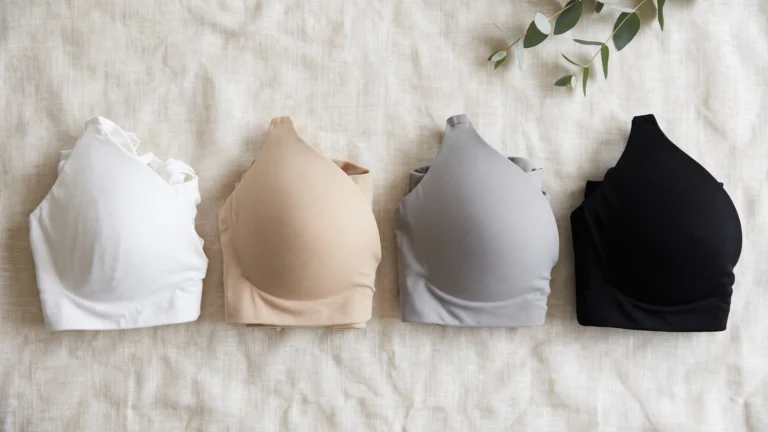
Keep the cups in shape. This is the one detail where manufacturers disagree, so teach the safe version. Freya says never to invert a moulded cup, because it leads to misshaping, and recommends stacking bras to keep the cup shape. Triumph recommends stacking bras with one cup inside the other. The safe rule that respects both is simple: lay bras flat, cups facing the same way, stacked one on top of the other, and never fold a cup inside out or force one cup into the other. If a cup resists, it is telling you it does not want to be folded.
Hook the clasps before storing. Fasten the hooks before a bra goes in the drawer, so they do not catch on other fabrics. This is a ten-second habit that prevents snags and pulls, and it is easy to make part of putting laundry away.
Lesson Four: Rotation and Rest
A bra needs a rest day. Elastic stretches during wear and needs time to spring back, and a bra worn two days running never gets that time.
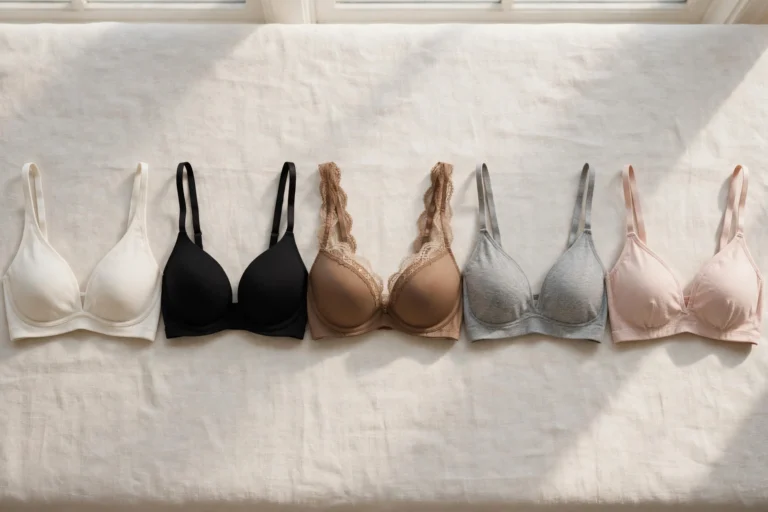
Rotate three to five bras. The count from our guide to how many bras a tween needs is three to five in a weekly lineup, and the reason is rotation, not collection. Three in rotation give each one a rest day between wears and cover a weekly wash. Teach her the order: wear one, rest one, wash one.
Give each bra a day off. Felina advises giving each bra at least a 24-hour rest between wears, so the fibres can return to their shape. A daughter who rotates her bras will notice the difference herself: a rested bra feels firmer and sits better than one worn two days running. Let her discover that, rather than telling her.
Lesson Five: Knowing When a Bra Is Done
A bra does not last forever, and knowing when to let one go is part of caring for the ones that remain. Teach her the signs, not a calendar date.
The signs are the same ones she already knows from wearing it. A band that feels tight or rides up, cups that no longer sit smoothly, straps that slip no matter how they are adjusted, or elastic that no longer springs back. When a bra shows one of these signs, it is time for a replacement, not a repair. Our bra shopping checklist for parents covers the next shopping trip, and our guide to how to buy the first bra for a tween covers the fitting room itself.
Let her be the one who notices. Ask her how a bra feels, rather than telling her it is worn out. A daughter who checks her own bras will tell you when one stops fitting, and that is the habit that matters most. Replacement is driven by fit and wear, not by a date on the calendar, and not by anyone else’s timetable.
How to Teach It Without Pressure
The method matters as much as the content. A daughter who feels lectured stops listening, and a daughter who feels judged stops asking.
Keep it practical, not personal. Talk about the garment, not about her body. “This is how you wash a bra” lands better than any comment about why she needs one. Keep the language plain and the tone the same as teaching her to fold a shirt.
Let her make small mistakes. A pad washed in the machine, a bra hung by its straps, a cup folded the wrong way: these are small mistakes with small costs, and they teach better than a warning. Correct the method, not the person, and move on.
Do not make it a test. There is no need to quiz her on wash temperatures or check her drawer every week. The goal is a habit she keeps when nobody is watching, not a performance for a parent. If she forgets, show her again. If she does it differently, ask why before correcting her: she may have found a method that works.
Keep it private. Laundry is a private matter for many tweens. Teach her at home, not in front of siblings or visitors, and let her keep her own drawer. Privacy is part of the lesson, and it is part of the trust.
The Bottom Line for Parents
Teach three habits, show them once, and hand over one job at a time. Wash gently, dry flat, and store with the cups in shape. Rotate three to five bras so each one rests, wash everyday bras every 3 to 4 wears, and let her be the one who notices when a bra is done. The habits she learns now are the ones she will use for years, and they cost nothing but five minutes at the sink together.
Common questions
At what age should I teach my daughter bra care?
When the first bra arrives, whatever stage she is at. Care is taught alongside wearing, not on a timetable. If the first bra is already months old, the next laundry day is just as good a moment.
Should my daughter hand wash her bras, or can she use the machine?
Hand washing is the gentlest method and the easiest to teach. Machine washing works as a backup if the hooks are fastened, the bra goes in a mesh bag, and the cycle is gentle and cool. Either way, air dry, never tumble dry.
How do I teach her to store bras without damaging the cups?
Lay them flat, cups facing the same way, stacked one on top of the other, and never fold a cup inside out. Hook the clasps before they go in the drawer so they do not catch on other fabrics.
What if she does not want to learn bra care?
Do not force it. Keep doing it yourself for a while, let her watch, and hand her one small job, like putting bras in the mesh bag. A habit she chooses sticks better than a chore she resents.