
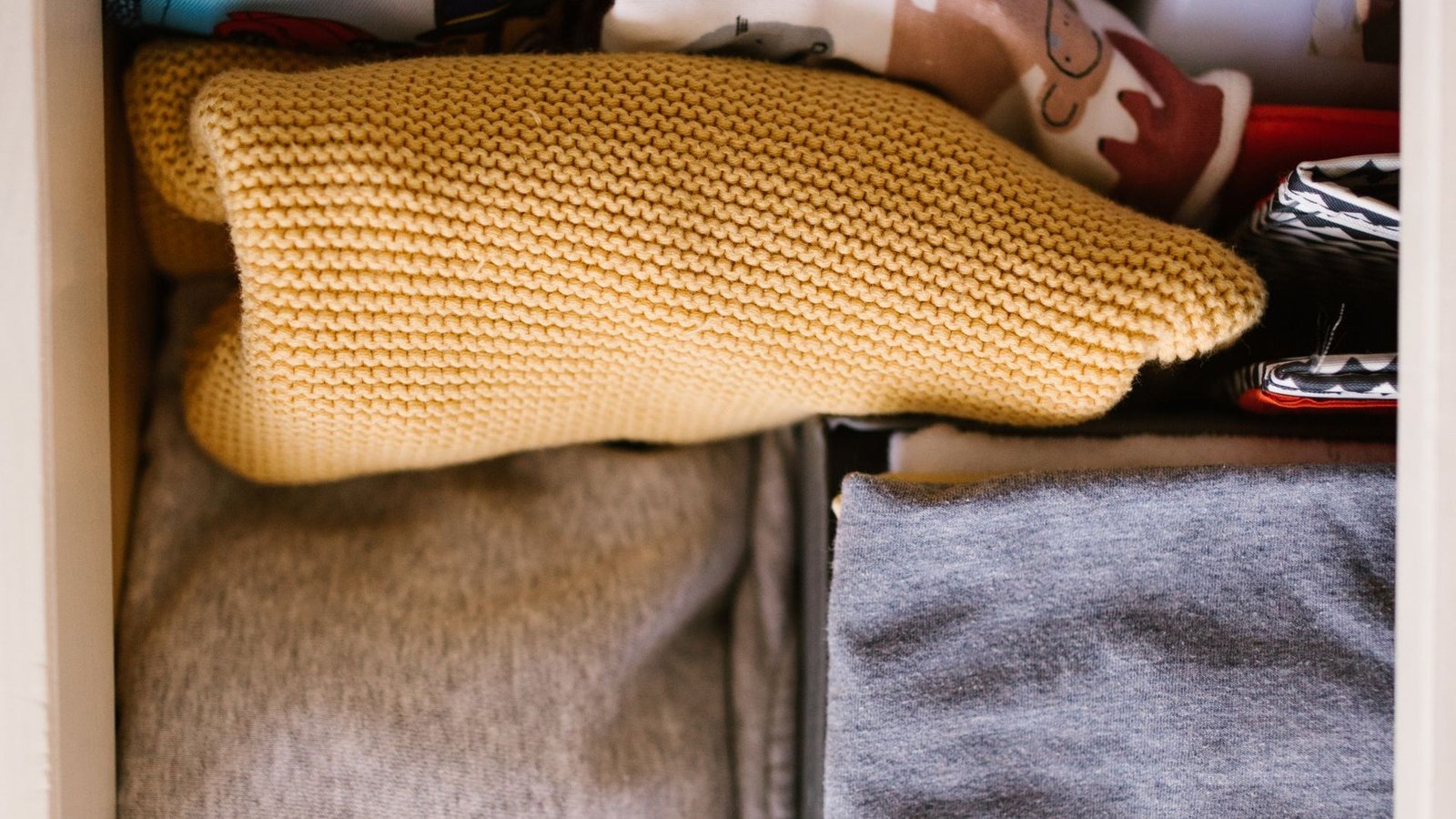
If you are wondering how many bras should I buy my daughter, start with three to five. Three is the working minimum for a school week, four is comfortable for most tweens, and five gives you a spare for laundry day and a sports bra on top. That count is not a rule from a study. No study sets a number for a tween’s bra drawer. It is editorial guidance built on rotation logic: a bra needs a day of rest between wears, it needs washing every few wears, and a growing tween outgrows bras faster than she wears them out.
How Many Bras Should I Buy My Daughter? The Short Answer
Buy three to five, and start at three if you are unsure. A first set of three covers the rotation: one to wear, one in the wash, one resting in the drawer. Four adds breathing room for a laundry day that slips, and five covers a sports bra as well. More than five at the start is usually money sitting in a drawer, because tweens grow, tastes change, and a style she loved in the shop can be the one she never reaches for at home. Start from her week, not from a number on a list.
Why Three to Five Is the Right Starting Point
The count comes from how bras wear. Elastic stretches while a bra is worn and recovers while it rests. Felina recommends rotating between 3 to 5 bras and giving each one at least a 24-hour rest between wears, because wearing the same bra day after day strains the elastic. With three in rotation, each one gets two days off. With two, each one is back on the next day, and the elastic never fully recovers. That is why two is not enough.
Washing sets the other half of the count. Felina puts everyday bras at every 3 to 4 wears, and sports bras after every wear. A tween who wears a bra five days a week and washes on the weekend needs at least three everyday bras to get through the week without rewearing a dirty one. Growth is the third reason to keep the set small: a bra that fits in September can be tight by spring. Three to five now, and one more when she needs it, beats a big drawer of bras she has already outgrown.
What the Starter Set Looks Like
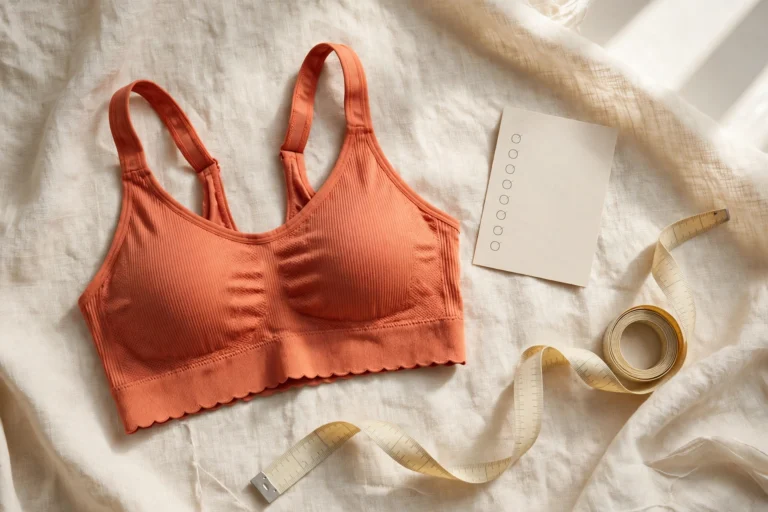
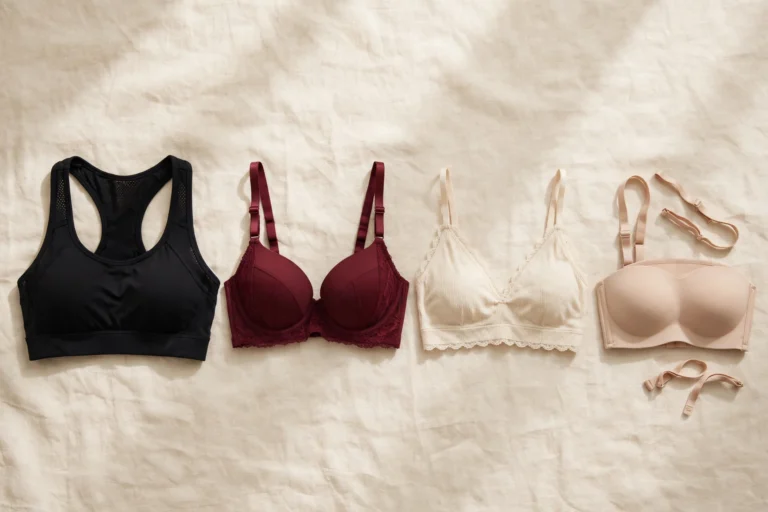
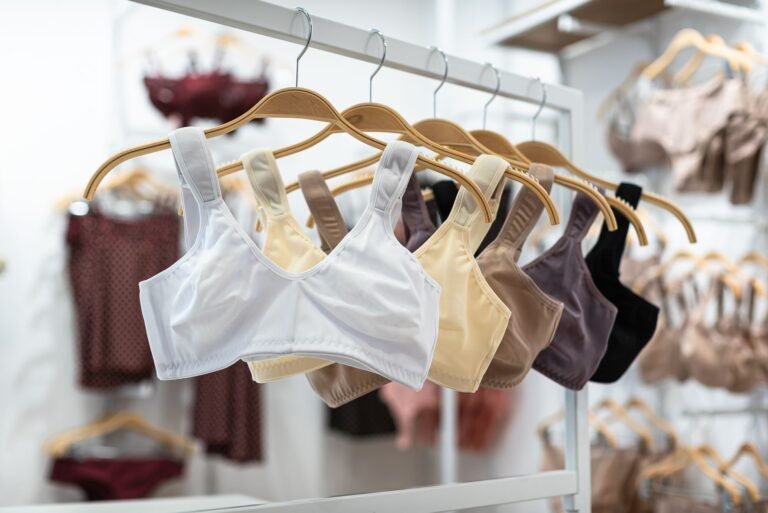
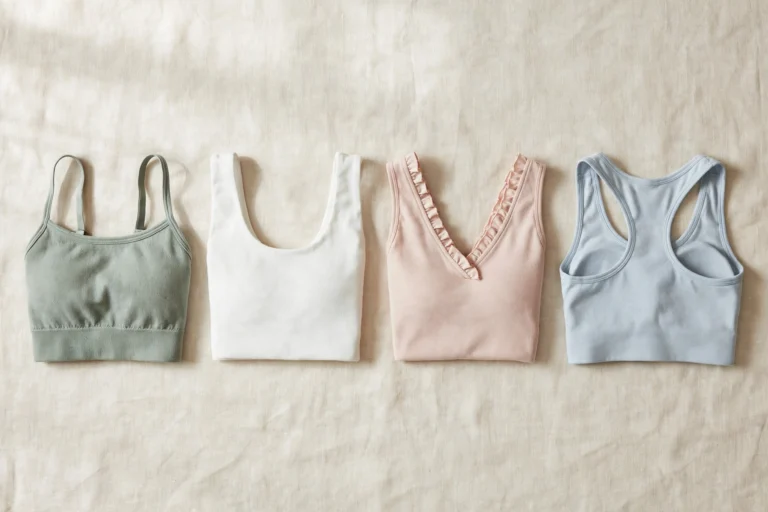
A practical starter set of four looks like this: two everyday bras, one sports bra, and one spare. The two everyday bras are the workhorses, and they should be the plainest, softest styles she likes, in colours that disappear under school clothes. White, nude and black cover most outfits. The sports bra is for PE, practice and any activity where she moves a lot. The spare covers laundry day, a spill, and the morning she cannot find her favourite.
If she does not play sport, swap the sports bra for a third everyday bra, and keep the spare. If she plays sport three or more days a week, she may need a second sports bra before she needs a fourth everyday bra, because a sports bra washed after every wear cannot be worn two days running. Count by use, not by type: one for school, one for sport, one resting, one spare.
The School, Sport and Everyday Split
School days set the everyday count. Most tweens wear a bra five days a week for school, so two everyday bras in rotation means each one is worn two or three times a week, washed every three to four wears, and rested a day between wears. That is why two everyday bras is the floor rather than the ceiling.
Sport sets the sports bra count. One sports bra covers a single weekly PE lesson or one practice a week, because it can be washed and dried before the next session. Two cover two or three sessions a week, since the first is still drying when the second is needed. Add a second sports bra when sport fills three or more days of her week, not before. Before that, the money is better spent on an everyday spare.
Outside school, the spare earns its place. Weekends, family outings and after-school clubs all draw on the same drawer, and a spare means she is never choosing between a dirty bra and no bra. If she wears a bra seven days a week rather than five, the spare becomes part of the rotation.
Laundry Day Math: Making the Count Work All Week
Take a normal week and walk it through the drawer. Monday she wears bra one, Tuesday bra two, and Wednesday bra three, or bra one again if the set is three and bra one has had its rest day. By the weekend, each bra has been worn about twice, which is inside the wash-every-three-to-four-wears guidance, and each has rested at least a day between wears.
The count fails only when washing slips by more than a week, and the fix then is a wash, not a fourth bra. Sports bras run on a tighter cycle: one worn for PE on Monday is washed Monday evening and dry by Wednesday, so it is ready for the next session. Three sessions a week, or two sessions on back-to-back days, is where a second sports bra becomes useful. Our sports bra care guide covers washing and drying for sports styles, which is the part of care that changes fastest when sport enters the week.
When to Add One, and When to Stop Buying
Add a bra when a clear reason appears, and the reasons fall into three groups. First, she has outgrown one. The band feels tight, the cups no longer contain comfortably, or the straps are at their longest and still short. Replace the outgrown bra rather than adding to the drawer: the count stays the same, and the drawer stays useful. Second, one has worn out. Elastic that no longer springs back, a band that rides up, or fabric that has gone thin means the bra has done its job. Replace it, and keep the count where it was. Third, her week has changed. She joins a team, PE moves to three days a week, or she starts wearing a bra every day instead of on school days only. A new activity that adds two or more wearing days is a reason to add one. A sale is not a reason, and a matching set is not one either: if the reason is not outgrown, worn out, or a busier week, the drawer is full.
What a Sensible Budget Looks Like
Budget follows the same logic as the count: spend on the bras she wears most, save on the ones she wears least. The two everyday bras deserve the largest share of the budget, because they are worn four or five days a week. A soft, well-made everyday bra that survives the wash is better value than two thin ones that lose their shape in a month. The spare can be a simpler style at a lower price, because it is worn once a week at most. The sports bra sits in the middle: it needs to hold up to sweat and frequent washing, so it is worth a little more than the spare.
Multipacks are the simplest way to keep the budget down. A pack of two or three everyday bras in plain colours is often cheaper per bra than buying them singly. Check the pack before you buy it: if two of the three colours are ones she will never wear, the saving is not a saving. A tween’s bra drawer is a rolling cost, because growth means a new set every year or so, so setting aside a small amount for one replacement bra each term keeps the drawer current without a big shop each time. Our bra shopping checklist for parents covers the budget and the shop visit together, so the first trip and the spending plan happen in one pass.
What Not to Buy Yet
The most common mistake is buying the whole wardrobe on the first trip. She has not lived in a bra yet, so she does not know which style she reaches for and which one stays in the drawer. Buy the starter set, wait a month, then buy the next one with knowledge instead of guesses. The second shop is always smarter than the first.
Do not buy ahead in the next size. It feels thrifty, but a bra bought a size up to grow into fits badly now, and a badly fitting bra is a bra she will not wear. Do not buy duplicates of an untried style, or special-occasion styles before she has asked for one. A strapless bra for a party dress is a purchase for a specific outfit on a specific day, not part of a starter set.
Let Her Choose the Details
The count is the parent’s decision. The details are hers. Colour, pattern, strap style, whether the bra is plain or has a small bow, these are the choices that make a starter set feel like hers rather than a uniform. A tween who chose her own bras is more likely to wear them and to tell you when one stops fitting.
That also means accepting a choice you would not have made. If she wants the pink one and you would have picked white, buy the pink one, and keep a white one in the set for school shirts that need it. Compromise is the whole skill here: her taste on the visible details, your judgement on the count, the fit and the budget. If she is embarrassed about shopping, our guide to how to buy the first bra for a tween works through the shop visit itself, including how to keep it low-key and let her lead.
The Bottom Line for Parents
Three to five bras, starting at three, is the right first set for most tweens and teens. Two everyday bras, one sports bra and one spare cover school, sport, laundry day and a growth spurt’s worth of change. Add one when she outgrows one, wears one out, or her week gets busier. Replace rather than accumulate, and let her choose the colours. The drawer does not need to be big. It needs to be the right bras, in rotation, washed on time, and replaced when they stop doing their job.
Common questions
Is three bras really enough for a tween?
Yes, for most school weeks. Three in rotation give each one a rest day between wears and cover a weekly wash. Add a fourth when laundry slips past a week, or when she wears a bra seven days a week instead of five.
How many sports bras does a tween need?
One covers a single weekly PE lesson or practice. Two cover two or three sessions a week, because a sports bra is washed after every wear and may still be drying when the next session starts.
Should I buy bras in a bigger size so she can grow into them?
No. A bra bought a size up fits badly now, and a badly fitting bra is one she will not wear. Buy the size that fits today, and buy the next size when she needs it.
How often should a tween’s bras be replaced?
Replace a bra when it is outgrown or worn out, not on a calendar: a band that feels tight or rides up, cups that no longer contain comfortably, or elastic that no longer springs back. For most tweens, that means a replacement every year or so, driven by growth rather than by wear.

One Comment