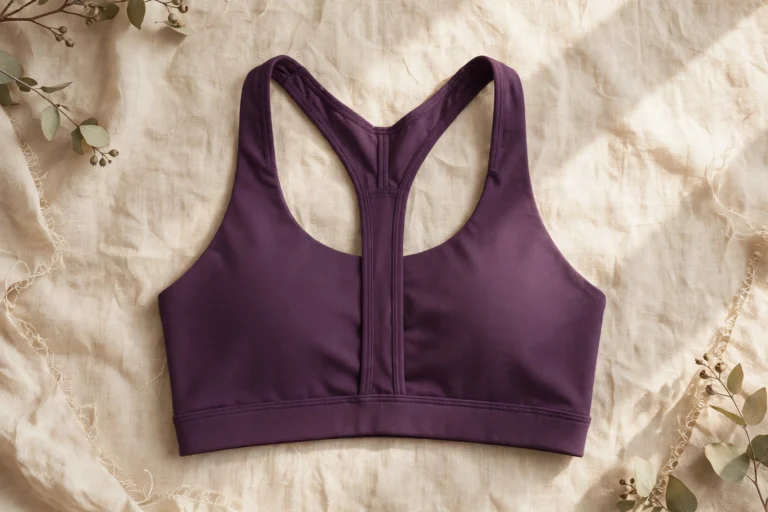
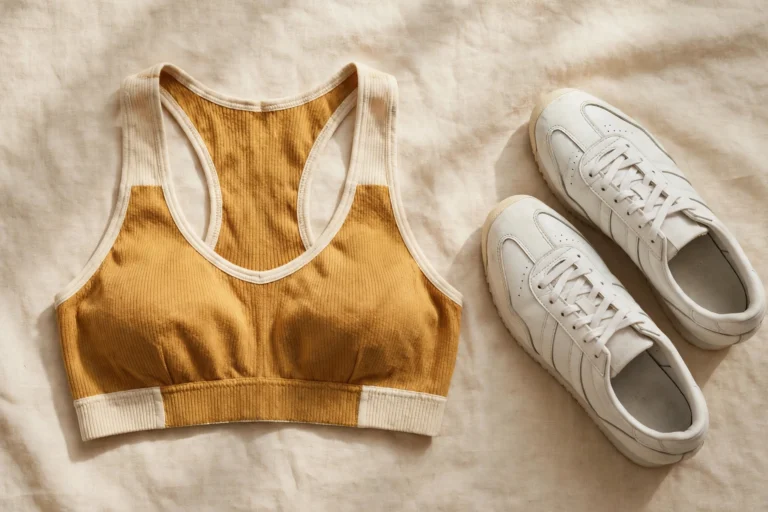
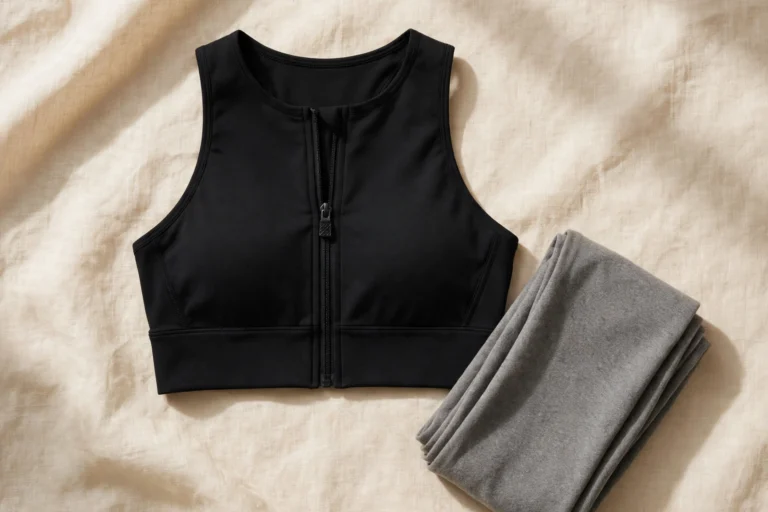
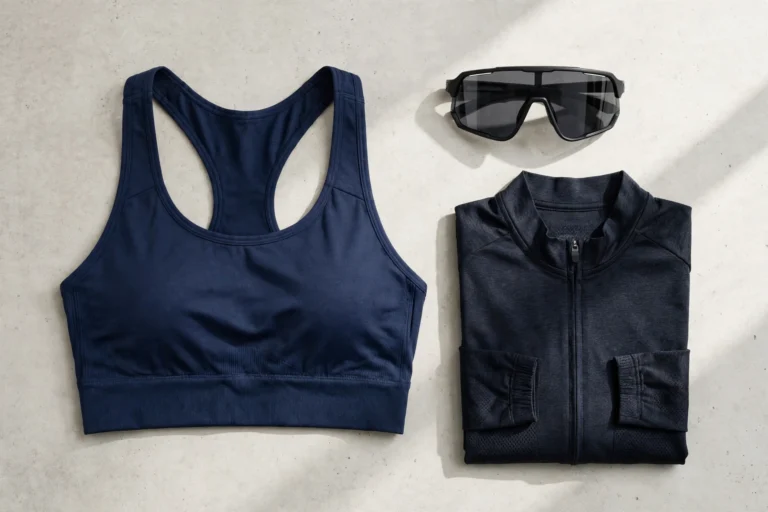
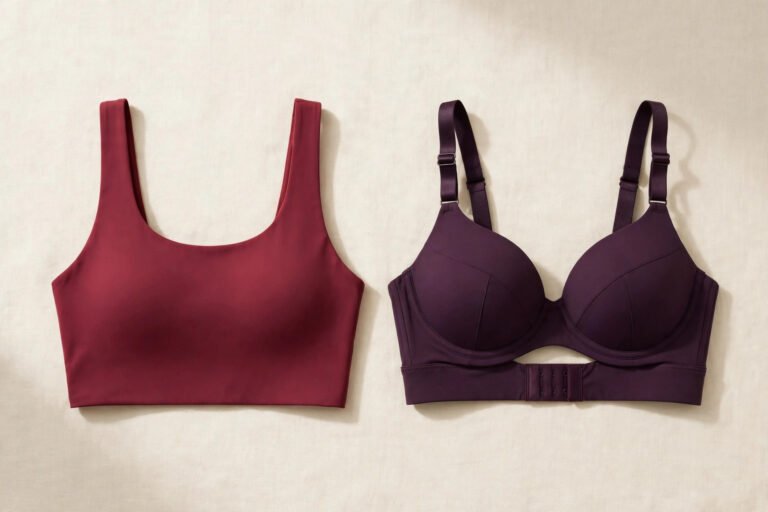
The honest answer is sometimes, and the activity decides, not the cup letter. Ask do small breasts need support on a run and the answer is usually yes, real support, properly fitted. Ask it about gentle yoga and, for many readers, the honest answer is light support or none at all. Smaller breasts carry less mass, so they move less on average (our breast size and exercise guide works through the gradient). But less is not none, and pain does not check your cup size first. In the 2012 London Marathon survey, one in four A cup runners reported breast pain (Medical News Today), and among 540 elite athletes whose most common cup was a B, 44 percent reported exercise induced breast pain (Journal of Sports Sciences).
One thing this choice is not about: sag. No research shows that wearing or skipping a sports bra changes sagging at any size, so this is a comfort and pain decision, never a fear decision; our breast sag research check covers the studies.
Support by Activity: The Short Version
| Activity | What moves | Support that matches |
|---|---|---|
| Running and jumping | Vertical travel in bursts; over 7 cm measured unsupported even at A and B cups | Structured high support, separate cups or firm compression |
| Court and field sports | Side to side movement on cuts, turns and overhead reaches | Medium to high support; a secure band and straps that stay put |
| Strength training | Very little bounce; bar and bench contact, strap pressure under load | Light to medium; a smooth padded front and adjustable straps |
| Cycling and rowing | Minimal bounce; hours of band and strap pressure in a forward lean | Light to medium; a smooth wide band and nothing that digs |
| Yoga and walking | Gentle movement; inversions test coverage more than bounce | Light support, or none for many readers |
Do Small Breasts Need Support on a Run?
Yes, and this is where the small bust exemption quietly expires. The marathon researchers note that more than 7 cm of vertical breast displacement has been measured in unsupported A and B cup runners (British Journal of Sports Medicine). In the elite athlete survey, running, jumping and landing produced the most severe exercise induced pain recorded. Joanna Scurr puts the point plainly: breast pain is not linked to size, and an A cup athlete can be stopped by it just as a larger cup athlete can (Science 2.0). Her lab work also found encapsulation styles, which hold each breast separately, reduced movement better than compression across cup sizes, which retires the old rule that small busts only need a squash flat crop. Match the level to the session with our sports bra impact levels guide: the faster and bouncier the workout, the more structure earns its place.
Court and Field Sports: The Direction Change Problem
Tennis, netball, football and five a side ask something different. The bounce is still there, but the defining load is lateral: cutting, turning and reaching overhead drag tissue sideways and test whether straps stay put. A medium to high support bra with a firm band and a back that anchors the straps, racerback or cross back, suits most small busts here. You do not need the heaviest running bra you own, but a soft studio bralette will spend the match migrating, and a bra you keep adjusting is a bra that is not supporting.
Strength Training: Contact, Not Bounce
Lifting barely bounces, so bounce control is the wrong buying brief. The real jobs are contact and pressure. A bench press bar path can brush or rest on the upper chest, so a smooth, lightly padded front with no center hardware is the practical choice. Bench work means lying on your back: bulky clasps and thick strap adjusters dig into the bench and your shoulder blades, so flat backs win. Straps carry load differently here too: heavy carries and presses load the shoulders, and adjustable straps you can ease between sets beat one fixed, unchangeable tension. Coverage matters too: a bra that stays put through a hinge and a press keeps your attention on the lift. Light to medium support, honestly labelled, covers nearly every lifting session a small bust will meet.
Cycling and Rowing: Posture and Duration
On a bike or an erg, breast movement is minor; the session is won or lost on pressure over time. You lean forward for 45 minutes or more, so a band that feels merely snug in the shop can saw at your ribs by minute forty, and narrow straps concentrate their load in one spot all ride. Choose light to medium support with a wide, smooth band and wider or well padded straps, and treat any hotspot in the first ten minutes as a verdict. If a bra only feels fine standing still, it is the wrong bra for endurance work.
Yoga and Walking: Where Light or None Is a Legitimate Answer
Here the honest answer flips. Slow flow yoga, stretching and walking move a small bust very little, and plenty of readers need nothing more than a soft lined bralette, or no bra at all. The claim that a small bust needs structured support for everything gets its own verdict in our sports bra myths roundup: it does not survive the evidence. Two practical checks still apply. Inversions and deep forward folds test coverage, not support, so pick a neckline that keeps you covered upside down if that matters to you. And hot yoga adds sweat, which makes a quick drying fabric worth more than any support feature. Our guide to low impact sports bras works through when even a light bra stops being necessary.
The Needs That Are Not Bounce
Nipple friction is the quiet one, and it is not about support at all: an unlined compression top over a long, sweaty session can chafe badly at any cup size, so lining or light padding is a skin decision, not a vanity one. Strap pressure is the second: over half of marathon runners reported shoulder strap issues, because straps carry a bra’s whole load and a small frame gives them no room to spread it. Band chafe follows at the ribs, worst on long, hot sessions. Finally, the alpha sizing trap: a letter size folds band and cup into one guess, so a small band with a relatively full cup, or the reverse, can fall between letters entirely. Our alpha sizes vs bra sizes guide does the translation.
Disclosure: Stellaleah is reader supported. When you buy through links in this article, we may earn a commission from Amazon at no extra cost to you. Our picks are research based: we verify manufacturer specs and published listings, and we never claim hands on testing we have not done. Read our affiliate disclosure.


Three Bras, Matched to the Activity
Running and Jumping: SYROKAN Underwire Unlined Racerback Sports Bra (Style A217)
This is the pick for readers who assumed letter sized structure was not made for them. The A217 is sold in band and cup sizes rather than alpha letters, and its listing variants include small band sizes such as 34C (Amazon). Separate underwire cups hold each side on its own, the approach the Portsmouth work favours across sizes, and its hook and eye closure lets you set the band properly. The fabric is 88 percent polyamide and 12 percent spandex, unlined, which keeps it light and quick to dry. Unlined also means less nipple coverage, the one honest trade here.
Pros
- Band and cup sizing that reaches small bands, not just alpha letters
- Separate underwire cups control movement without squash flat compression
- Hook and eye closure gives a real band fit and an easier on and off
Cons
- Unlined cups give limited nipple coverage on long runs
- Hand wash only, per the listing care instructions
- More structure than some small busts will want for everyday training
| Spec | Detail |
|---|---|
| Support | High support (brand rating) |
| Size range | Band and cup sizes; 34C variant confirmed in listing data (confirm full grid in the catalog) |
| Closure | Hook and eye, back |
| Construction | Underwire cups, unlined; racerback; 88 percent polyamide, 12 percent spandex |
| Adjustability | Band adjusts by hook column; strap adjustability not confirmed in the listing data |
Strength Training: YEOREO Micaela Open Back Sports Bra
The Micaela earns the lifting slot on one feature: adjustable straps, the fix for the pressure problem that dominates strength sessions. Its listing data (Amazon) shows medium padding behind a smooth front, which is what a bar path and a bench actually meet, and an open strappy back that vents heat and has no clasp to lie on. Read its support honestly: the listing title says medium impact while its own spec field says low impact, so we rate it light to medium, which is all a lifting session asks. The fabric is 75 percent nylon and 25 percent spandex.
Pros
- Adjustable straps let you set and reset shoulder pressure between sets
- Smooth padded front suits bar contact and bench work
- Open back has no clasp hardware to dig in while lying on a bench
Cons
- Alpha sizing only, so band and cup cannot be fitted separately
- The listing’s own support labels conflict; not a running bra
- Pull on style, which some readers find awkward when sweaty
| Spec | Detail |
|---|---|
| Support | Light to medium (listing fields conflict; rated conservatively) |
| Size range | Alpha sizes; XS and M variants confirmed in listing data (confirm full run in the catalog) |
| Closure | Pull on |
| Construction | Wirefree padded cups; open strappy back; 75 percent nylon, 25 percent spandex |
| Adjustability | Adjustable straps |
Yoga and Walking: Onzie Hot Yoga Chic Bra (Style 354)
For the sessions where the honest prescription is as little bra as possible, the Chic Bra is a hot yoga staple: a strappy, fully lined, quick drying style that retailer Evolve Fit Wear describes as one of its best sellers, and listed on Amazon in dual sizes S/M and M/L. It holds what gentle movement needs held, covers what inversions need covered, and stays out of the way. Its limits are the alpha trap in miniature: two dual sizes for every body, and fixed straps with nothing to adjust.
Pros
- Fully lined, so coverage holds through inversions and forward folds
- Quick drying fabric suits hot yoga and sweaty walks
- Strappy back moves freely through twists and binds
Cons
- Dual sizes only (S/M and M/L); between size readers get an approximate fit
- Fixed straps with no adjustment
- Light support only, by design; not transferable to bouncy sessions
| Spec | Detail |
|---|---|
| Support | Light (retailer rates it moderate; sized here for low impact days) |
| Size range | Dual sizes S/M and M/L, as listed on Amazon |
| Closure | Pull on |
| Construction | Wirefree; fully lined; multi strap back; quick drying performance fabric |
| Adjustability | None evidenced; fixed straps |
Common Questions
I am an A cup. Can I just run in a soft bralette?
For a short, easy jog, some readers do. The problem is dose: displacement and pain build with distance, pace and downhill running, and the survey data shows a quarter of A cup marathoners in pain. Let pain, not pride, set your level: the moment a run hurts or you catch yourself holding your chest, step up to structured support.
Do small breasts need support for lifting?
Not for bounce, because there is barely any. For coverage, strap pressure and bar and bench contact, yes, a light to medium bra with a smooth front earns its place. Save your structured bra for run days.
How do I know if my light bra is enough for yoga?
If nothing shifts in an inversion, nothing digs after forty minutes, and you never adjust it mid class, it is enough. Support is matched to what your session actually does.
The Bottom Line
Match the bra to the activity, not to a rule about cup size. Running and jumping ask a small bust for real structure; lifting asks for coverage and pressure control; the bike asks for a band that behaves for an hour; and yoga and walking, for many readers, ask for very little. Anyone who answers this question with always or never is selling something.