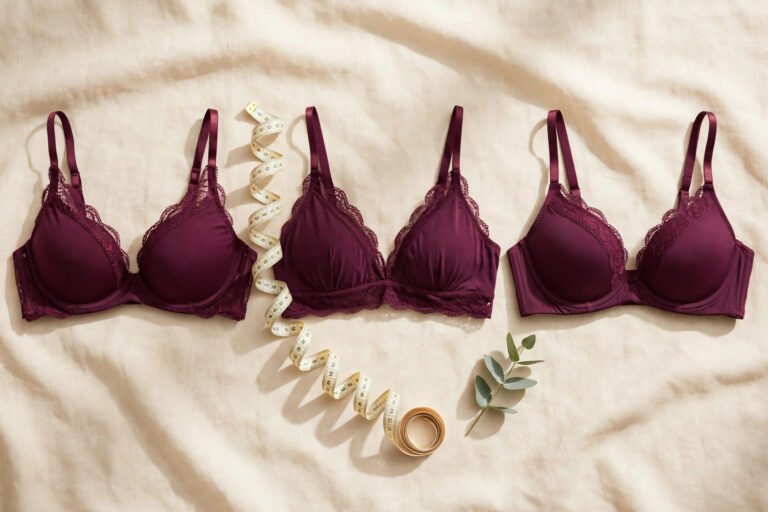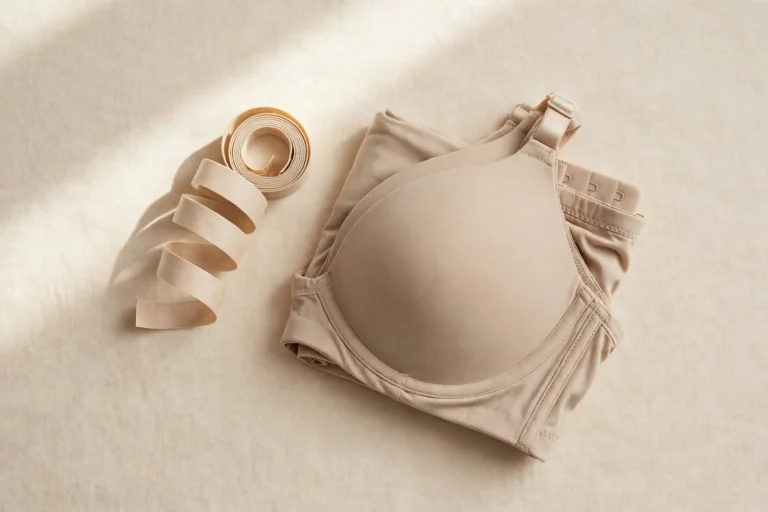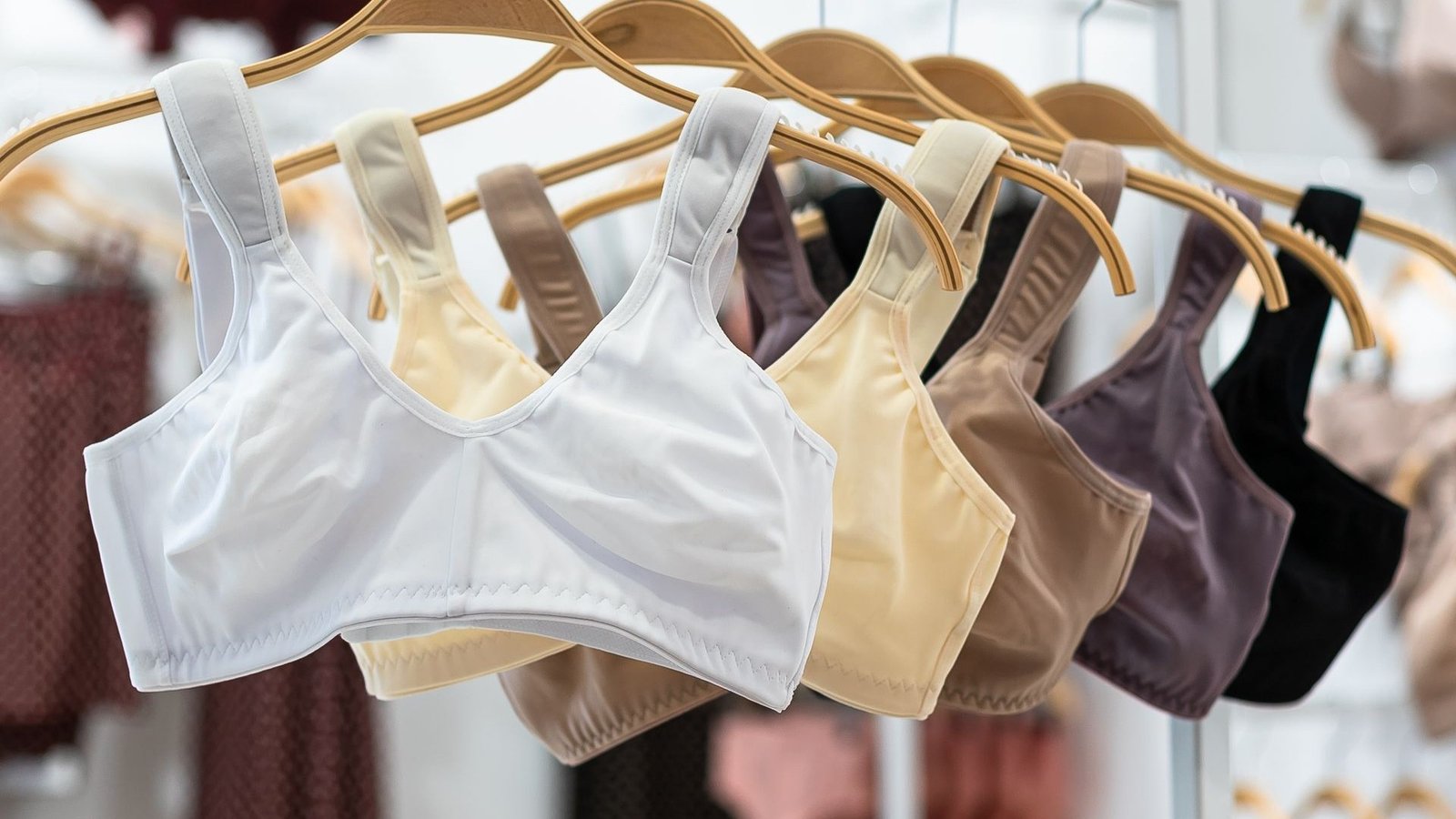
When a first bra uncomfortable is the complaint, the problem is almost never her body. A first bra is a simple garment, a soft layer with thin straps and a stretchy band, and when it feels wrong it is usually because the style does not suit what she is doing that day, or because one small detail, a strap, a seam, a band, is fighting her. Most first bra problems have a fix that takes five minutes, and the rest are solved by switching to a different style, not by trying harder to make the wrong one work.
This guide covers the six problems parents hear most often: a band that rides up, a bra that shows through a school shirt, itching, straps that slip, embarrassment, and discomfort in PE. Each one gets a cause, a fix to try first, and a clear sign that a different style is the answer. Nothing here asks you to measure her or to predict a size from her age. Fit is judged the same way she will judge it herself: by how it feels when she wears it, moves in it, and forgets about it.
Quick Answer
A first bra that feels uncomfortable usually needs a small adjustment or a different style, not a different size rule. Start with the cheapest fix: adjust the straps, smooth the band so it sits level, and check the shirt she wears over it. If the problem stays after two or three wears, try a different cut, a wider band, a racerback, or a style with no padding, and let her compare the two side by side. Do not keep buying the same style in the hope that the next one will feel different. If embarrassment is the real problem, not the garment, our guide on how to talk to your daughter about bras covers the conversation, and our daughter wants a bra too early guide covers what to say when she asks because her friends have one.
Why a First Bra Feels Wrong
A first bra is not a smaller version of an adult bra. It has no underwire, no hooks, and usually no padding, and it is meant to do three small jobs: add a layer under thin shirts, keep things comfortable when she moves, and help her feel normal in the locker room. When one of those jobs goes wrong, she notices it all day, because the garment sits against her skin from morning to bedtime.
The most common reason a first bra feels wrong is a mismatch between the style and the day. A thin-strapped bralette that is fine under a loose T-shirt can slip and show under a school uniform. A padded style that looks smooth under one shirt can feel hot and itchy in PE. A band that fits when she is standing still can ride up when she reaches for a book on a high shelf. None of these mean the bra is broken or that she picked wrong. They mean the style and the situation do not match, and the fix is to change one of them.
The second reason is newness. A first bra feels strange for the first few wears in the same way new shoes feel strange, and some girls need a week to stop noticing it. Give a new style three or four wears before you judge it, unless it itches, pinches, or leaves marks. Discomfort that fades after a few days is adjustment. Discomfort that stays, or gets worse, is a fit or style problem, and it deserves a fix. If you are not sure she needs a first bra yet at all, our guide on signs you need your first bra covers the readiness signs to look for, so you can tell a real need from a passing wish.
Problem 1: The Band Rides Up
The band is the stretchy strip at the bottom of the bra, and it should sit level all the way around her body. When it rides up at the back, she feels it every time she moves, and she will tug at it all day. Riding up usually means the band is too loose for that style, or the style is too long in the body for her frame, so the band has nowhere to sit.
Try this first: have her put the bra on, then smooth the band with both hands so it sits level, front and back. Ask her to raise both arms above her head. If the band stays where it is, the problem was how it was put on, and smoothing it each morning fixes it. If it creeps up as soon as her arms go up, the band is not holding, and no amount of smoothing will fix it.
When a different style is the answer: if the band rides up on every wear, try a style with a wider band, which grips more evenly, or a shorter, closer cut that sits higher on her ribs. A crop-style bralette with a wide underband often solves riding up where a long, loose camisole style cannot. Let her try both and raise her arms in each one. The arm-raise test is the honest judge here, not the size on the label.
Our how to buy the first bra for a tween guide covers the shopping trip itself, including how to check a band in the fitting room without turning it into a measuring session.
Problem 2: It Shows Through Her School Shirt
Show-through is the problem girls mention most, and it is the one that causes the most embarrassment. A white or pale shirt turns a dark or brightly colored bra into a visible shape, and a textured or lacy style shows its outline even under a darker top. She notices it because her classmates might notice it, and that worry follows her into every classroom.
Try this first: match the bra color to her skin tone, not to the shirt. A nude or skin-tone bra disappears under a white shirt far better than a white bra does, because white fabric glows against skin while nude blends with it. A smooth, seamless style with no lace, no seams across the front, and no padding ridges also helps, because there is no texture for the shirt to reveal. If she only has one bra and it is the wrong color, a plain camisole or a thin undershirt over the bra and under the school shirt is a quick cover while you shop for a better match.
When a different style is the answer: if show-through happens under every shirt she owns, the style is the problem, not the shirt. Switch to a smooth, seamless bralette in a nude shade, and keep the lacy or brightly colored styles for weekends and loose tops. Our padded vs unpadded first bras guide explains how padding changes show-through, and our best bras for school guide covers school-day choices in more detail, including uniforms and PE-day splits.
Problem 3: It Itches
Itching is the problem most likely to make her refuse to wear a bra at all, and it is also the most fixable. Itching usually comes from one of three things: a scratchy seam or tag, a fabric she reacts to, or a bra that has not been washed since it was bought. New garments often carry finishing chemicals from manufacturing, and a first wash removes most of them.
Try this first: wash the bra before the next wear, in a gentle cycle with mild detergent, and let it air dry. Check the tag and any scratchy seams while you are at it. If the tag is the culprit, snip it out carefully, or fold it flat and stitch it down. If a seam rubs in one spot, a thin layer of soft fabric tape over the seam, or a dab of petroleum jelly on the skin before she puts it on, can get her through the day. If the itching comes with a rash, redness that spreads, or swelling, stop wearing that bra and talk to a pharmacist or her doctor, because that is a skin reaction, not a fit problem.
When a different style is the answer: if she itches in every bra made from the same fabric, switch fabrics. Soft cotton or a cotton blend is the gentlest starting point for most girls, and it is worth trying before you try a synthetic performance fabric. A tagless style, or one with flat seams, removes the two most common itch points at once. Let her feel the fabric against the inside of her wrist before she tries it on. If it feels scratchy there, it will feel scratchy all day.
Problem 4: Straps Keep Slipping
Slipping straps are annoying in a way that is hard to ignore, because every slip needs a discreet fix, and a school day has no good moment for one. Straps slip when they are too loose, when they sit too close to the edge of her shoulders, or when the style has thin, smooth straps that slide on her skin.
Try this first: shorten the straps. Most first bras have adjustable straps, and a shorter strap sits closer to the neck and slips less. Adjust them so the strap sits flat on her shoulder with a little give, not so tight that it digs in. If the straps are fixed and cannot be shortened, a small silicone strap holder, the kind that clips the two straps together at the back, turns a slipping pair into a racerback for the day. Check that the band is level too, because a band that rides up pushes the straps out toward the shoulders, and fixing the band often fixes the straps.
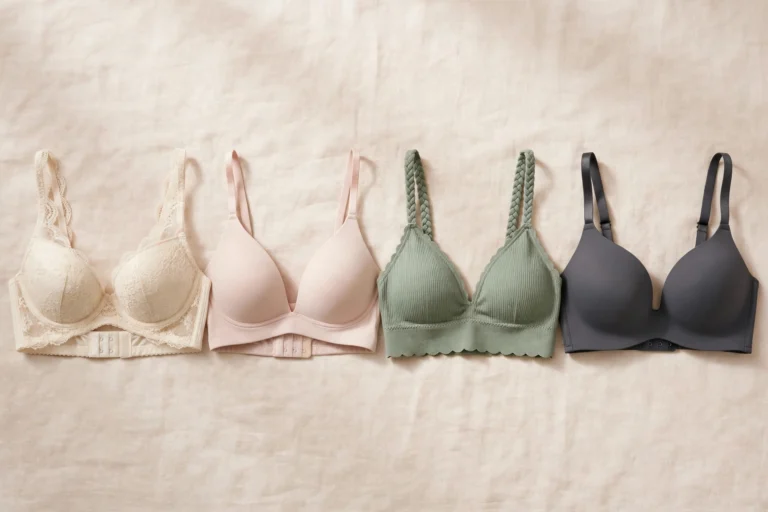
When a different style is the answer: if the straps slip no matter how short you set them, her shoulders may be narrow for that cut, and the fix is a different strap layout. A racerback or a cross-back style keeps the straps centered and cannot slip off the shoulder at all. A style with wider, textured straps also grips better than thin, smooth ones. Our bralettes for tweens guide shows the strap layouts she will see on the rail, including racerback and cross-back options.
Problem 5: She Is Embarrassed to Wear It
Embarrassment is not a garment problem, and no adjustment fixes it, but it is the problem that ends the most first bras. A girl who is embarrassed by her bra will leave it in the drawer, or wear it only on days she thinks nobody will notice, and the bra gets blamed for a feeling that started somewhere else. The usual sources are the locker room, a comment from a classmate, or the fear that a strap showing, or a bra line under a shirt, will draw attention.
Try this first: ask her what exactly feels embarrassing, and listen for the specific moment. “I hate wearing it” usually means one of three things: she is worried someone will see it, she feels different from her friends, or she does not like how it looks on her. Each one has a different answer. If it is visibility, the show-through fixes in Problem 2 help, and a nude, seamless style removes the thing she is worried about. If it is feeling different, our daughter wants a bra too early guide covers the friends-have-one pressure and how to answer it. If it is how it looks, let her choose the next one herself, from two or three options you approve, because a bra she picked feels like hers in a way a bra handed to her never does.
When a different style is the answer: sometimes the style itself is the embarrassment. A padded style can feel like it is making a statement she did not ask to make, and a lacy style can feel too grown up. In that case, switch to the plainest style you can find: a soft, unpadded bralette in a plain color, with no lace and no decoration. Plain is not a compromise here. Plain is the point, because it lets the bra disappear under her clothes and out of her thoughts.
If embarrassment is the whole problem, and it stays after the style is fixed, our daughter embarrassed about bra shopping guide goes deeper on the locker room, the fitting room, and the teasing worry. Do not dismiss embarrassment as silliness. It is the reason most first bras end up unworn, and taking it seriously is what keeps her wearing one.
Problem 6: First Bra Uncomfortable in PE
PE is where a first bra earns its keep or fails completely. Running, jumping, and changing in a hurry expose every weakness a classroom hides: a band that rides up, straps that slip, a style that feels hot, and the locker-room worry on top of it. A bra that is fine at a desk can be miserable in PE, and that is normal, because PE asks more of it.
Try this first: keep a separate style for PE days. A soft sports-style bralette, with a wider band and a closer fit, handles movement far better than a thin-strapped everyday bralette, and changing into it before PE, then back into the everyday one after, solves the problem without asking one garment to do two jobs. On PE days, she should also check the straps before class, because a strap that slips during a run is a distraction she does not need. A racerback style is the simplest fix for PE-day slipping, because the straps cannot fall off her shoulders at all.
When a different style is the answer: if she is uncomfortable in PE in every style she owns, the everyday bralette is not a PE bra, and that is fine. Buy one or two soft sports-style bralettes for PE and sport, and keep the everyday styles for the classroom. The two jobs are different, and two cheap styles beat one expensive compromise. Our best bras for school guide covers the PE-day versus classroom-day split, and our how many bras does a tween need guide explains the 3 to 5 count for a starter set, including a PE style.
When a Different Style Is the Answer
Most first bra problems end in one of two places: a small fix, or a different style. The table below is the shortcut. Find her problem, try the fix in the middle column, and if it does not work after two or three wears, switch to the style in the right column instead of buying the same one again.
| Problem | Try first | Switch to |
|---|---|---|
| Band rides up | Smooth the band level, arm-raise test | Wider band, shorter closer cut |
| Shows through shirts | Nude color, smooth seamless style | Seamless nude bralette, camisole over it |
| Itching | Wash before wearing, remove the tag | Soft cotton or cotton blend, tagless, flat seams |
| Straps slip | Shorten the straps, check the band | Racerback or cross-back, wider straps |
| Embarrassment | Ask what exactly feels embarrassing | Plainest unpadded style, her choice |
| PE discomfort | Separate PE style, check straps first | Soft sports-style bralette for PE days |
One warning about switching styles: change one thing at a time. If you change the style, the fabric, and the color all at once, you will not know which change fixed the problem, and the next purchase becomes a guess again. Change the one thing that matches the problem, wear it for a few days, and then decide.
What Not to Do
A few responses feel helpful and make the problem worse. Do not tell her to just get used to it, because a bra that itches or rides up does not get better with patience, and the message she hears is that her discomfort does not matter. Do not buy three more of the same style, because the same style has the same problem. Do not size up or down as a first resort, because first bra problems are usually about cut and style, not about a size label, and changing the size without changing the style just moves the problem. Do not turn the fix into a measuring session, and do not predict a size from her age. She is the judge of how a bra feels, and her answer after wearing it for a day is worth more than any chart.
Do not make the bra a reward or a punishment either. A first bra is underwear, worn under clothes, and treating it as a milestone makes every problem feel bigger than it is. Keep the tone ordinary, fix the problem, and move on. That is the whole job.
Frequently Asked Questions
How long should a first bra take to feel comfortable?
Give a new style three or four wears. The first day feels strange because it is new, and the fabric softens a little after a wash. If it still itches, rides up, or slips after four wears, stop waiting and fix it. Comfort that never arrives is not adjustment, it is a mismatch.
Should I buy a different size if the band rides up?
Not as a first step. A riding band usually means the style is too loose in the band or too long in the body, and a different cut fixes it more reliably than a different size label. Try a wider band or a shorter cut in the same general fit first, and judge by the arm-raise test, not by the label.
What if she refuses to wear any bra at all?
Find out why before you buy another one. Ask what she dislikes: the feeling, the look, the locker room, or the idea itself. If it is the feeling, a different fabric or a looser cut may fix it. If it is the locker room, the embarrassment section above and our daughter embarrassed about bra shopping guide cover it. If she simply does not want one yet, that is a fine outcome too. Leave the door open and revisit it in a few weeks, the same way our daughter wants a bra too early guide suggests for the other direction.
Can one bra work for school and PE?
It can, but it rarely works well for both. A soft sports-style bralette handles PE and still looks fine under a school shirt, so if you want one style to do both jobs, start there. If she already has everyday bralettes she likes, adding one PE style is cheaper than replacing the whole set, and it keeps each garment doing the job it is best at.
The Short Version
A first bra that feels uncomfortable is a solvable problem, and most of the time the solution is small. Adjust the straps, smooth the band, wash it before she wears it, match the color to her skin, and give a new style a few wears. If the problem stays, change the style, not the size label, and change one thing at a time so you know what worked. Let her choose the replacement from options you approve, because a bra she picked is a bra she will wear.
If the problem is really the conversation, not the garment, our how to talk to your daughter about bras guide has the words for it, and our companion guide on how to ask your mom for a bra gives her side of the same conversation, in her own words. Between the two, you have both halves of the talk, and a first bra that actually gets worn.