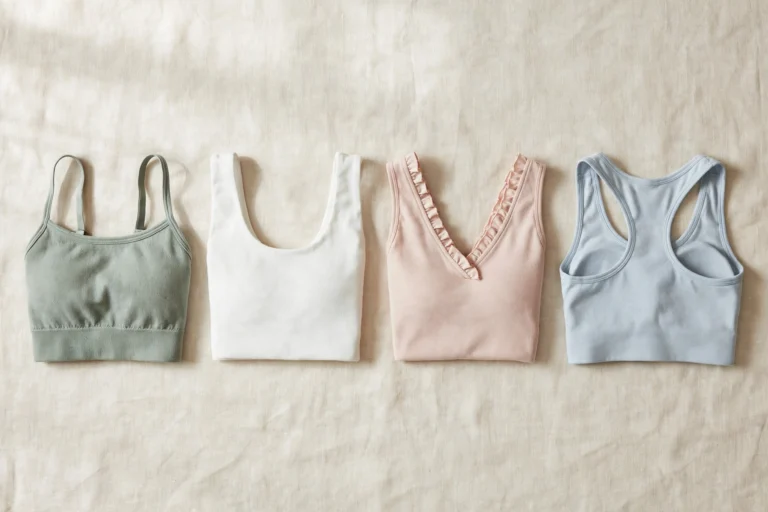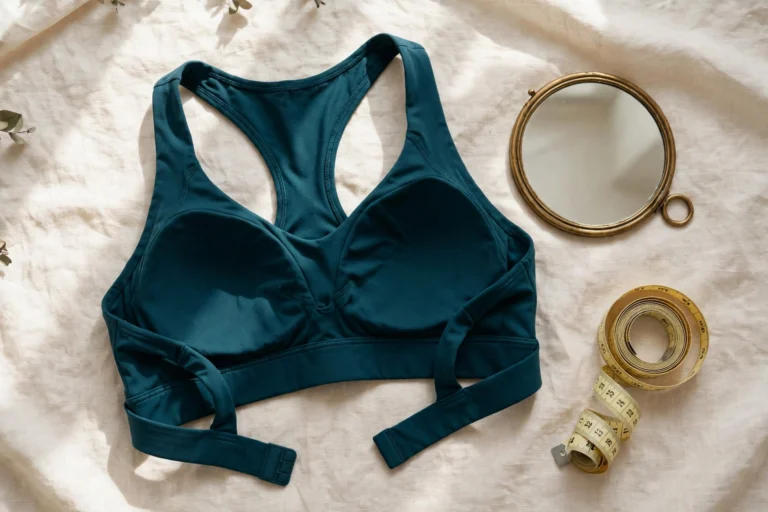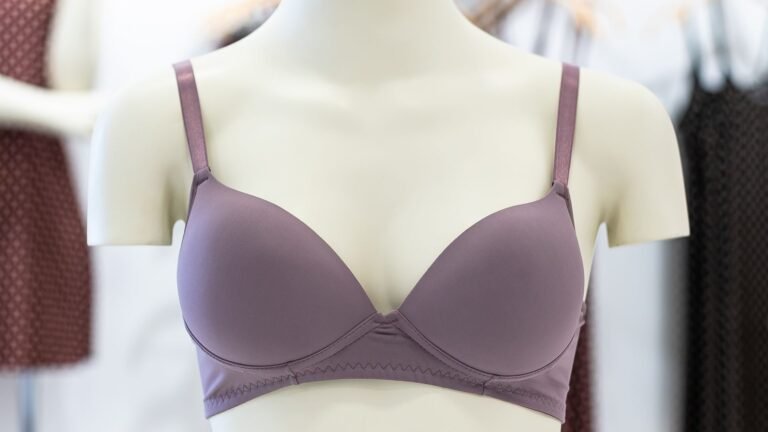
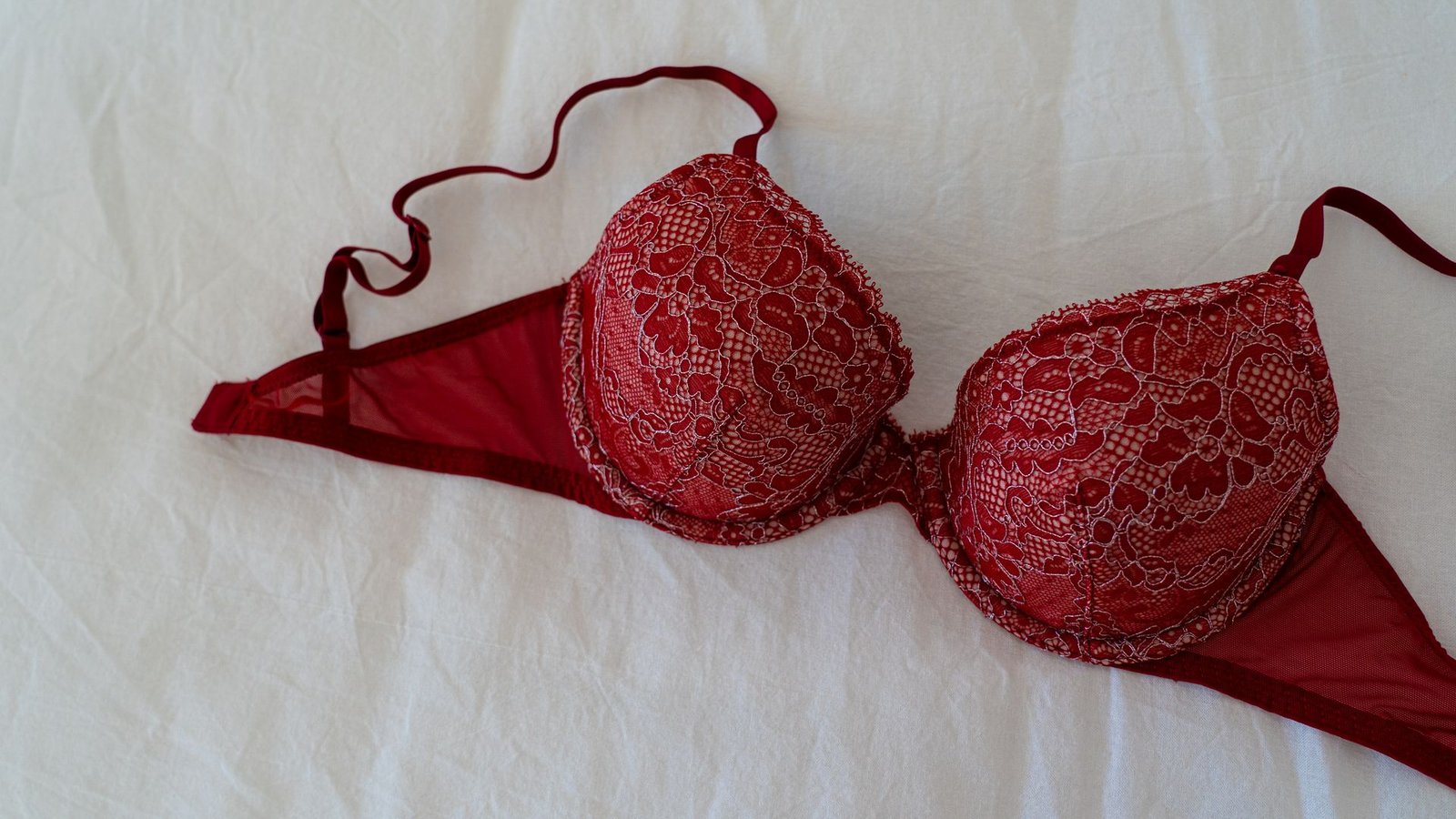
This bra care guide answers a simple question: how do you wash, dry, and store a bra so it keeps its shape and support? The short answer is to treat it like the delicate garment it is. Hand wash when you can, use a mesh bag and a cold gentle cycle when you cannot, never use the dryer, and store the cups in their natural shape. Most bras wear out in the wash, not on your body, so the way you care for a bra decides how long it lasts.
That matters because a bra is mostly elastic, foam, and fine fabric, and all three are damaged by heat, agitation, and wringing. The care itself is not difficult: about ten minutes of hands-on time, then waiting while the bra air dries. This guide covers the full everyday routine: how often to wash, hand washing, machine washing, drying, storage, rotation, and replacement. Sports bras get a short section of their own, because sweat changes the rules, and our guides on sports bra care and making your sports bra last longer carry the detail.
Quick Answer
Wash your bra every 2 to 3 wears, hand wash it in cool water with a mild detergent, press the water out in a towel instead of wringing it, and air dry it flat or hung by the center gore. If you machine wash, fasten the hooks, put the bra in a mesh lingerie bag, and use a cold gentle cycle with no fabric softener. Store bras in a drawer with the cups in their natural shape, never folded one into the other, and rotate them so each one rests between wears. The care label inside the bra overrules everything in this guide, so read it first.
Bra Care at a Glance
| Step | The rule | Why it matters |
|---|---|---|
| How often | Every 2 to 3 wears | Body oils and sweat break down elastic if they sit in the fabric |
| Washing | Hand wash first; mesh bag and cold gentle cycle if machine washing | Agitation and heat stretch the band and crush molded cups |
| Detergent | Mild, made for delicates; no bleach, no fabric softener | Fabric softener coats elastic fibers and reduces their stretch |
| Drying | Air dry flat or hung by the center gore; never the dryer, never wring | Dryer heat breaks down spandex and elastic and warps cups |
| Storage | Drawer, cups in their natural shape, one behind the other | Folded or crushed cups crease and lose their shape |
| Rotation | Rest each bra between wears | Elastic recovers between wears instead of staying stretched |
Start With the Care Label
Before any of the steps below, read the care label sewn inside the bra. The label is the manufacturer’s instruction for that exact bra, and it overrules general advice. Some bras are hand wash only, some allow a machine, and some fabrics have their own limits. Triumph puts it plainly in its own care guide: always double check the laundry care label in your bra before washing. The label also tells you what the bra is made of, and that changes the care: lace snags and tears where foam cups crush and crease. If the label and this guide disagree, follow the label.
How Often Should You Wash a Bra?
Every 2 to 3 wears is the working rule. Triumph states it directly in its care guide, and Wacoal gives the same figure. The reason is not dirt you can see. It is body oil, sweat, and skin care products sitting in the elastic and the fabric, slowly breaking the fibers down. A bra that looks clean can still be carrying the things that wear it out.
Common sense is the referee, as Triumph puts it. After a hot day, or any day you sweated in the bra, wash it straight away instead of waiting for the third wear. A bra worn for a quiet day at a desk can wait. Sports bras are different again: they get washed after every workout, because sweat degrades elastic fast, and our sports bra care guide covers that routine in full. Do not wash a bra after every single wear out of habit: overwashing is its own kind of wear, and it is the reason the 2 to 3 wear rule exists.
Hand Washing: The Bra Care Guide Method
Hand washing is the gentlest method, and every manufacturer in this guide recommends it first. Wacoal says hand washing extends the life and support of your bras many times over, ThirdLove suggests hand washing all of its bras, and Triumph calls hand washing the gold standard. It takes about ten minutes.
1. Fill a basin with cool water. Use cool or lukewarm water, never hot. Hot water breaks down elastic and foam, and it can shrink fabrics. Add a small amount of a mild detergent made for delicates and stir until it dissolves.
2. Soak for 10 to 15 minutes. Submerge the bra and press it gently under the water so it is fully soaked. Wacoal advises a soak of about 10 to 15 minutes and warns against soaking for too long, because prolonged soaking can weaken elastic and lace.
3. Work the suds through gently. Gently squeeze the suds through the cups and the band with your hands, paying attention to the underarm and band areas where sweat builds up. Do not scrub, and handle underwires gently so they do not bend. If there is a stain, dab it with mild soap and water first, which is the spot treatment ThirdLove recommends before the soak.
4. Rinse until the water runs clear. Drain the soapy water, refill with clean cool water, and press the bra under the water until no suds remain. Leftover detergent irritates skin and attracts dirt.
5. Press the water out, never wring. Lay the bra flat on a clean dry towel, roll the towel up with the bra inside, and press gently. Wringing or twisting is the mistake to avoid here: it distorts foam cups, stretches the band, and can bend an underwire. Every manufacturer in this guide says the same thing, in the same words: press, do not wring.
Machine Washing a Bra Without Ruining It
Hand washing is best, and machine washing done properly is an acceptable second choice. Triumph says so directly, and adds that it is what actually happens in real life. The machine used carelessly is the problem, so follow these four conditions every time.
1. Fasten the hooks. Close every hook before the bra goes in. An open hook catches lace and fabric with what Triumph calls surgical precision, snagging the bra itself and anything else in the load.
2. Use a mesh lingerie bag, and wash with similar items only. Put the bra in a zipped mesh bag, and wash it with other delicates, never with jeans or zipped hoodies that will rub and snag it. The bag keeps the bra from tangling with other clothes and protects it from heavy items. Wacoal calls the lingerie bag a must, and ThirdLove gives the same instruction for machine washing.
3. Choose a cold gentle cycle. Use cold water and the delicate or gentle cycle, with a low spin. Triumph caps its guidance at 86 degrees Fahrenheit, and its UK guide says cold water or 30 degrees at most. Never use hot water.
4. Use a mild detergent, and skip the fabric softener. A gentle detergent made for delicates is the right choice. Fabric softener is the single most common mistake, because it coats the elastic fibers and reduces their stretch over time. Triumph names it as the mistake to avoid, and ThirdLove and Wacoal both list it as something to leave out. Skip bleach too, which breaks fibers down.
Drying: Air Dry Every Time
How you dry a bra matters as much as how you wash it, because heat is the enemy of elastic. ThirdLove warns that dryer heat breaks down spandex and elastic, and Triumph is blunter: heat is the killer of elastane, and the tumble dryer is where bras go to die. The rule has no exceptions for everyday bras: air dry, never tumble dry.
Lay the bra flat on a clean towel or a drying rack, and reshape the cups to their natural dome while the bra is still damp. That one step is what keeps molded cups smooth instead of dented. If you prefer to hang it, hang it by the center gore, the small bridge between the cups, or drape it over the line at its middle. Never hang a bra by the straps: the weight of the wet fabric stretches them out. Keep the drying bra away from radiators, heaters, and direct sunlight, because heat is heat even without a spinning drum, and sun fades colors. A bra laid flat in a ventilated room usually dries overnight. If you need it sooner, the honest answer is to own a second bra in rotation, not to reach for the dryer.
Storing Bras So the Cups Keep Their Shape
Storage is where molded and padded bras are won or lost. The rule from Triumph is the golden rule: cups keep the shape you make them hold. Padded and molded bras belong in the drawer open, one behind the other as in a shop, with the cups in their natural shape. Never fold one cup into the other, and never fold a bra in half. A folded cup creases, and on a molded bra that crease shows through shirts.
Give the drawer some space: bras with room to sit in their shape last longer than bras crushed into a drawer that is too full. Unlined and soft-cup bras are more forgiving, but they still do better laid flat than crammed in. ThirdLove gives the same storage advice for its nursing bras: store them in a drawer with ample space, making sure the cups are not crushed. Hanging is the second choice: hang by the center gore, never by the straps, with hooks fastened and straps tucked inside the cups.
Rotation and Rest Between Wears
Elastic recovers between wears. A bra worn two days in a row never gets the chance, and its band stays stretched a little longer each time. Wacoal advises letting lingerie rest between wears and giving it 24 hours after washing to return to its natural shape. The practical version is a small rotation: two or three everyday bras in your size, worn in turn, so each one rests for a day or two before its next wear. Fitters quoted by PureWow note that rotating through three identical bras means replacing them less often, because no single bra carries every day of wear. This is not a rule about how many bras to own. It is a rule about rest: one bra worn every day will wear out far faster than three bras sharing the same week.
How Long a Bra Lasts and When to Replace It
There is no fixed date. A bra’s life is measured in wears and washes, not months, and how you wash it decides where in the range it lands. ThirdLove gives a range of 6 to 12 months for a minimizer bra worn regularly, and PureWow reports roughly 6 to 8 months for everyday bras, with fitters using a rule of 100 wears and 100 washes. A bra worn daily and machine dried will reach the end far sooner than the same bra rotated, hand washed, and air dried, so treat any number of months as a rough guide, not a deadline: the bra itself tells you when it is done.
These are the signs that mean replacement, and any one of them on its own is enough:
-
You are on the tightest hook and the band still feels loose. A new bra fits on the loosest hook, and you move inward as the band relaxes. When you run out of hooks and the band still rides up, the elastic has nothing left to give.
-
The band rides up at the back during the day. A working band sits level all the way around. If it climbs toward your shoulder blades, it has lost its grip.
-
The straps slip even at their shortest. Straps fully tightened that still slide off your shoulders have lost their elasticity, and ThirdLove lists straps that keep falling as a replacement sign.
-
The cups have lost their shape. Foam that has creased, dented, or flattened no longer holds tissue where it belongs, and dryer heat speeds this up.
-
The underwire pokes through or feels bent. Once the channel holding the wire wears through, the wire moves out of place and the cup’s shape goes with it.
-
The fabric is fraying or overstretched. Fraying along the straps or band means the bra is finished even if it still feels wearable.
Before you replace a bra, check whether the problem is wear or fit. A bra that never fit properly will fail the same checks for a different reason, and buying the same size again will not fix it. Our guide on signs your bra does not fit lists each fault in full, and if the fit has changed, re-measure with our measurement guide or the bra size calculator before you buy. Sports bras have their own replacement signs, covered in our guide on when to replace your sports bra.
Sports bras are the exception to the 2 to 3 wear rule. They follow the same washing, drying, and storage rules, with one difference: wash them after every workout, because sweat degrades elastic fast. For the full sport-specific routine, read our guides on sports bra care and making your sports bra last longer.
Frequently Asked Questions
Can I put my bra in the washing machine?
Yes, if you do it properly. Fasten the hooks, put the bra in a mesh lingerie bag, and use a cold gentle cycle with a mild detergent and no fabric softener. Hand washing is gentler and will make the bra last longer, so use the machine for busy days and hand wash when you have ten minutes. Never put a bra in the dryer, whichever way you wash it.
How often should I wash my bra?
Every 2 to 3 wears, according to Triumph and Wacoal. Wash it straight away after a hot day or a workout, and wash sports bras after every workout. Do not wash an everyday bra after every single wear out of habit, because overwashing wears the elastic out too.
How do I know when to replace my bra?
Replace it when you are on the tightest hook and the band still feels loose, when the band rides up at the back, when the straps slip at their shortest, when the cups have creased or flattened, or when the underwire pokes through. ThirdLove gives 6 to 12 months as a rough range for regular wear, and PureWow reports roughly 6 to 8 months for everyday bras. Go by the bra, not the calendar: a well cared for bra can outlast the range, and a badly cared for one can fail inside it.
The Short Version
This bra care guide comes down to four habits: wash every 2 to 3 wears, hand wash in cool water or machine wash properly in a mesh bag on a cold gentle cycle, air dry flat or hung by the center gore, and store the cups in their natural shape. Skip the fabric softener, skip the dryer, never wring, and read the care label before anything else. Rotate your bras so each one rests between wears, and replace a bra when you are on the tightest hook and the band still rides up, not when a date on the calendar arrives. If your bras are failing the fit checks in this guide, start with our guide on signs your bra does not fit before you shop, and re-measure with our measurement guide or the bra size calculator when the fit has changed. Good care is also the simplest form of sustainable buying, as our guide on sustainable bras explains: a bra that lasts a year instead of six months is one you do not have to replace.