A bra for small bust fit starts with the band, not the padding. If you wear an AA or an A cup, the most common fitting problem is not that you need more volume. It is that most bras are cut for a deeper cup than you have to fill, so the top edge stands away from your body and gapes under a T-shirt. The fix is usually a shallower style, a firmer band, and straps that adjust short enough for your frame. This guide explains which constructions suit a smaller bust, which fit checks matter most, and how to try a bra on so you know in the shop, not at home, whether it will gap.
This is an adult everyday guide, for AA and A cups and petite frames. It is not about sports support, which our guide on whether small breasts need support covers activity by activity, and it is not about teen fitting, which is a separate topic. It is also not a guide to making a small bust look bigger. Padding is a choice you can make or skip, and this guide treats it as one.
Quick Answer
A bra for small bust fit works best when the cup is shallow enough to follow your shape. Start with a lightly lined T-shirt bra, a demi, a balconette, a plunge, or a soft bralette, and check the band first: fasten it on the loosest hook, level all the way around, with two fingers sliding underneath. If the cups gape at the top edge, go down a cup or switch to a shallower style before you reach for more padding. The most common mistake is buying a taller, fuller cup and filling the gap with push-up padding, when a shorter cup would have sat flat on its own.
What “Small Bust” Means Here
In this guide, a small bust means AA and A cups, usually on a petite frame, and sometimes on a narrow ribcage with a small band. It is a size, not a problem. Bra-Calculator.com puts it well: “A cup is a valid size on its own, it does not need to be ‘corrected’ with bulk unless the wearer personally wants extra shaping.” The goal of a bra in this size is not to force volume that is not there. It is to hold, smooth, and support what is there, without gaping, slipping, or digging.
That framing matters because most fitting advice for a small bust starts with what is missing. This guide starts with what the bra has to do. A good fit in an AA or A cup means a band that stays level, cups that lie flat against the body, and straps that stay put. If a bra does those three things, it fits, whatever the label says. Do not let a size label decide your shape. Brands grade sizes differently, so the cup letter is a starting point and the fit checks below are the verdict. Our band size vs cup size guide explains the two numbers, and our cup sizes guide explains the sequence from AA upward.
Why Cups Gape on a Smaller Bust
Gaping has two causes, and telling them apart saves you a lot of returns. The first is cup size: the cup is simply too big, and the top edge has nothing to hold. The second is cup shape: the cup is the right size but too tall or too deep for your shape, so it stands away from the body even though the volume is right. Wacoal makes the same distinction: gaping may be cup size or cup shape, and “the same labelled size can feel different in a T-shirt bra, a full-cup bra and a non-wired bra. Compare the fit rather than choosing by the size label alone.”
The shape cause is the one that catches small busts most often. A tall moulded full cup holds its dome whether you fill it or not. The foam is rigid, so the top edge stays where the mould put it, and the gap shows under anything fitted. A shallower cup does not have that problem, because there is less cup to fill and less height to stand away. That is why the constructions in the next section work: they are shorter, shallower, or softer, and they follow the body instead of holding a shape of their own.
The band plays a part too. A loose band lets the whole bra drift, and a drifting bra gapes. ThirdLove gives the sister-size rule for this exact situation: “if the cups fit comfortably, but the current band size is too loose, you’ll have to try a smaller band size as well as a larger cup size.” A 32A that gapes is not always a 30A. It is often a 30B, a smaller band holding the same volume.
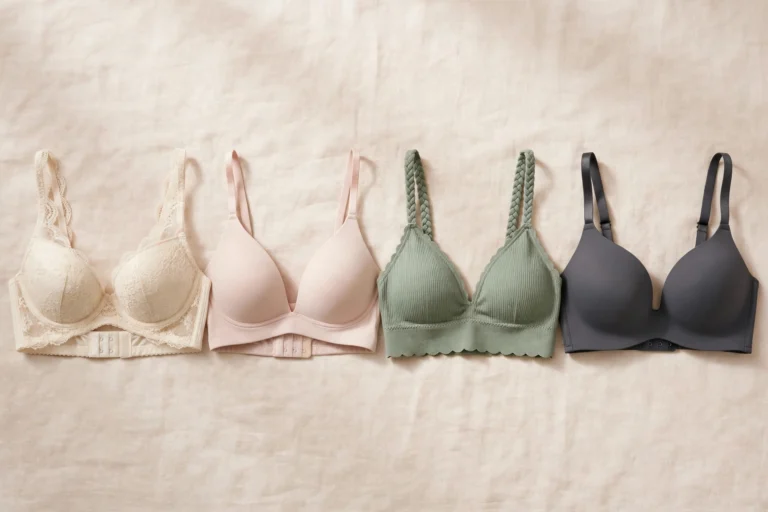
Choosing a Bra for Small Bust Fit: Five Constructions That Work
These five are the everyday constructions that suit AA and A cups, in the order most readers should try them. Each one solves the gaping problem a different way.
| Style | What it does for a smaller bust | Watch for |
|---|---|---|
| Lightly lined T-shirt bra | Smooth, shallow cups that sit flat under fitted tops; memory foam can mould to your shape | A tall moulded cup can still gape, so choose a shallow cut, not just a light lining |
| Demi | Covers 50 to 75 percent of the breast, so there is less cup to fill | A demi that cuts across the fullest point can spill; the top edge should lie flat |
| Balconette | Covers closer to 50 percent with wider-set straps, lifting from below | Wide-set straps can slip on narrow shoulders, so check the strap position |
| Plunge | Angled cups and a low gore, with less fabric above the breast | The low gore suits close-set shapes best; check the centre sits flat |
| Soft bralette or triangle | No rigid moulded cup to stand away from the body; follows your shape | Less structure, so the band has to do the work; check it stays level |
ThirdLove backs the demi and balconette directly: “Balconette and demi bras tend to have less cup to fill, making them better for slender breast shapes.” ThirdLove says the same for plunge styles, whose “angled cups that help eliminate gaping while giving your breasts a little accentuation… without any excess padding.” And Bra-Calculator.com lists the same set as its best styles for an A cup: triangle bras, soft bralettes, demi cups, plunge bras, bandeaus, and lightly lined wireless bras.
Two of these deserve a closer look. The lightly lined T-shirt bra is the everyday default, and StylePhyle names it the best everyday pick: “a lightly lined T-shirt bra with shallow cups and a firm band.” The key word is shallow. A lightly lined cup in a tall, full cut will gape just as a padded one does, so look for a cup whose top edge sits low and whose foam is thin enough to follow you. ThirdLove makes the same point for athletic shapes, where cup gaping is common: its memory foam T-shirt bra works because “its memory foam cups form to your unique shape.” The soft bralette is the other end of the same idea. With no rigid cup at all, there is nothing to stand away from the body, so gaping disappears, and the band does the work instead.
A note on brands that build for this size on purpose. Pepper designs only for AA to B cups, with shallower contour cups and shorter, less curved wires, and describes its cups as made “to follow your natural shape instead of leaving awkward gaps.” Natori’s Feathers Contour Plunge starts at 30A, and Calvin Klein’s Perfectly Fit Lightly Lined T-shirt bra is repeatedly recommended for small busts. These are examples of the construction, not a shopping list. Any brand’s demi, balconette, or lightly lined T-shirt bra in your size is worth trying, and the fit checks below decide whether it stays.
Three Fit Checks That Matter Most
Run these three checks in order, band first, every time you try a bra on. They are the same five checks our other guides use, narrowed to the three that decide a small-bust fit.
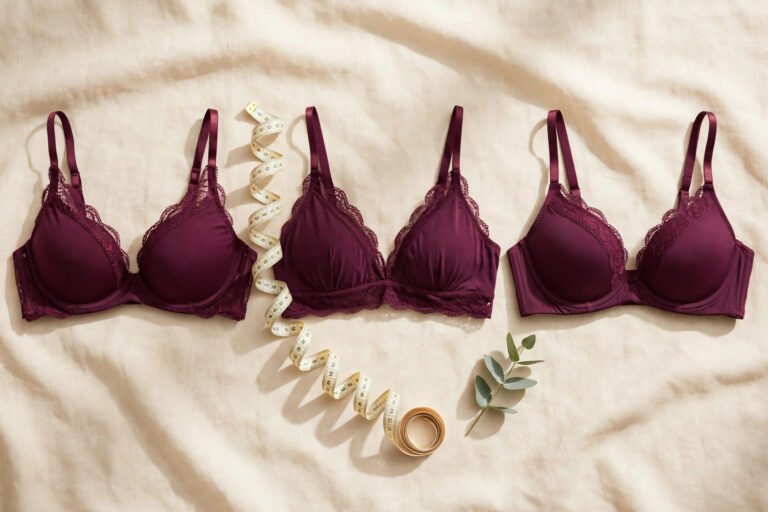
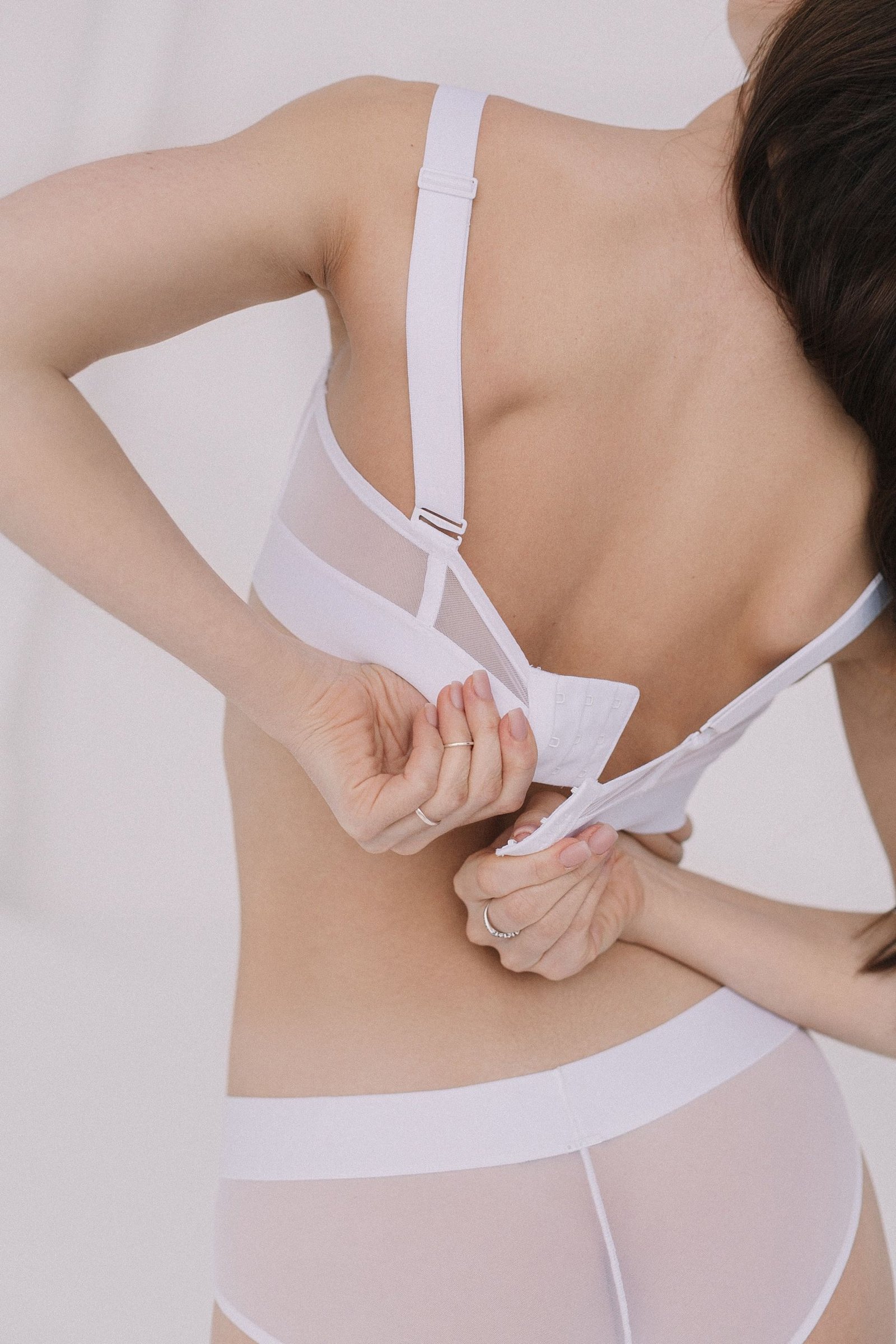
1. The band sits level and feels snug. Fasten the bra on the loosest hook of a new bra. The band should sit level all the way around and feel snug, with two fingers sliding underneath. ThirdLove uses the same test: the band should be snug, “just loose enough that you could put two fingers beneath it.” If the band rides up at the back, it is too loose, and no cup change will fix it. Go down a band size and up a cup letter to hold the volume.
2. The cups lie flat, with no gaping at the top edge. Lean forward slightly and look at the top edge of the cup. It should lie flat against your body, with no gap you can see into and no wrinkling in the fabric. If it gapes, try the same style one cup smaller first. If it still gapes, switch to a shallower style, a demi, a balconette, or a plunge, rather than going smaller again. StylePhyle gives the same rule: “if cups gape, go down a cup or switch to a shallower style.”
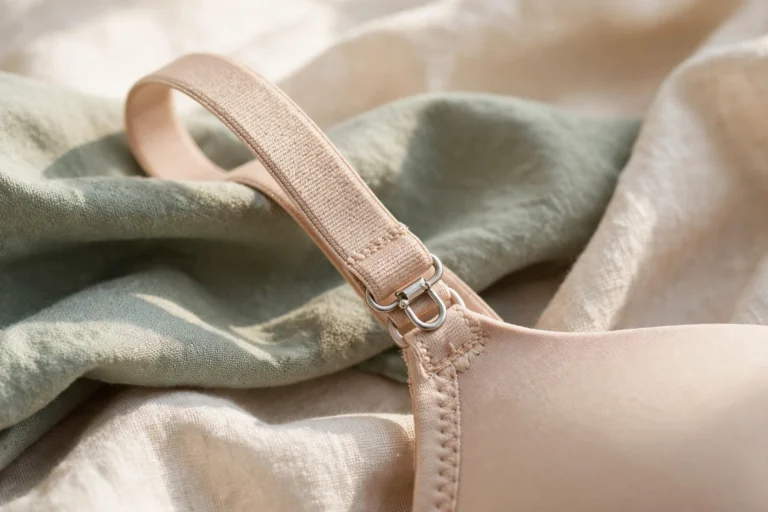
3. The straps adjust short enough and stay put. Petite frames need straps that adjust short, and many standard straps do not. If the straps slip even at their shortest setting, the bra is not built for your frame. Look for centre-pull straps, which attach toward the middle of the back and pull inward, or a racerback clip, which draws the straps together. StylePhyle gives the same advice: “If straps slip, look for center-pull straps or a racerback.” Wacoal adds the diagnostic: if a strap keeps falling after adjustment, “the strap position or bra style may not suit your shoulders.” The strap check itself is one finger passing comfortably between the strap and your shoulder. Straps that dig in are not a sign of a supportive bra. They are a sign that the band is not doing its job.
Padding and Push-Up: A Choice, Not a Correction
Padding is where small-bust advice usually goes wrong, so this section is short and direct. Push-up padding is a styling choice, not a fitting fix. It can add shape under a dress, and it can even out asymmetry. It cannot fix a cup that gapes, because padding fills the bottom of the cup while the top edge still stands away. Lingerie Mantra states the principle plainly: “The fix is usually not more padding, it’s bras designed for a smaller, often shallower shape.”
ThirdLove notes that push-up bras “use extra padding to help even smaller breasts fill in the entire bra cup,” and its weight-loss guide calls a push-up “an occasional option rather than your daily bra.” Treat it that way. If you like the look, wear it for the occasion. If you want an everyday bra that disappears under a T-shirt, choose the shallower cup and skip the padding. There is no size that needs correcting, and no padding that proves anything about you.
Trying On: A Short Checklist
Take this list to the fitting room, or keep it open when you order online.
-
Try the band first. Fasten on the loosest hook, check it sits level, and slide two fingers underneath. If it rides up, go down a band and up a cup.
-
Check the top edge. Lean forward and look for gaping. If it gapes, go down a cup, then switch to a shallower style.
-
Raise your arms. The band should stay put and the cups should stay in place. If the bra moves, the band is loose.
-
Check the straps at their shortest. If they still slip, the style is not built for your frame. Look for centre-pull straps or a racerback clip.
-
Wear it around the house for an hour. Keep the tags on. A bra that feels fine for five minutes can still ride up or dig in by the afternoon. If you spent the hour aware of it, send it back.
-
Buy one before you buy three. Brands grade sizes differently, so confirm the size in one style before you stock up. Our US bra size chart gives the size tables, and our measurement guide and bra size calculator give the starting size.
If three sizes in one style all fail, the style is wrong for you, not the size. Move on to another construction from the table above. Our guides on breast shape and bra fit and bras for different body types map shapes and frames to styles, and our guide on signs your bra does not fit lists every fit fault to watch for.
Frequently Asked Questions
Should I wear a push-up bra every day?
You can, but you do not need to, and most days a lightly lined bra will be more comfortable. A push-up is an occasional option for a particular outfit, not a daily requirement, and it cannot fix a cup that gapes. If your everyday bra gapes, fix the style first, then decide whether you want padding for the look.
Why does my A cup gape when the band fits?
Because the cup is too tall or too deep for your shape, not because the size is wrong. A moulded full cup holds its dome whether you fill it or not, so the top edge stands away. Try the same size in a demi, a balconette, or a plunge, which have less cup to fill, or try a soft bralette, which has no rigid cup at all.
What if the straps keep slipping even at their shortest?
The straps are too long for your frame, or they sit too wide on your shoulders. Look for centre-pull straps or use a racerback clip to draw them together. If the straps slip and the band rides up, check the band first, because a loose band hands the support job to the straps and they cannot do it.
Can I wear a bralette as an everyday bra?
Yes, if the band is firm enough to stay level. A bralette is a good everyday choice under T-shirts and sweaters, and it is often the most comfortable option in AA and A cups. For a fitted top or a dress where you want a smooth line, a lightly lined T-shirt bra may sit flatter. Try both and let the outfit decide.
The Short Version
A bra for small bust fit starts with the band, not the padding. Choose a lightly lined T-shirt bra, a demi, a balconette, a plunge, or a soft bralette, and check the band first: level, snug on the loosest hook, two fingers underneath. If the cups gape at the top edge, go down a cup or switch to a shallower style before you reach for more padding. Check that the straps adjust short enough for your frame, and wear the bra around the house for an hour before you decide. Padding is a choice for a particular look, not a correction for a size that was never wrong. A small bust is a valid size on its own, and the right bra is the one that lies flat, stays put, and lets you forget you are wearing it.