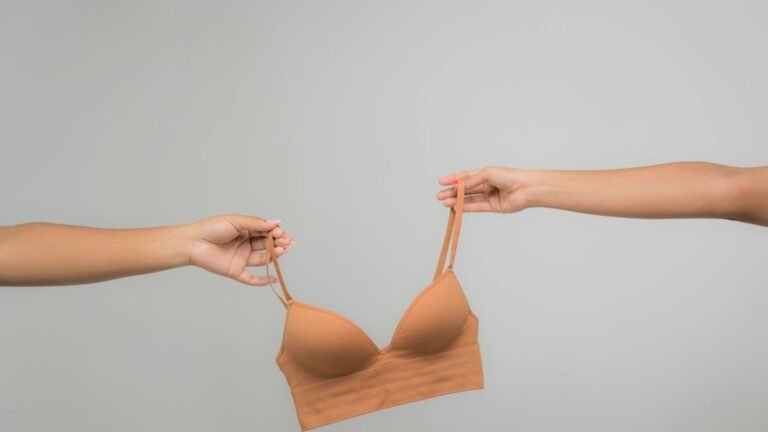
When your daughter wants a bra too early, or at least earlier than you expected, the request usually arrives out of nowhere. She comes home from school, or from a friend’s house, and says that everyone else has one. She may ask for a bra by name, or she may ask in a roundabout way, saying her shirt feels weird, or that she wants what her friend has. The question underneath is simple: does she need one, and if not, what do you say that keeps her trust intact?
The short answer is that wanting a bra because her friends have one is a real reason, even when she does not strictly need one yet. Belonging matters at her age, and a first soft style costs little and changes nothing about how fast she grows up. What matters is how you answer, what you buy, and what you do not turn into a rule. This guide works through all three.
Quick Answer
If your daughter wants a bra because her friends have one, say yes to a first soft style, and say it calmly. A soft bralette or training bra in a plain color is a layer of clothing, not a milestone and not a medical decision. Let her choose the color and the style from two or three options you approve. Buy one or two, not a drawer full. If she tries one and does not like wearing it, that is a fine outcome too, and the drawer keeps it for later. Do not set an age for first bras, do not predict a size from her age, and do not make the purchase a reward for growing up. If she is embarrassed about the conversation itself, our guide on how to talk to your daughter about bras covers the words for that talk, and our daughter embarrassed about bra shopping guide covers the shopping trip when embarrassment is the main problem.
Why She Is Asking Now
She is probably not asking about support. She is asking about belonging. At school, bras are visible in the locker room, in the changing area after PE, and in the straps that show under a tank top. A girl who is the only one without one can feel exposed even when nothing about her body has changed. That feeling is not vanity. It is the same feeling adults get when they are the only person in a room dressed differently, and it is sharper at her age because fitting in is the job of the moment.
Friends are the usual trigger, and that is worth taking seriously rather than dismissing. “Everyone has one” is almost never literally true, but it is true that the friends she notices have one, and those are the friends she compares herself with. Dismissing it with “you do not need one” answers a question she did not ask. She did not ask whether she needs one. She asked whether she can have one, and whether wanting one is normal. A shirt that shows through under a white school top, a comment from a classmate, or an older sister can put the idea in her head the same way. None of these mean she is in a hurry to grow up. Most of the time they mean she noticed something, and she wants to feel normal.
What “Too Early” Really Means
“Too early” usually means one of three things, and they are worth separating, because each one has a different answer.
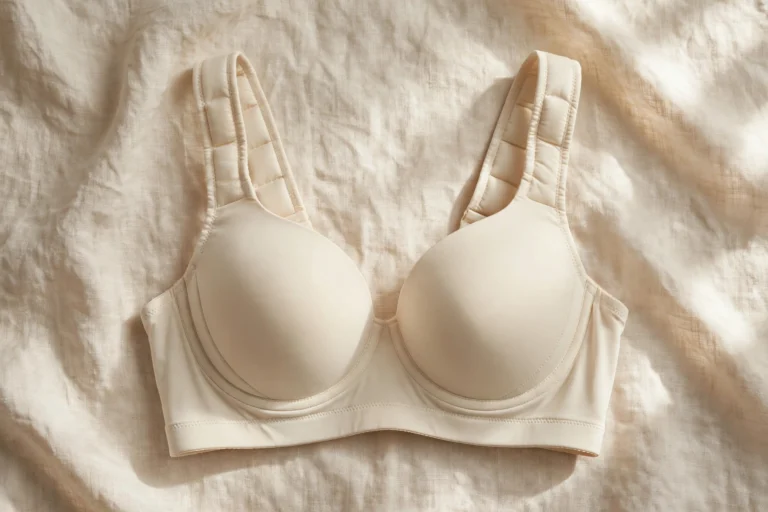
First, it can mean she does not need support yet. That is usually true, and it is also usually beside the point. A first bra is rarely about support. It is about coverage under thin shirts, comfort in the locker room, and feeling like everyone else. A soft style with no wire and no padding does that job without pretending to be something it is not.
Second, it can mean you worry the purchase will rush her childhood. That worry is understandable, and it is worth naming honestly to yourself. But a plain bralette does not rush anything. It is underwear, worn under clothes, chosen by her, in a color she likes. What rushes childhood is pressure, teasing, and being made to feel behind, not a soft layer under a T-shirt.
Third, it can mean you are not sure what to buy, and the uncertainty feels like a reason to wait. That is the easiest one to fix. The shopping part of this guide, and our bra shopping checklist for parents, walk through it in plain steps, and the purchase itself is small: one or two soft styles, plain colors, no padding unless she asks for it.
There is no set age for a first bra, and there is no age below which a bra is wrong. Girls start at different times, for different reasons, and the starting point is comfort and confidence, not a birthday. If you catch yourself setting an age, ask what the age is protecting. Usually the honest answer is your own comfort with the conversation, not her readiness.
How to Judge Readiness Without an Age or Size Rule
Readiness for a first bra is not a measurement. There is no chart that says a girl of a certain age or a certain size is ready, and this guide will not give you one, because no such rule exists. Readiness is a mix of three things you can observe, and all three are about her, not about a number.
She asks for one, more than once. A single passing comment is curiosity. A request that comes back, in different words, on different days, is a wish. Take the second ask seriously even if the first one surprised you.
She is uncomfortable without one. That discomfort can be physical, a shirt that rubs or shows through, or social, the locker room feeling of being the only one. Both count. You do not need to decide which kind it is. If a soft layer would make her day easier, that is enough.
She can tell you what she wants it for. Ask her, plainly: “What would it change for you?” A girl who says “so my shirt does not show through” or “so I feel normal in PE” has a clear, practical reason. A girl who says “I do not know, everyone has one” has a social reason, and that is a clear reason too.
One thing readiness is not: a size. Do not predict a size from her age, and do not measure her to decide whether she is ready. Sizing belongs to the shopping trip, where she tries styles on and picks what feels comfortable. Our training bra size chart explains how to read a chart if she already has a size, and it is written as chart literacy only, not as a measuring lesson.
If all three signs are missing, if she mentioned it once and has not brought it up again, and she seems unbothered, then waiting is fine. Tell her so directly: “If you change your mind, we will go and get one.” That leaves the door open, and it tells her the answer is about timing, not about permission she has to earn.
Daughter Wants a Bra Too Early: What to Say in the Moment
The first minute matters more than the shopping trip. A flat “no” lands as a judgment about her body, even when you mean it as a judgment about timing. A flat “yes” with no conversation lands as permission she did not have to think about. The middle ground is a short, warm answer that takes her seriously and keeps the decision in her hands.
Here are four lines that work, in plain language. Use the one that fits your situation, in your own words.
When she says “everyone has one”: “That makes sense. A lot of girls start with a soft one around now because it feels better under their shirts. Shall we go and look at a couple this weekend, and you can pick the one you like?” This accepts her reason, names the practical job a first bra does, and moves to a plan.
When you are not sure she needs one: “You might not need one for support yet, and that is fine. A first one is mostly about feeling comfortable under your clothes. Would you like to try a soft one and see how it feels?” This is honest about the support question without making it a verdict.
When she is embarrassed to ask: “I am glad you told me. There is nothing awkward about it. We can look at the soft ones together, and you can choose.” Keep it short. Embarrassment grows with long explanations, and shrinks with a calm, ordinary tone. If embarrassment is the whole problem, our daughter embarrassed about bra shopping guide goes deeper on the locker room, the fitting room, and the teasing worry.
When you want to wait: “Not yet, but not never. Let us talk about it again in a few weeks, and if you still want one, we will go.” This only works if you mean it. A “not yet” that quietly becomes “never” teaches her that asking was pointless. Put a real revisit in the plan, and keep it.
What not to say matters as much as what to say. Do not say “you are too young,” because it sets an age rule you cannot defend and invites her to count the days. Do not say “you do not need one,” because she hears “your feelings are wrong.” Do not say “your sister did not need one until she was older,” because comparisons between sisters land as a ranking. And do not make it a joke, even a gentle one. She brought you something she was nervous about, and a joke tells her it was not worth the nerves.
Giving Her a Choice That Respects Her Autonomy
The purchase itself is where autonomy becomes real. A first bra chosen by a parent, handed over without discussion, feels like a uniform. A first bra she picked, from options you approved, feels like hers. The difference costs nothing, and it changes how she feels about wearing it.
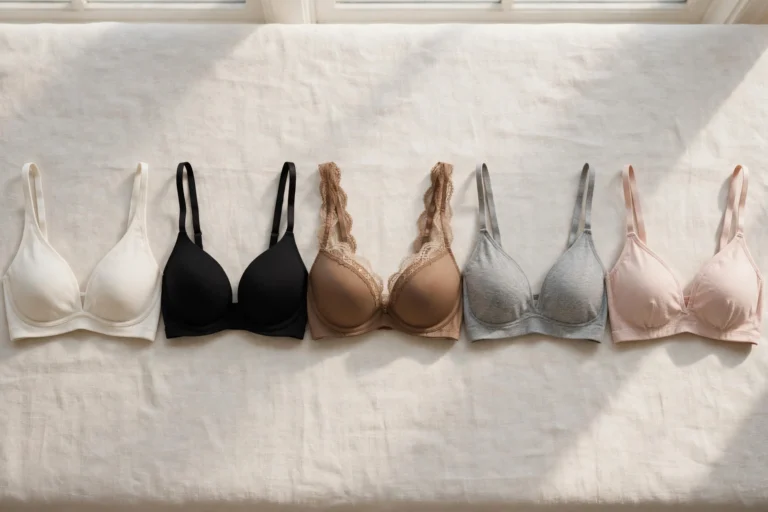
Start with two or three options, not a whole rail. Too many choices overwhelm a first shopping trip, and too few feel like no choice at all. Offer soft bralettes or training bras in plain colors, white, black, nude, or a color she loves, in soft cotton or a cotton blend. Let her pick the color and the style. You keep the veto on anything with heavy padding, underwire, or a price that makes no sense for a first layer. Our how to buy the first bra for a tween guide covers the practical side of that trip, and our bralettes for tweens guide explains the styles she will see on the rail.
Talk about padding before she finds it on her own. Some first bras have light padding, and she may ask for it because a friend has it. Padding is a choice about show-through and shape, not about growing up, and our padded vs unpadded first bras guide explains the trade without taking sides. If she wants padding, let her try an unpadded one and a lightly padded one and compare how they feel under her own shirt. The comparison matters more than the answer, because it teaches her to judge a bra by how it feels on her, not by what her friends have.
Buy one or two, not a drawer full. Two is enough to rotate while one is in the wash, and it keeps the purchase small enough that a change of mind costs nothing. Our how many bras does a tween need guide explains the 3 to 5 count for a full starter set, but that count is for later, once she knows she likes wearing one. A first purchase is a trial, not a wardrobe.
Let her decide whether she wears it to school the next day, or keeps it in the drawer for a week. Some girls put it on immediately. Some try it at home first. Some wear it once, decide it is not for them yet, and come back to it months later. All three are normal, and none of them means the purchase was a mistake.
The Shopping Trip, Step by Step
Keep the trip short, calm, and hers. An hour is plenty, and a long afternoon of browsing turns a small purchase into a big event, which is the opposite of the message you want to send.
Go at a quiet time. A weekday afternoon or a Sunday morning beats a crowded Saturday. Fewer people in the aisle means less embarrassment for her and less pressure for you.
Let her hold the styles. Hand her the two or three options and let her feel the fabric. Softness matters more than brand at this stage, and her hands will tell her more than a label will.
Use the fitting room, but keep it simple. She tries it on over her own shirt first, then under it if she wants. You stay outside, or inside if she asks you in, and you do not comment on her body. Comment on the garment: whether the band stays level, whether the straps stay put, whether it shows through her shirt. That is the whole fit check for a first soft style.
Check the shirt, not the mirror. The question is how it looks under the clothes she actually wears. Have her put her school shirt or her usual T-shirt on over it and look at the outline. If it shows through less and feels comfortable, it is doing its job.
Buy it, and move on. Pay, put it in the bag, and go and do something ordinary together, lunch or a walk. A first bra becomes a bigger deal the longer the day revolves around it. Our bra shopping checklist for parents has the full list of what to bring and what to check, so this guide keeps the trip itself to these five steps.
If she changes her mind in the store, let her. A girl who picks a style, then puts it back and picks a different one, is learning to trust her own judgment. A girl who decides she does not want one today, after all, has still had a useful trip: she knows what they feel like, and she knows you will take her again when she asks.
What Not to Do
A few mistakes are common, and all of them are easy to avoid once you see them.
Do not buy the same style her friend has. Her friend’s bra fits her friend. Your daughter’s comfort, her shirts, and her school day are different, and the right first style is the one that feels good on her. If she insists on the exact same one, let her try it, and let the fit check decide.
Do not buy a drawer full. A first purchase is a trial. Buying five at once turns a small step into a commitment, and it wastes money if she grows out of them or changes her mind about the style.
Do not make it a reward. “When you are older” or “when you have earned it” turns a layer of clothing into a prize, and prizes invite pressure. A bra is not a reward for growing up. It is a practical garment, and treating it as one keeps it ordinary.
Do not talk about her body in front of other people. Not in the store, not at the family dinner, not as a funny story later. She trusted you with something private, and privacy is part of the deal.
Do not buy underwire for a first bra. A first bra should be soft, with no wire and no rigid structure. Underwire has its place later, when support becomes the question, and our guide to wireless vs underwire bras for teens explains that choice when the time comes. For now, soft is the right call.
When to Revisit the Conversation
If you said “not yet,” put a real date on the revisit, even a loose one. “Let us talk about it again after the school holidays” is a plan. “We will see” is not. When the date comes, ask her again, plainly, and listen for whether the answer has changed. Often it has not, and the conversation ends there. Sometimes it has, and the trip happens then.
If you said yes and she wears her first bra happily, the conversation is not over, it just changes. In a few months she may want a second color, or a different style for PE, or a sports bra for the days she is active. Those are ordinary next steps, and our how many bras does a tween need guide covers the count when the starter set grows.
If you said yes and she does not wear it, do not push. Ask once, lightly, whether it feels uncomfortable or whether she just does not feel like wearing it yet. If it is uncomfortable, a different style may fix it. If she just is not ready, the drawer keeps it, and the door stays open. A first bra that sits in a drawer is not a wasted purchase. It is a choice she made and can remake, and that is the point.
Common questions
Is it normal for a girl to want a bra because her friends have one?
Yes. Belonging is the most common reason girls ask, and it is a real reason. A first soft style answers it without turning the purchase into a milestone or a medical decision.
What age is too young for a first bra?
There is no set age. Girls start at different times, for different reasons, and the starting point is comfort and confidence, not a birthday. If she asks more than once, and a soft layer would make her day easier, that is enough.
Should I buy a padded first bra?
Padding is a choice about show-through and shape, not about growing up. Let her try an unpadded style and a lightly padded one under her own shirt and compare. Our padded vs unpadded first bras guide explains the trade in full.
What if she wants one and her dad is the one shopping with her?
The same rules apply: keep it short, let her choose, comment on the garment rather than her body, and buy one or two soft styles. Our single dad’s guide to bra shopping covers the practical side of that trip, and the conversation advice in this article works the same way.
What if she asks and I am not sure I can afford it right now?
Say so honestly, and make a plan together. A single soft bralette is a small purchase, and many budget brands make plain soft styles for a few dollars. The plan matters more than the price: “Let us get one this weekend” beats a vague “later.”