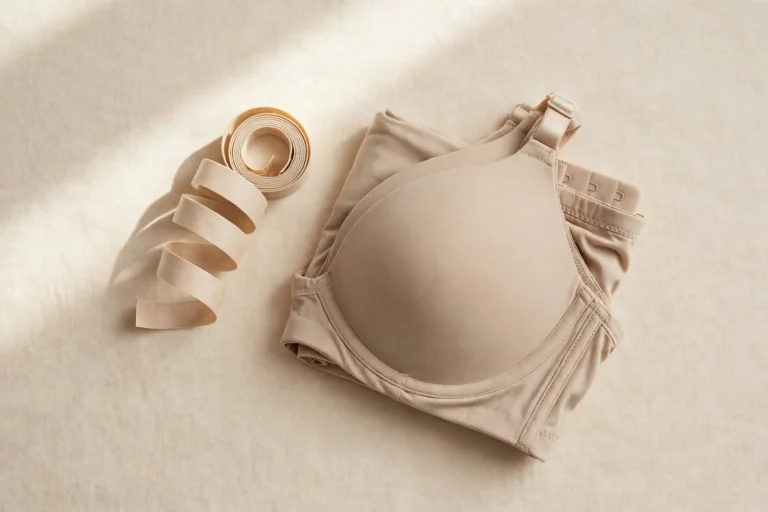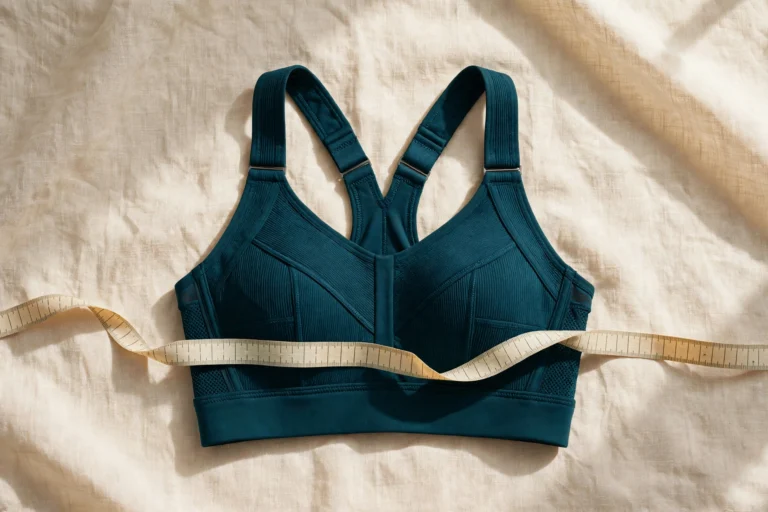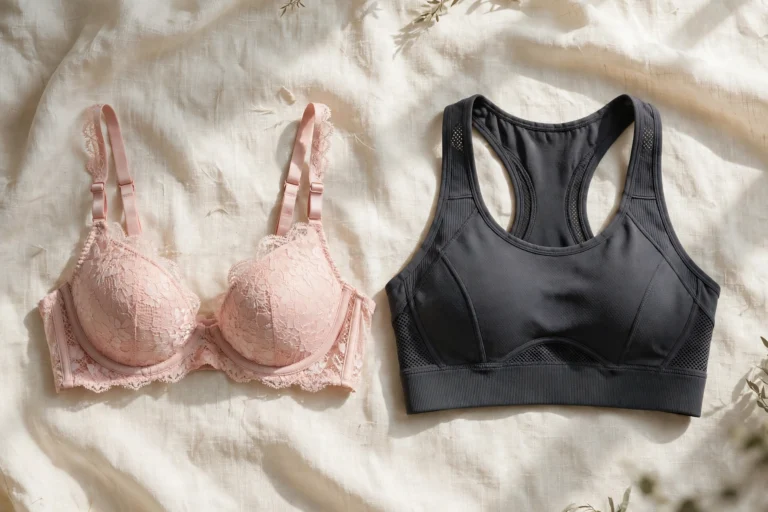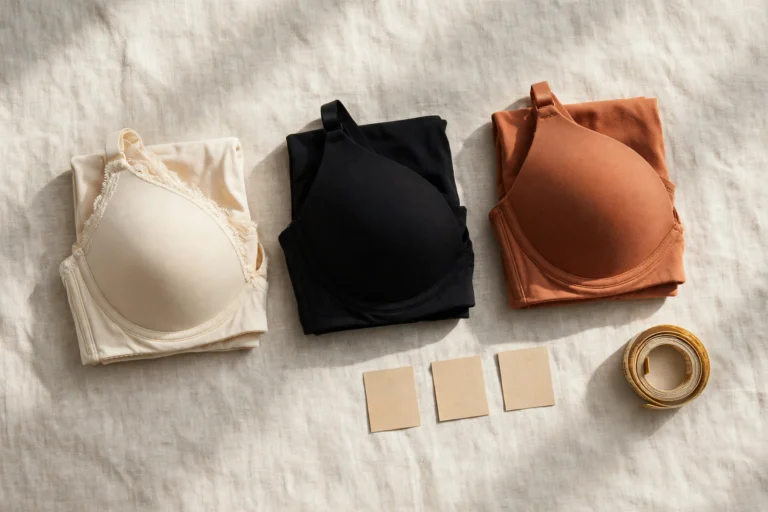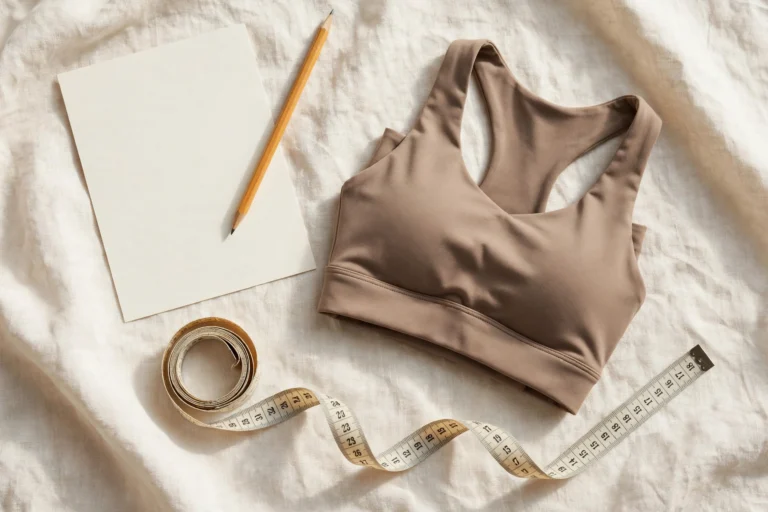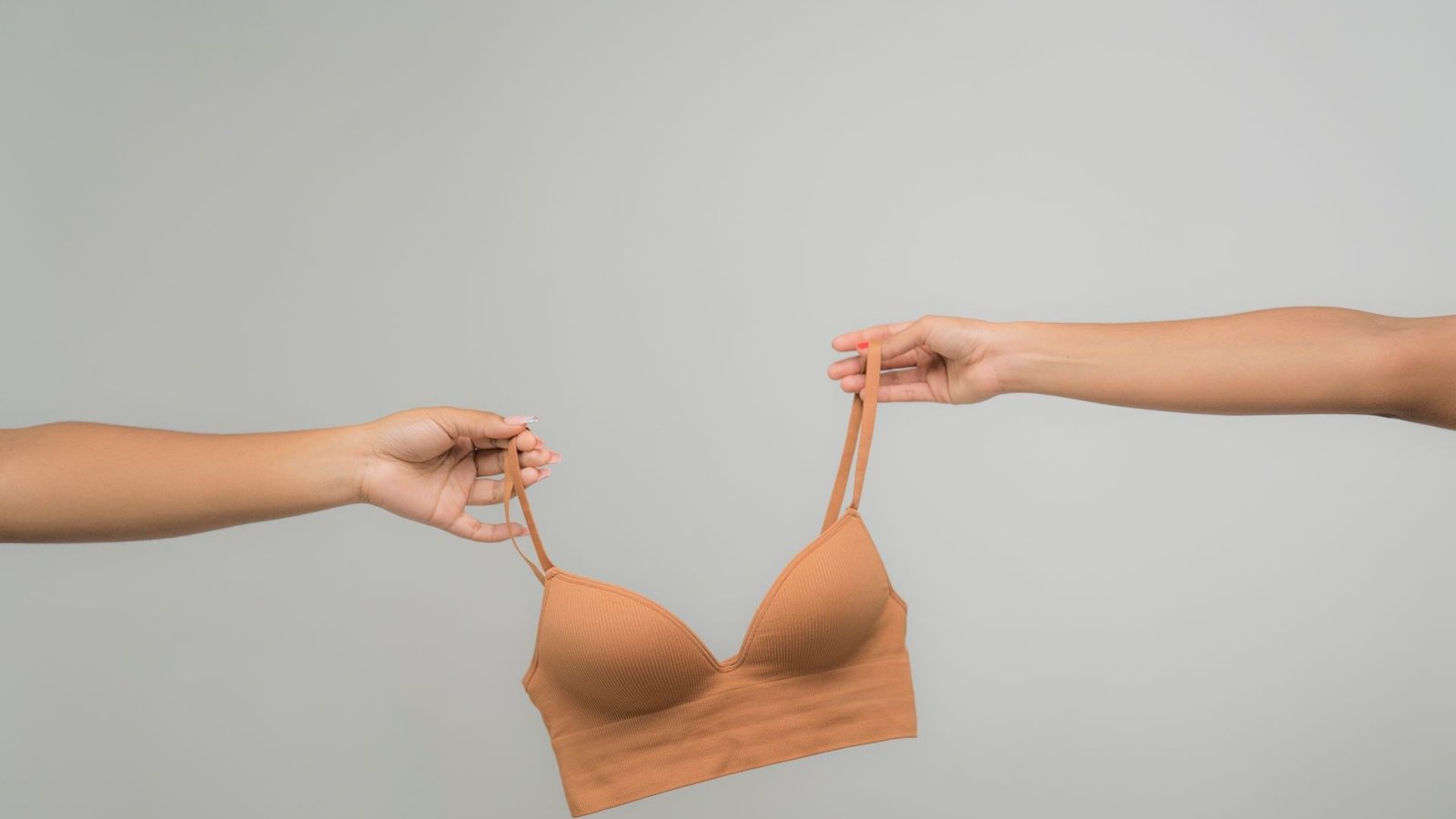
The wireless bra vs underwire question comes up the moment a teen outgrows her first soft bralette. One side promises lift and shape. The other promises comfort and nothing digging in. Both claims are partly true, and neither one is the right answer for every girl, every day. The choice depends on what her day asks of a bra: sitting through classes, running around at PE, or simply feeling comfortable under her school shirt.
This guide explains what each construction actually does, where each one fails, and how to choose between them without turning the decision into a rule about growing up. It is about teen everyday wear, not sports bras. For the sports version of this comparison, our adult guide to wirefree vs underwire sports bras covers support during exercise, and the two guides answer different questions.
Quick Answer
Start wireless, and add underwire later only if she asks for it or her day needs it. For most teens, a wireless bra is the better first step after a soft bralette: it flexes when she moves, it has no wire to poke or dig, and it disappears under a school shirt. Underwire earns its place when she wants more shape or lift, or when a wireless style cannot keep up with her day. There is no age when underwire becomes required, and no size at which wireless stops working. The test is simple: she tries both, she moves in both, and the one she forgets she is wearing wins. If you are still choosing her very first style, start with our how to buy the first bra for a tween guide, which covers the first purchase from the beginning.
What Underwire Actually Does
An underwire is a thin, curved wire sewn into a channel under each cup. Its job is to hold the cup’s shape and to lift and separate. It does that job by being rigid: the wire keeps its curve while the fabric around it moves, so the cup holds its form through the day.
That rigidity is both the benefit and the cost. On the benefit side, underwire gives shape under fitted tops, it lifts more than a soft band can, and it keeps the cup from collapsing when she leans forward. On the cost side, a wire that does not sit flat will poke, dig, or press. It can ride up, it can press on the ribs, and it can feel like a foreign object by the end of a long school day.
Three things decide whether underwire feels good or feels awful. The first is the fit of the band: a band that rides up pushes the wire out of place, and a band that is too loose lets the wire slide. The second is the shape of the wire: a wire that is too narrow sits on breast tissue instead of around it, and that hurts. The third is the quality of the channel: a thin, cheap channel lets the wire work its way out and poke through the fabric, which is the classic underwire complaint and the one most girls remember.
Underwire is not a grown-up badge. It is a construction choice, and it suits some days and some outfits better than others. A girl who wears underwire because she thinks it proves she is older is wearing the wrong reason, not the wrong bra.
What Wireless Actually Does
A wireless bra has no wire at all. Support comes from the band, the fabric, and the cut: a wide band under the bust, a shaped cup or a seamed cup, and straps that stay put. Because nothing rigid is pressing against her, a wireless bra flexes when she moves, sits flat when she leans forward, and forgives a band that is a little loose.
That flexibility is why wireless is the usual first step after a bralette. It feels familiar to a girl who has only worn soft styles, it works under school shirts without showing a wire outline, and it survives a day of sitting, walking, and PE without a midday adjustment. It also washes more easily, since there is no wire to bend out of shape in the laundry.
Wireless has limits, and honesty about them helps her choose well. It gives less lift than underwire, and it gives less separation, so under a fitted top the shape is softer and rounder. On a bigger bust, a wireless style can feel less steady by the end of the day, because the band is doing all the work. That is a construction limit, not a failure, and it is the reason underwire exists as an option rather than a requirement.
Most wireless bras for teens are pull-on or hook-and-eye styles with adjustable straps. Adjustable straps matter more than most people think: they let her shorten the strap when it slips and lengthen it when it digs, and that single adjustment fixes half of all wireless complaints. Our bralettes for tweens guide covers the soft styles wireless grows out of, and the step from bralette to wireless is a small one.
Wireless Bra vs Underwire at a Glance
| Wireless | Underwire | |
|---|---|---|
| What holds the shape | Band, fabric and cut | A rigid wire under each cup |
| Comfort over a long day | Usually higher, nothing rigid to dig in | Depends on the fit; a good fit feels fine, a poor fit pokes |
| Lift and separation | Less lift, softer shape | More lift and separation |
| Under a school shirt | Disappears easily, no wire outline | Can show a wire line under thin fabric |
| When she leans forward | Flexes with her | The wire can press or ride up |
| Washing and care | Easier, no wire to bend | Needs a mesh bag and gentle handling |
| Best first step | Yes, for most teens | Later, when she asks for shape or lift |
| Common complaint | Can feel less steady by late afternoon | Poking wire, digging band, wire slipping out |
The table makes the trade clear: wireless trades a little shape for a lot of comfort, and underwire trades a little comfort for a little shape. Neither trade is wrong. The right one depends on what she values that day.
Comfort and the Poking Wire Problem
Ask a teen what she hates about underwire and the answer is almost always the same word: poking. A wire pokes for a few clear reasons, and knowing them helps you fix the problem instead of blaming the whole idea of underwire.
The most common reason is a band that rides up. When the band climbs, the wire climbs with it, and the wire ends up pressing where it should not. The fix is a band that stays level, not a different wire. The second reason is a wire that is too narrow for her, so it sits on breast tissue instead of around it. The fix is a different cup shape, not a bigger size. The third reason is wear: a wire that has bent in the wash, or worked its way through a thin channel, will poke no matter how well the bra fit on day one. The fix is a mesh wash bag, gentle handling, and replacing a bra whose wire has escaped.
Wireless has its own comfort complaints, and they are worth naming too. A wireless band that is too loose rides up just like an underwire band does, and a wireless style with straps that cannot adjust will slip all day. A wireless cup that is too small will flatten and press, and a wireless style in a stiff fabric will chafe where a soft one would not. Comfort is not a property of wireless or underwire. It is a property of a bra that fits her, in a fabric she likes, on a day she actually lives in.
If she comes home complaining about a bra, ask where it hurts and when. A wire that pokes in the afternoon but not the morning is usually a band problem. A strap that slips all day is a strap problem. A band that leaves marks is a band problem, not a sign she needs a different construction. Our best bras for school guide covers the all-day comfort question in detail, including backpack straps and show-through under school shirts.
The School Day Split
A school day is not one activity, and the bra that suits first period may not suit PE. Splitting the day in two makes the choice easier.
Classroom days are mostly sitting, walking between rooms, and standing in line. Comfort wins here, and wireless usually wins with it. A soft wireless style under a school shirt is invisible, it does not dig during a long sit, and it does not need adjusting between classes. If she wears a uniform, a plain wireless bra in a nude or white color is the simplest answer to show-through.
PE and sport days are a different question, and neither an everyday wireless bra nor an everyday underwire bra is the right tool for them. A sports bra is built for movement, with a wider band and a closer fit, and our wirefree vs underwire sports bras guide compares the two sports constructions. The practical routine is simple: an everyday bra for the classroom, and a sports bra in her bag for PE. Our training bra vs bralette vs sports bra guide explains the three types side by side, so she can see why one bra does not have to do every job.
One more school-day point: the locker room. Changing in front of classmates makes the bra itself visible, and a girl who is self-conscious about it will care more about what it looks like than what it does. A plain style in a color she likes, wireless or underwire, is the kindest choice here. Anything lacy, bright, or attention-getting adds a worry she does not need.
When a First Underwire Makes Sense
There is a right time for a first underwire, and it arrives when she asks for it or when her day needs it, whichever comes first.
She may ask for shape. Under a fitted top, an underwire bra gives a smoother, more defined outline than wireless, and a girl who has noticed that difference may want it for a particular outfit. That is a fair reason. Let her try one under the outfit she has in mind, not in the abstract, and let the mirror decide.
She may ask for lift. As she grows, a wireless style can start to feel less steady by late afternoon, and an underwire style can feel more secure. That is also a fair reason, and it is the most common one. The test is not her size. It is whether she feels steadier in the underwire style at the end of a normal day.
She may simply be curious. Curiosity is a fair reason too. A first underwire bought as a trial, worn for a week, and judged honestly, teaches her more about her own preferences than any guide can. If she tries it and goes back to wireless, that is a useful answer, not a wasted purchase.
When the time comes, buy one underwire style, not three. Let her wear it on a normal school day, not just for an hour at home, and ask her that evening how it felt. If the wire poked, check the band first, then the cup shape, before you conclude that underwire is not for her. And if she loves it, she has found her second everyday style, not a replacement for wireless. Most girls end up with both, and they reach for whichever one fits the day.
When Wireless Is the Better Call
Wireless is the better call in more situations than most people expect, and it is worth saying so plainly, because the idea that underwire is the “real” bra and wireless is the training version is one of the most stubborn myths in this whole subject.
Wireless is the better call when comfort is the priority, which is most school days. It is the better call when she is between sizes, because a wireless style forgives a band that is slightly loose in a way a wired style does not. It is the better call when she is active but not in PE, walking to school, carrying a backpack, sitting through a long exam, because nothing rigid is pressing against her ribs. It is the better call for sleepovers and long travel days, for the same reason.
Wireless is also the better call when she is sensitive to pressure. Some girls feel every seam and every wire, and no amount of “you will get used to it” changes that. Our guide to bras for sensory issues covers that ground in full, and the short version is that a girl who feels a wire all day is not being fussy. She is giving you accurate information about her own body, and wireless is the right answer for her.
None of this means wireless is a lesser bra. It is a different construction, with different strengths, and plenty of adults wear wireless every day by choice. The idea that a girl graduates from wireless to underwire, the way she graduates from one school year to the next, is a story the lingerie aisle tells, not a rule her body follows.
Trying Them On: A Simple Fit Check
The fitting room is where the wireless vs underwire question gets answered, and the check is the same for both constructions. She tries each one on, under her own shirt, and she moves in it. That is the whole test, and it takes five minutes.
The band stays level. It should sit flat around her, at the same height in front and in back, and it should not ride up when she raises her arms. A band that rides up will cause problems in either construction, and no wire can fix it.
The straps stay put without digging. She should be able to slide two fingers under a strap, and the strap should not slip off her shoulder when she moves. If the straps slip, shorten them first. If they still slip, the style is wrong for her shoulders, not her size.
The wire, if there is one, sits flat. On an underwire style, the wire should sit flat against her ribs all the way around, with no gap and no pressure point. If it floats, digs, or sits on breast tissue, try a different cup shape before you try a different size.
The cups lie smooth. No gaping at the top, no spilling over the top or the sides, and no wrinkling. A cup that gapes in one shape may lie smooth in another, so a gaping cup is a reason to try a different style, not necessarily a different size.
She moves in it. Have her sit, stand, reach up, and bend forward. A bra that feels fine standing still and awful when she bends is not a good bra for a school day. The one she forgets she is wearing after five minutes of moving is the one to buy.
If she is choosing between a wireless and an underwire style, have her try both under the same shirt, one after the other, and ask her which one she notices less. The one she notices less is the one that fits her day. Our padded vs unpadded first bras guide covers the padding question that often comes up in the same fitting room trip, and our how many bras does a tween need guide covers how many to buy once she has chosen.
Common questions
Is underwire bad for teens?
No. Underwire is a construction choice, not a health risk, and it is neither required nor forbidden at any age. It suits some girls and some days, and it does not suit others. The right question is whether it feels comfortable on her, not whether she is old enough for it.
Can a teen wear a wireless bra every day?
Yes. Plenty of teens and adults wear wireless every day. Wireless gives less lift than underwire, but for most school days comfort matters more than lift, and a wireless style that fits well is a perfectly good everyday bra.
What if the wire pokes?
Check the band first: a band that rides up pushes the wire out of place. Then check the cup shape: a wire that is too narrow sits on breast tissue. If the wire has bent in the wash or escaped its channel, replace the bra, and wash the next one in a mesh bag.
Should she wear a different bra for PE?
Yes. Neither an everyday wireless bra nor an everyday underwire bra is built for exercise. A sports bra is the right tool for PE, and our wirefree vs underwire sports bras guide compares the two sports constructions.
My daughter wants a bra because her friends have one. Does this guide help?
Yes, and the question comes up so often that we wrote a separate guide for it. Our guide on when a daughter wants a bra too early covers what to say, how to judge readiness, and what a first soft style is for.