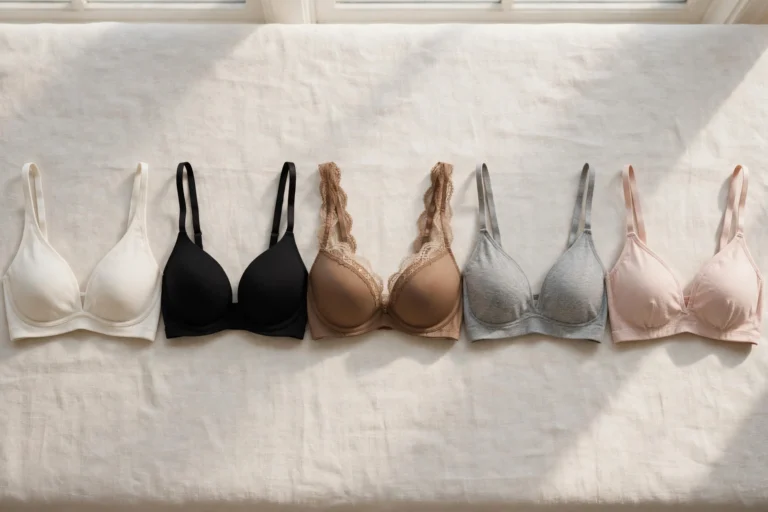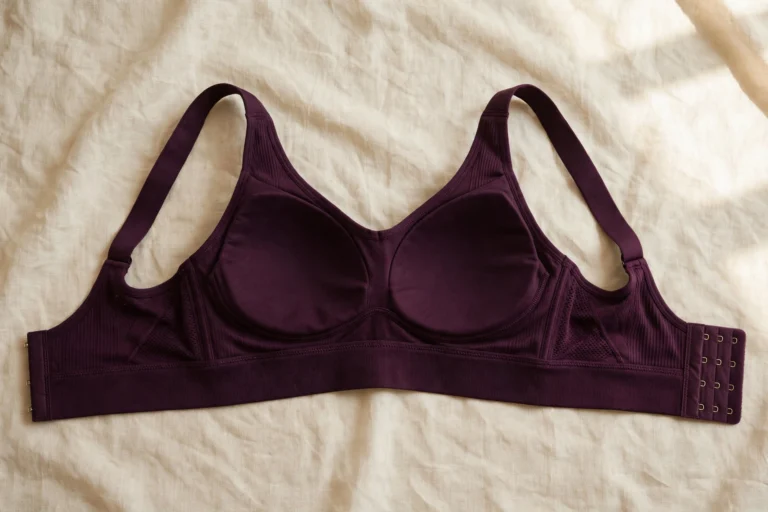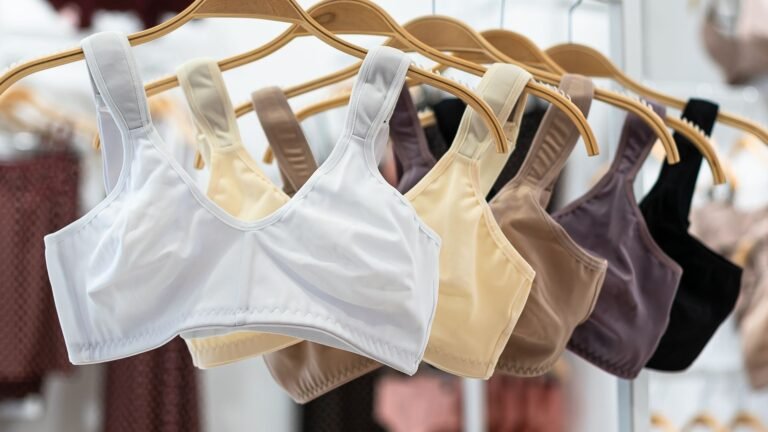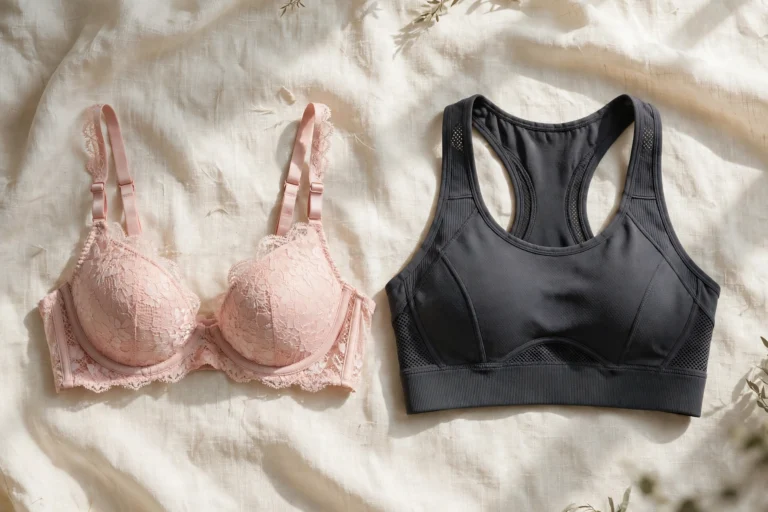
The best bra for teen with large chest is a full coverage style with a firm band, cups that contain the whole breast, and wide adjustable straps, with a minimizer kept for fitted tops and an encapsulation sports bra kept for sport days. That is the whole answer in one sentence. A larger bust in the teen years is a normal variation, not a problem to correct, and the bra that serves it best is the one that holds comfortably through a school day without constant adjusting, digging straps, or a band that creeps upward by lunchtime.
Most of the frustration families run into comes from buying the same soft styles that worked at a smaller size and then wondering why nothing stays put. The fix is construction, not a smaller size or a flatter look. This guide is written for parents shopping with a teen, and for teens reading alongside a parent. The adult version of this ground lives in our guides to the best sports bras for a large bust and plus-size bras that actually support.
Bra for Teen with Large Chest, at a Glance
| Construction | What it does | Best for | Watch for |
|---|---|---|---|
| Full coverage cups | Contains the whole breast, no spillage | Everyday school wear, the default | A shallow cup can still spill |
| Minimizer | Spreads tissue wider and flatter | Button-down shirts, fitted tops | Too small pushes tissue over the top |
| Encapsulation sports bra | Each breast in its own cup | PE, running, court sports | Needs band and cup sizing, not S to XL |
| Wireless full coverage | Firm band and structured cups, no wire | Long school days | Band must be snug or support drops away |
| Underwire full coverage | Wire anchors each cup to the ribcage | Fitted clothes, defined shape | Wire must sit flat, never on tissue |
Five constructions, one rule running through all of them: the band does most of the holding, and the cups have to contain the whole breast.
Encapsulation vs Minimizer: Two Different Jobs
Encapsulation and minimizer are the two words parents hear most when shopping for a teen with a larger bust, and they describe two different jobs. Mixing them up is how a family ends up with a bra that does the wrong thing well.
Encapsulation means each breast sits in its own shaped cup and is supported separately. The idea comes from sports bras, where it matters most, but the same principle applies to an everyday seamed cup. SheFit puts the difference plainly: compression presses both breasts against the chest as one unit, while encapsulation gives each breast its own cup and supports it separately. HauteFlair adds the reason it matters as cup size grows: movement has vertical, side to side, and forward components, and compression restrains the first reasonably well and the other two poorly, while encapsulation addresses all three.
A minimizer does a different job entirely. It does not support each breast separately, and it does not reduce breast tissue. It redistributes tissue across a wider, flatter area, so the bust projects less far forward under clothes. ThirdLove describes it directly: a minimizer “redistributes breast tissue across a wider area of the cup and frame, so your bust projects less forward,” and says its own minimizers reduce the appearance of the bust by up to 2 inches. The cup size stays the same. What changes is the outline under a fitted top: buttons lie flatter and a fitted knit skims instead of pulling.
Full coverage is the third piece, and it is the default. A full coverage bra has cups that encase the whole breast, so nothing spills over the top or bulges at the sides, and ThirdLove notes that full coverage describes the cup shape, so it shows up across many styles, including minimizers. The practical split is simple. Start with full coverage for everyday wear, add a minimizer for fitted tops, and keep encapsulation for sport. A minimizer is a shaping choice for specific outfits, not a daily requirement, and no teen needs one to look acceptable.
The Band Does the Heavy Work
If there is one fact to carry into the shop, it is this: most of a bra’s support comes from the band, with the straps and cups doing the rest. ThirdLove states it directly, and the lingerie experts Bustle spoke to say the same thing. Annette Smith of Montelle Intimates puts it this way: “most of the support for your breasts comes from the band.” Jessica Pfister of Le Mystere adds that the “band should hug firmly around body, anchoring the bra cup and underwire in place.”
A band that is too loose hands the whole support job to the straps, and straps cannot do it. The result is familiar: straps that dig in, a band that rides up the back, and a teen who spends the day tugging at her bra. Tightening the straps to fix a loose band only moves the discomfort to the shoulders.
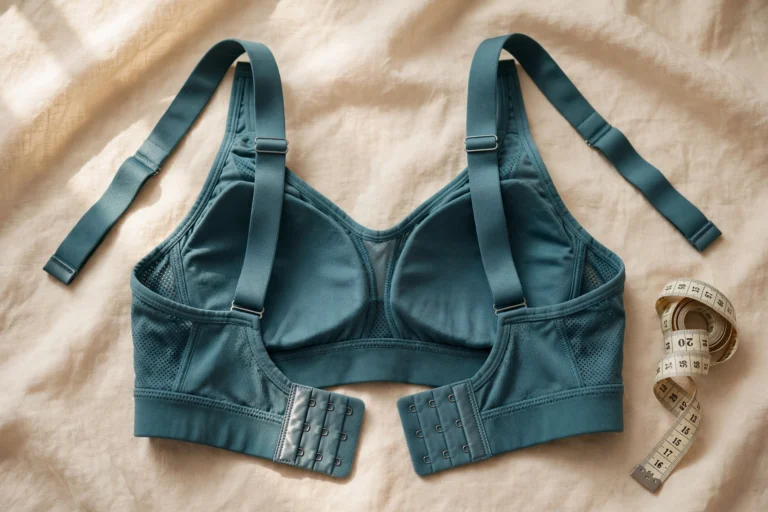
Check the band first, on the loosest hook. The band should feel snug and sit level all the way around, with room to tighten it as the elastic relaxes over months of wear. Slide two fingers underneath at the back: they should fit snugly, and the band should not ride up when the arms are raised. Look for a wider band with more hooks. Larger cup sizes are often built with three or four rows of hook and eye closures instead of two, and the extra width spreads the load across more of the back. Width is not a style detail here, it is part of the support. Our adult guide to plus-size bras that actually support covers band width and hook counts in the same spirit.
Straps, Back, and Shoulders: Where Comfort Shows Up
Straps are where a teen with a larger bust feels a bad bra first, usually by mid morning. The fix is width, cushioning, and placement, not tighter straps. Wide or cushioned straps spread the weight. Bustle reports the expert rule directly: bra straps “should be wide or cushioned (or both) to help evenly distribute weight,” and they should be adjustable. ThirdLove makes the same point, noting that wider padded straps spread the weight across the shoulders and ease pressure. Thin spaghetti straps concentrate the load on a narrow strip, and that is what leaves marks by the end of the day.
Check the strap the way the experts do. Pfister’s rule, quoted by Bustle, is that “if your straps are correctly adjusted, you should only be able to fit two fingers under the strap.” If the straps only stay put because they are tight enough to leave marks, they are doing the band’s job, and the band is wrong. The back shape matters too. Look for a U-shaped back and close-set straps, which keep straps from slipping off the shoulders, and a racerback clip, where the bra has one, pulls the straps toward the centre of the back. A strap that stays put on its own is doing its job; a strap that needs constant hitching is telling you the bra is the wrong shape.
Underwire or Wireless for a Teen with a Larger Bust
Parents ask this question more than any other, and the honest answer is that both work for a larger bust, for different reasons. The choice is about comfort and preference, not about need, and a teen who dislikes underwire is not giving up support by choosing wireless, provided the wireless bra is built properly.
Underwire wins on lift and separation. The wire anchors each cup to the ribcage, which helps with separation and lift, and it gives a defined shape under fitted clothes. The check is strict: the underwire “should follow the perimeter of the breast tissue and rest on the ribcage,” in Pfister’s words from the Bustle guide, and the wires “should cradle your breasts, not dig into any of your breast tissue,” in Smith’s. If the wire sits on tissue at the sides, the cup is too small. If the wire lifts away from the chest at the centre, the cup is too deep or the shape is wrong.
Wireless wins on comfort, with one condition. There is nothing to dig in or press against the ribcage during a long school day. But a wireless bra for a larger bust cannot be a soft unstructured pullover and still hold. Smith’s warning, quoted by Bustle, is that “a wireless bra will never offer the same full support as a wired bra,” so “you again need to ensure that the band is snug and providing optimal support.” Pfister’s recommendation for support without a wire is a foam cup for shaping and lift, “teamed with a wider plush strap and wide strong wing.” In plain terms: a wireless bra for a larger bust needs a firm band, structured cups, wide straps, and a wide wing at the sides. A soft bralette with a narrow band is a lounge bra, not an everyday bra at this size, and our guide to bralettes for tweens explains where bralettes do their best work. A practical split is two wireless to one underwire, or the reverse if she prefers definition.
School Days and Sport Days Need Different Bras
A school day and a sport day ask different things of a bra, and one bra rarely does both jobs well. Splitting them is the single most useful wardrobe decision in this article.
For school, the priorities are smooth coverage, a band that stays level, and straps that do not need adjusting. A lightly lined full coverage T-shirt bra is the everyday default: smooth cups disappear under a uniform or a plain tee, the lining gives coverage under light colors and thin knits, and the full coverage cut contains the whole breast. A minimizer earns its place on the days when a button-down shirt gaps at the buttons or a fitted top pulls across the chest. ThirdLove matches the bra to the outfit directly: a minimizer usually works best under button-downs and fitted dresses, while full coverage is often the easier pick under T-shirts. Our guide on the best bras for school covers everyday school comfort in the same spirit.
For sport, the priority is movement control, and that means encapsulation. A compression-only sports bra presses both breasts to the chest as one unit, which controls up and down movement reasonably well but leaves side to side and forward movement largely unaddressed. SheFit states that encapsulation “becomes essential past a C cup,” because individual cup space is the only way to control each breast on its own terms. A combination bra, which encapsulates each breast and adds compressive fabric over the top, is the strongest option for high movement days. Our guide to compression vs encapsulation sports bras explains the two constructions in full.
Buy the sports bra in band and cup sizes, not S to XL. SheFit notes that band-plus-cup sizing “allows a far more precise fit than alpha sizing can,” and encapsulation bras are usually sold that way. For PE days, running, and court sports, the encapsulated sports bra is a separate purchase from the everyday bras, not an optional extra. Our teen sports guides, sports bra for teens, best sports bras for teenagers, and back to school sports bras, cover the sports rotation in detail.
Fit Checks That Take Five Minutes
Five checks, in a fixed order, every time a new bra is tried on: band first, then cups, then straps, then movement. Checking in any other order leads to the wrong fix, usually a tighter strap or a bigger cup.
- Fasten the band on the loosest hook. It should feel snug and sit level around the ribcage. If it rides up at the back, the band is too loose. As the bra stretches over time, move to tighter hooks.
- Settle into the cups. Lean forward and gently move tissue from the sides into each cup so it is fully seated. The cups should contain the whole breast without bulging at the top or gaping at the edges.
- Run a finger along the top edge. The cup should lie flat against the breast. Spillage over the top means the cup is too small; a gap at the top edge means the cup is too big or the shape is wrong.
- Check the centre gore on wired styles. The centre piece between the cups should rest flat against the breastbone. If it floats away from the chest, the cups are likely too small.
- Adjust the straps last, then move. Straps should stay put without digging, with two fingers fitting underneath. Then raise the arms and twist side to side: the band should not ride up, and nothing should escape the cups.
These steps follow the fit sequence ThirdLove publishes for its full coverage and minimizer styles. If a bra fails the band check, no strap adjustment will save it.
What to Skip for Now
A demi or a balconette as an everyday bra. Both cover less of the breast, which is exactly the wrong direction at a larger cup size: the top of the breast has nowhere to go, so it spills. A compression-only sports bra for high movement days. It will feel fine standing still and fail on the run, so save compression-only styles for walking, yoga, and light activity. A soft unstructured bralette as the only everyday bra. Bralettes are comfortable for lounging and layering, but a soft pullover with a narrow band cannot hold a larger bust through a school day. A bra bought a size up “to grow into.” It will gap, slip, and ride up from the first wear. Buy the size that fits today, in two or three bras, and replace as she grows. Thin spaghetti straps on a larger bust. They concentrate the load on a narrow strip and leave marks. Wide, cushioned, adjustable straps are the feature that makes the bra wearable all day.
How Many Bras, and How to Build the Starter Set
Three is the floor, five is comfortable. One to wear, one in the wash, one resting. Five gives a full school week with a rest day for each bra, which keeps the elastic working longer. That count is editorial guidance from rotation logic, not a study, and our guide on how many bras a tween needs explains the count and the rotation in detail.
Build the set in this order. First, two everyday full coverage bras in a neutral color close to skin tone, one to wear and one to wash. Second, one encapsulation sports bra in band and cup sizing, for PE and sport days. Third, one minimizer, for button-down shirts and fitted tops. Fourth, if she wants one, an underwire full coverage bra for defined shape under fitted clothes. That is four or five bras, each with a job. Replace on fit, not on a calendar. A bra that has lost its firmness in the band, a cup that no longer contains, or straps that no longer adjust short enough has finished its job. Because a teen body is still growing, expect to replace sooner than an adult would, and check the fit again each school term.
Reassurance Without Alarm
A larger bust in the teen years is a normal variation, and there is no age at which a particular cup size should appear. Sizes change through the teen years as the body grows, and a bra that fits today may not fit next term. No size should be predicted from age, and no chart can tell you what size a teen will be next year. The question that matters today is whether the bra she is wearing fits and feels comfortable.
Let her choose. Some teens want the minimizer for fitted tops and some never want one. Some prefer underwire for the defined shape and some will only wear wireless. Both preferences are fine, and the right answer is the one the wearer is comfortable in. Keep the conversation practical, not anxious. Talk about the bra the way you would talk about shoes: it has to fit, it has to hold through the day, and it has to suit the activity. If a teen mentions ongoing discomfort that does not resolve with a better fitting bra, that is a conversation for a clinician, not for a bra guide. Comfort is the goal, and a bra that fits is the tool, not a treatment.
Questions Parents Ask Most
Does my daughter need a minimizer?
Not necessarily. A minimizer is a shaping choice for specific outfits, not a daily requirement. If button-down shirts gap at the buttons or fitted tops pull across the chest, a minimizer helps those outfits sit better. If her everyday tops fit fine in a full coverage bra, she does not need one. A minimizer changes the outline under clothes, it does not change her size.
Should a teen with a large bust wear an underwire bra?
She can, and many do, but she does not have to. Underwire gives lift and a defined shape, and the check is that the wire sits flat on the ribcage and never on breast tissue. Wireless works too, provided the bra has a firm band, structured cups, wide straps, and a wide wing at the sides. The right choice is the one she finds comfortable through a full school day. Our teen guide on wireless vs underwire bras for teens compares the two in full.
What sports bra does a teen with a large bust need?
An encapsulation sports bra in band and cup sizes, or a combination bra that encapsulates and compresses together, for PE, running, and court sports. A compression-only pullover is fine for walking and yoga but does not control side to side and forward movement well enough for high movement days at a larger cup size. Our teen sports guides, sports bra for teens and best sports bras for teenagers, cover the sports rotation activity by activity.
How do I know if the band is the problem?
Three signs point to the band: it rides up at the back, the straps dig in even though they are not overtightened, and the cups never quite sit right no matter how the straps are adjusted. The band does most of the holding, so when it is too loose, everything else fails with it. Fasten on the loosest hook and check that the band sits level and snug. If it does not, the answer is a firmer band, not tighter straps.
How many bras does a teen with a large bust need?
Three is the floor and five is comfortable: two everyday full coverage bras, one encapsulation sports bra, one minimizer for fitted tops, and optionally one underwire for defined shape. Our guide on how many bras a tween needs explains the count and the rotation in detail.
The Short Version
The best bra for teen with large chest is a full coverage style with a firm band, cups that contain the whole breast, and wide adjustable straps. Start there for everyday wear. Add a minimizer for button-down shirts and fitted tops, and an encapsulation sports bra in band and cup sizes for PE and sport days. Check the band first: level all the way around, snug on the loosest hook, two fingers sliding underneath at the back. Check the cups next: they should contain the whole breast without spilling or gaping. Check the straps last: wide or cushioned, adjustable, staying put without digging in. A larger bust needs a bra that holds, not a bra that hides, and the wearer gets to choose which constructions she is comfortable in.