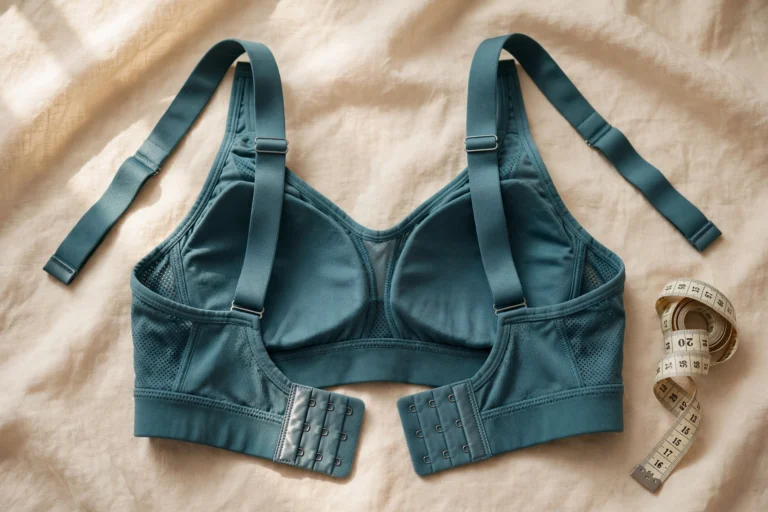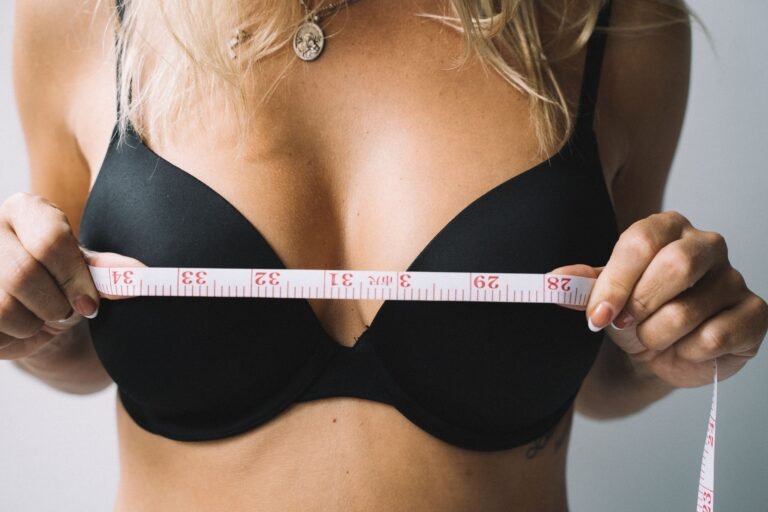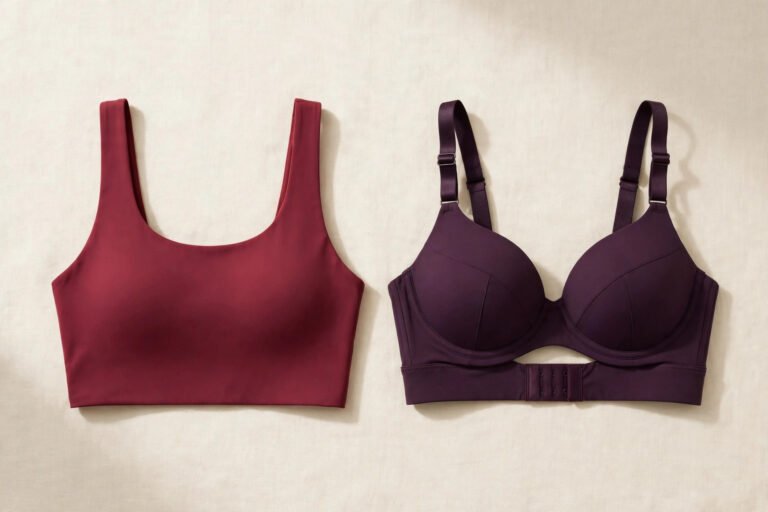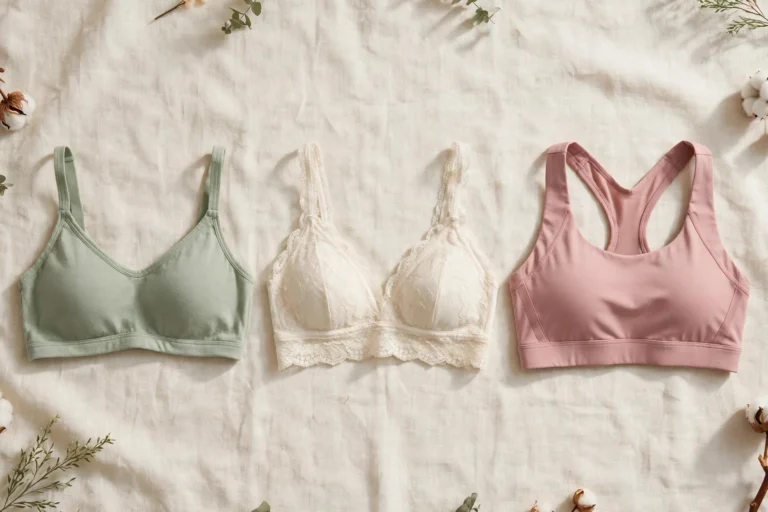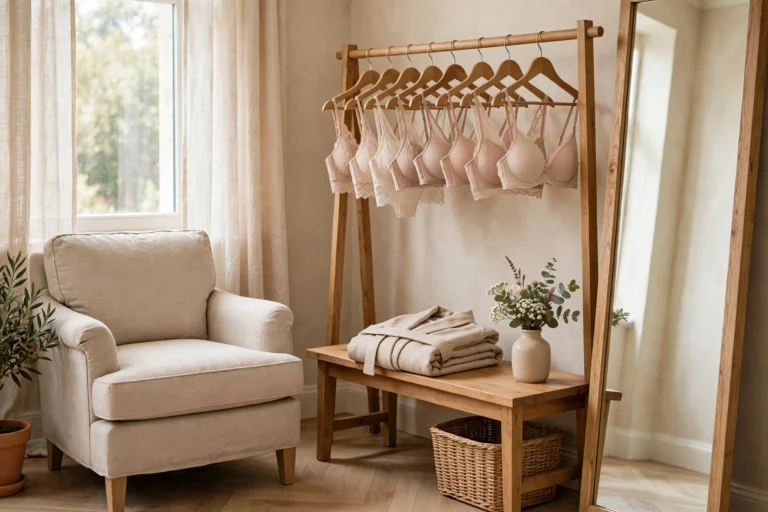
How many bras should a woman own? The honest answer is 7 to 9 bras for most women: 3 to 5 everyday bras, 2 to 3 sports bras, and 1 specialty bra for occasions. That count covers a full week, gives every bra a rest day between wears, and leaves you with something to wear while the rest are in the wash. It is a working capsule, not a collection, and the exact number moves with your laundry rhythm, your workouts, and your wardrobe.
This guide is about the adult capsule. It is the companion to our guide to how many bras a tween needs, which covers a daughter’s starter set. There is no measuring method and no measuring link anywhere in this article.
How Many Bras Should a Woman Own: The Short Answer
Start with 3 everyday bras, and build to 7 to 9 in total. Three is the floor, not the goal. One bra on your body, one in the drawer, and one in the wash is the starter pack ThirdLove recommends, and it works because no single bra is ever worn two days running. From there, add sports bras for the workouts you actually do and one specialty bra for the outfits that need it.
The number that matters most is your everyday rotation. Three to five everyday bras is the range every source we checked agrees on. Felina puts it at 2 to 4 comfortable everyday bras in neutral tones, Neubodi at 3 to 5, and ThirdLove at 5 to 7 in rotation for a full workweek. The spread is not a disagreement. It is the difference between doing laundry twice a week and doing it once.
More bras do not mean better bras. A drawer of twelve bras where four fit well and eight do not is worse than a capsule of seven that all fit. Buy the next bra because it fills a gap in your week, not because it was on sale.
Why Rotation Decides the Number
Elastic is the reason the count matters at all. A bra band stretches during wear and needs time to spring back. Wear the same bra two days running and the elastic never gets that rest, so it gives up sooner and the bra stops supporting the way it should.
Give every bra at least 24 hours off between wears. Felina advises a rest day between wears, and our own care guidance says the same. Rotation is what turns three bras into a wardrobe that lasts, and it is what makes one bra worn daily wear out in months while the same bra in a rotation lasts a year.
The Capsule, Piece by Piece
A capsule is built by role, not by colour or by impulse. Each piece earns its place by covering a day or an outfit nothing else in the drawer covers.
Everyday bras: 3 to 5
These are the workhorses. Smooth, seamless, or lightly lined styles in neutral tones that disappear under the clothes you actually wear most days. Felina recommends 2 to 4 in neutral tones like black, nude, or soft blush, chosen to suit your skin tone so they stay invisible under light tops.
Start with two neutrals and one dark. A nude or skin-tone bra for light and white tops, a black bra for dark clothes, and a second nude or a soft blush as your spare. If your wardrobe leans heavily one way, weight the capsule that way. A woman who wears white shirts four days a week needs two light bras more than she needs a second black one.
One of these should be your best-fitting bra. Not the prettiest, the best fitting. It is the one you reach for on long days, and it is the standard the rest of the capsule is judged against. If none of your everyday bras earns that description, the next purchase is a fitting, not another bra.
Sports bras: 2 to 3
Sports bras are washed after every wear, so one is never enough if you work out more than once a week. Felina recommends 2 to 3, and Neubodi agrees at 2 to 3.
Match the count to your workout days, not your ambitions. Two sports bras cover two workouts a week with a wash between them. Three covers three to four, or a week where laundry slips a day. A sports bra is not an everyday bra. Our sports bra care guide explains why the two jobs need different bras and different care.
One low-impact and one high-impact beats two of the same. If your week mixes yoga and running, the two activities need different support. Buying a second high-impact bra when you already own one does not add a capability. Buying the low-impact one your week is missing does.
Specialty bras: 1 to 2
This is the small group that exists for specific outfits: one strapless or multiway bra for off-shoulder and strapless dresses, and, only if your wardrobe calls for it, one plunge or backless style. Felina recommends 1 to 2 specialty bras for the just-in-case moments.
One strapless bra covers most occasions. If you wear strapless or off-shoulder styles only a few times a year, one well-fitting strapless or convertible bra is enough. It does not need a backup, because it is not in weekly rotation.
Do not buy a specialty bra for an outfit you do not own. The most common wasted purchase in this group is a plunge bra bought for a dress that was never bought. Specialty bras are bought for the outfit, not for the drawer.
Comfort bras and bralettes: 1 to 2
A comfort bra or bralette earns its place on rest days, travel days, and evenings at home. Felina counts 2 bralettes or demi-cups in its 8 to 11 total, and Neubodi lists 2 to 3 wireless bras as part of a well-rounded wardrobe. One is enough to start with. Add a second only if you reach for it most evenings. If it sits unworn, it was a want, not a need, and the capsule does not miss it.
The Capsule at a Glance
| Role | Count | What it covers |
|---|---|---|
| Everyday bras | 3 to 5 | Workdays, errands, most outfits |
| Sports bras | 2 to 3 | Workouts, one per session, washed after each |
| Specialty bras | 1 to 2 | Strapless, plunge, or backless outfits |
| Comfort bras or bralettes | 1 to 2 | Rest days, travel, evenings at home |
| Total | 7 to 9 | A full week with rest days built in |
The total flexes with your life. A woman who works out five days a week and does laundry once a week may need 10 or 11. A woman who works from home, walks for exercise, and washes twice a week may be perfectly covered at 7. The table is a starting point, not a prescription.
Quality vs Quantity: Where the Money Goes
A capsule rewards spending more per bra and owning fewer of them. A well-made everyday bra that holds its shape for a year costs less per wear than two cheap bras that give up in three months.
Spend the most on the everyday bras. They are worn the most, washed the most, and asked to do the most. The specialty bra, worn a few times a year, is where a lower price makes sense. The sports bra sits in the middle: it takes the hardest workouts, so it needs to hold up, but it is also the bra you replace most often.
Our guide to affordable bra brands that actually fit well shows how to build this capsule without luxury prices. The brands there cover the everyday and specialty roles at prices from about 16 to 40 dollars, and every style in that guide was checked against the manufacturer’s own specifications.
Laundry Rhythm: The Hidden Variable
Most women count bras. Few count laundry days, and laundry days are what actually decide the number.
Weekly laundry needs 5 to 7 bras. That is Felina‘s figure, and the logic is simple: seven days, one bra a day, and the used ones wait until wash day. With five in rotation and two sports bras, the week works. With three, it does not, because by Thursday you are re-wearing Monday’s bra before it has rested.
Twice-weekly laundry needs 3 to 4 everyday bras. The wash comes around before the rotation runs out, so the capsule can be smaller. If you are short on bras, washing more often is cheaper than buying more bras.
Wash everyday bras every 2 to 3 wears, sports bras after every wear. That is Felina‘s guidance, and it matches the care labels most manufacturers print. A bra washed after every single wear wears out faster, because washing is itself wear. Our sports bra care guide covers the wash method in full, and our sustainable bras guide explains how gentle washing stretches a bra’s life.
When to Add One, and When to Replace One
Adding and replacing are different decisions, and confusing them is how drawers fill up with bras that should have been retired.
Add one when a role is empty. You start wearing strapless dresses and own no strapless bra. You take up running and own one sports bra. Your work wardrobe shifts to white shirts and you own one light bra. Each of these is a gap, and a gap is a reason to buy.
Replace one when it shows the signs. A band that rides up, cups that no longer sit smoothly, straps that slip no matter how they are adjusted, or elastic that no longer springs back. Our guide to the signs your bra does not fit covers these in detail, and they are the same signs that tell you a bra is done, not just the wrong size.
A good bra lasts 6 to 12 months with proper care. That is the range ThirdLove and Felina both give, and it depends on how many bras share the work. A bra in a rotation of seven lasts far longer than the same bra worn daily, so the capsule pays for itself in replacements you do not have to make. When a bra is done, replace that role, not the whole drawer.
Building Your Capsule on a Budget
A 7 to 9 bra capsule sounds expensive until you price it by role instead of all at once. Build it over three months, not one weekend. Month one: two everyday bras that fit well. Month two: a third everyday bra and a sports bra. Month three: the specialty bra and a comfort bra. Spreading the cost also spreads the fitting decisions, so a mistake costs one bra, not five. Sales are for the second bra, not the first. Buy the first everyday bra at full price from a shop with a good returns policy, wear it for a week, and confirm the fit. Then watch for the same style on sale and buy its twin. Before you shop, lay out every bra you own, try each one on, and sort them into fits well, fits acceptably, and does not fit. Most women find one or two keepers hiding among the bras they had written off.
The Bottom Line
Own 7 to 9 bras: 3 to 5 everyday, 2 to 3 sports, 1 specialty, and 1 comfort bra. That covers a full week, gives every bra a rest day, and keeps a fresh one ready while the rest are in the wash. Build it by role, buy the next bra only when it fills a gap, and replace one at a time when the fit signs tell you it is done. A small capsule of bras that all fit beats a full drawer of bras that mostly do not.
Common questions
How many bras should I own at a minimum?
Three everyday bras is the minimum that works: one to wear, one to wash, and one to rest. Below three, you will wear the same bra two days running, and the elastic will give up sooner. Three everyday bras plus one sports bra is the smallest capsule worth building.
Is 10 bras too many?
Not if your week needs them. A woman who works out four or five times a week, does laundry once a week, and dresses for occasions may genuinely need 10 or 11. The question is not the total, it is whether every bra in the drawer earns its place. If three of them have not been worn in a month, the capsule is too big.
How often should I replace my bras?
Every 6 to 12 months with proper care, according to ThirdLove and Felina. But fit signs matter more than the calendar. A band that rides up or cups that lose their shape mean replacement time, whatever the date.
Can I wear the same bra two days in a row?
You can, but the elastic will not thank you. A 24-hour rest between wears lets the band spring back, and rotation is what makes a capsule last. If you own only two everyday bras, washing more often is the practical fix until you add a third.