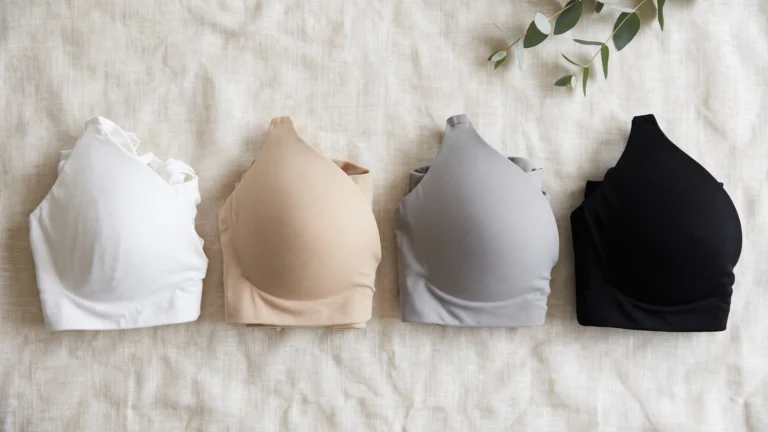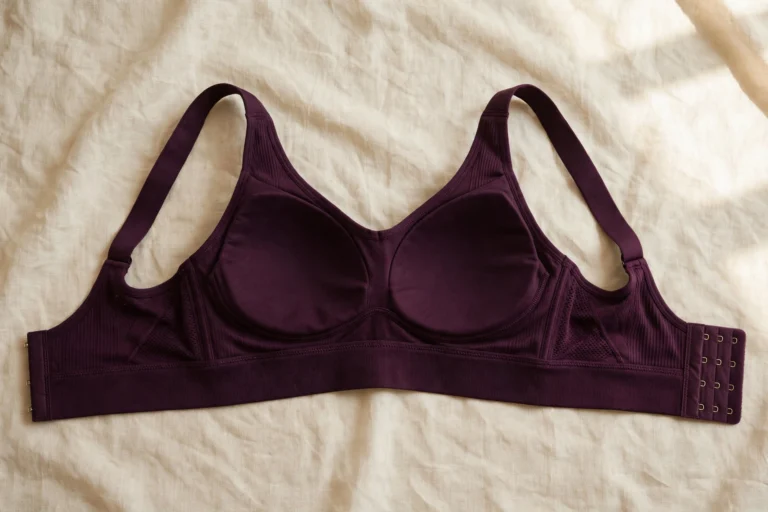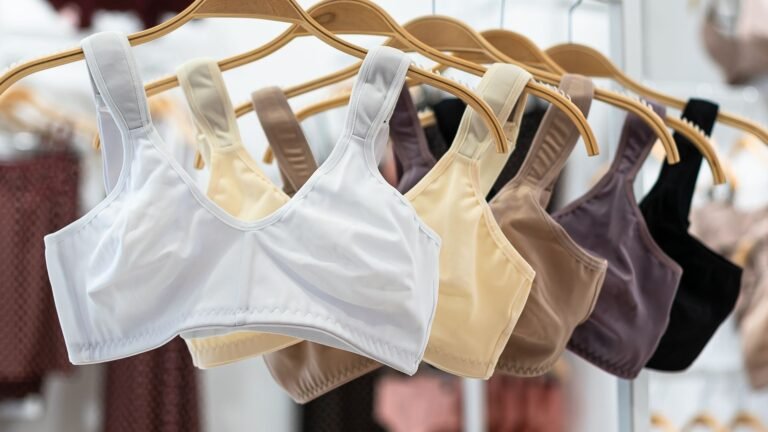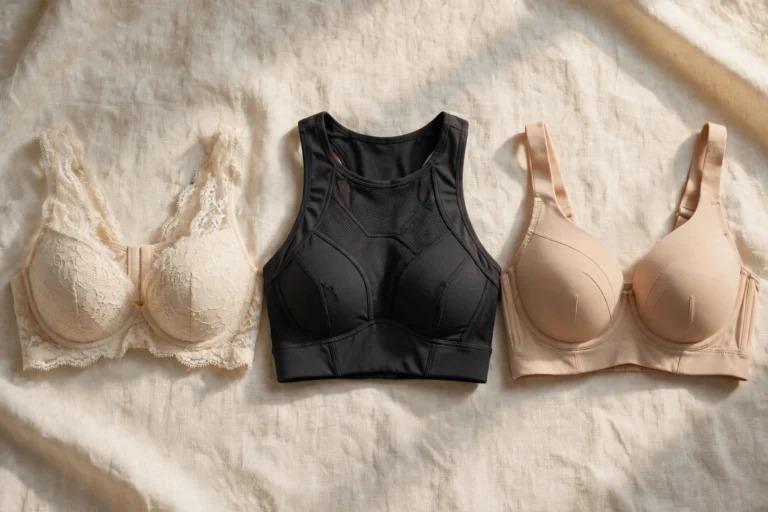
Bra shopping tips are usually a list of things to do in the fitting room, and that is why most of them fail. The fitting room is the last step, not the first. Most bad bra purchases fail before you ever try anything on: you walked in without a starting size, you bought the size you wore three years ago, or you ordered online from a brand whose chart you never opened. Fix the steps before the fitting room and the fitting room gets easy.
This guide covers the whole trip, from the drawer at home to the return label. It is the adult general-shopping guide, so it stays out of other articles’ ground. The parent version of the shopping trip, with its own printable checklist, is our bra shopping checklist for parents. The fitting appointment itself is covered in our guide on professional bra fitting. What follows is everything around those two: how to prepare, how to try on, how to buy online, and how to know when to stop buying and start replacing.
Quick Answer
The best bra shopping tips come down to three habits: start from a current size, try every bra on properly before you commit, and buy only from a place with a clear return policy. Wear a smooth, light-colored top to the shop, bring the bra you wear most so the fitter can see what is failing, and try the band on its loosest hook first. Online, never order from a brand whose size chart you have not read, and never keep a bra that fails the sit test at home. The rest of this guide is the detail behind those habits.
Bra Shopping Tips Before You Shop
Good shopping starts at home, in front of your own drawer. Ten minutes here saves an hour in the shop and at least one return.
Check what you already own. Pull out the two bras you wear most and look at them honestly. Is the band stretched out? Are the straps slipping no matter how you adjust them? Are the cups gaping or spilling? Each fault is information, and it tells you what to look for in the next bra instead of what to avoid. Our guide on signs your bra does not fit lists the faults in full, with what each one means, so you can diagnose your current bras before you shop for new ones.
Start from a current size, not a remembered one. Sizes change, and the size you wore three years ago is a guess, not a fact. If you have not checked your size recently, use our measurement guide or the bra size calculator before you shop, and write the result down. Do not treat that number as a final answer. Treat it as a starting point, because brands cut differently and the fitting room is where the number gets tested.
Read the brand’s own chart. Every brand publishes a size chart, and no two charts are identical. A 34C in one brand can fit like a 36B in another, and the only way to know is to look. Before you order online, open the chart for that brand and compare it with your starting size. Our US bra size chart explains how the US system works in general, and our guide on how bra sizing works explains why the same letter means different things on different bands. The brand’s own chart is the one that decides what to put in the basket.
Make a short list. Decide before you leave what you need: everyday, sport, strapless, or one of each. A list stops you buying a fourth black everyday bra when what you actually needed was a nude one for pale tops. It also stops the sale rack from deciding for you. If you cannot name what the bra is for, do not buy it yet, because a bra without a job is a bra that will sit in the drawer.
Wear the right top. Wear a smooth, fitted, light-colored top to the shop, or bring one with you. A thick sweater hides fit problems, and a dark top hides show-through. The top you try bras under should be close to what you will actually wear over them, or the fitting room will lie to you.
The Try-On Checks That Matter
Try every bra on, even if you have bought the same style before, because manufacturing varies and your body changes. Put the bra on properly first: lean forward, settle into the cups, fasten the band on its loosest hook, and then run these five checks.
1. The band sits level and firm. The band should sit level all the way around, at the same height at the front and the back, and it should feel snug on the loosest hook. A new bra belongs on the loosest hook, because the band will stretch with wear and the tighter hooks are your reserve for later. If the band rides up at the back, it is too loose, and no amount of strap tightening will fix it. If you can pull it more than two inches away from your body, it is too loose.
2. The cups contain without spilling or gaping. The cups should hold you fully, with no spillage over the top or at the sides and no empty space at the top of the cup. Spillage means the cup is too small, or the style is wrong for your shape. Gaping means the cup is too big, or the style is too tall for you. A cup that fits in one style can gap in another, so a gap is information about the style, not a verdict on your body.
3. The center gore sits flat. The small piece of fabric between the cups, called the gore, should sit flat against your chest. If it floats away from your body, the cups are too small or the band is too loose. If it digs in, the cups may be too close together for your shape. Our bra glossary defines the gore and every other part of a bra, if any of these terms is new to you.
4. The straps stay up without digging. The straps should stay on your shoulders through a normal range of movement, and they should not leave marks. Straps carry only a small share of the support; the band does most of the work. If you have to tighten the straps to keep the bra up, the band is doing too little, and tightening the straps is covering for a band problem.
5. The sit test. Sit down in the bra. Then stand up, raise your arms overhead, and twist gently side to side. A bra that fits only while you are standing still in front of a mirror does not fit. If the band rides up when you raise your arms, or the cups shift when you sit, that bra will annoy you all day, and no amount of adjusting will save it. This is the check most shoppers skip, and it is the one that catches the most bad purchases.
Try at least two sizes of any bra you like: your starting size and the sister size next to it. Sister sizing means going up a band and down a cup, or down a band and up a cup, to keep the same cup volume while changing the band. It is the fastest way to find out whether the problem is the size or the style, and it takes one extra minute in the fitting room.
Buying Bras Online
Online shopping is where most bras are bought now, and it works well if you treat it as a fitting room with a return label instead of a gamble.
Read the size chart and the reviews about fit, not the stars. The size chart tells you what to order. Reviews that mention fit, whether a style runs small in the band or large in the cup, tell you what to expect. Ignore star ratings as a fit guide. They measure satisfaction, not whether the bra will fit you.
Check the return policy before you check out. Free returns and a generous exchange window are worth more than a discount. Look for the return window in days, whether returns are free or you pay postage, and whether the bra must be unworn with tags attached. Never order from a shop whose return policy you have not read, because a bra you cannot return is a bra you are stuck with, and stuck bras are how drawers fill up with unworn purchases.
Order two sizes when the policy allows it. If returns are free, order your starting size and the sister size next to it, try both at home, and send one back. This is the online version of trying two sizes in the shop, and it is the single most effective online shopping trick there is. Keep the tags on both until you have decided, and try them on with the tops you will actually wear them under.
Try them on at home, properly. Do the same five checks from the fitting room section, plus the sit test, in your own home. Walk around, sit down, reach up to a shelf. A bra that passes in a two-minute mirror check and fails in an hour of normal movement is a return, not a keeper. Do not keep a bra because returning it feels like a chore. The chore takes ten minutes. Wearing a bra that does not fit takes all day, every day, until you give up and buy another one.
Photograph the tags and keep the receipt. Keep the receipt and the order confirmation until the return window closes, and photograph the tags before you remove them. If a size is wrong and the shop asks for proof of purchase, you will have it. This is a small habit, and it saves the argument that turns a simple exchange into a lost sale.
Sales and Timing
Sales are a good way to buy bras, and a bad way to choose them. The trick is to know what you need before the sale starts.
Buy your everyday bras on sale, not your experiments. When a style you already own and love goes on sale, buy a second one. That is the best use of a sale there is. When a style you have never tried goes on sale, the discount is not a reason to buy it. A cheap bra that does not fit is not a bargain. It is a drawer filler with a lower price tag.
Watch for end-of-season and holiday sales. Lingerie goes on sale around major holidays and at the end of seasons, when shops clear colors and styles. If you know your size and your style, these are the times to stock up. If you do not know your size, a sale is the worst time to guess, because the pressure to decide quickly makes bad fits more likely.
Do not buy three of a new style. Even if the price is good, buy one first. Wear it for a week, wash it once, and see how it holds up. If it survives, buy more. If the band stretches or the straps slip after one wash, you have lost the price of one bra, not three.
Returns and Exchanges
A good return policy is part of the product, and you should use it without guilt. Shops expect a share of bras to come back, and a returned bra is not a failed purchase. It is a fitting that happened at home instead of in the shop.
Know the window. Most shops allow 30 days, some allow 60, and a few allow less. The window usually starts from the delivery date, not the order date, so check which one applies. Mark the last return date on your calendar when the parcel arrives, so a bra does not sit unworn past the point where you can send it back.
Keep it returnable. Do not remove the tags, do not wash it, and do not wear it for a full day before you decide. A try-on at home is expected. A full day of wear is not, and a washed bra is usually not returnable. Try it, decide, and either keep it or send it back within a day or two, while the decision is fresh.
Exchange, do not just return. If the style is right but the size is wrong, exchange it for the sister size instead of returning it and starting over. Most shops make exchanges faster than refunds, and you keep the style you liked. If the style is wrong, return it and move on. No discount is worth keeping a style that fights you.
When to Replace Instead of Buying More
Sometimes the right shopping decision is not to buy a new bra at all, but to replace one that is worn out. A bra does not last forever, and a tired bra makes every new purchase feel wrong by comparison.
The band is the clock. When the band no longer feels snug on its tightest hook, the bra is finished, because the band does most of the support and there is no hook left to tighten to. Straps that slip even at their shortest, cups that have lost their shape, and underwires that poke are all replacement signs too. Our guide on signs your bra does not fit covers each one, and the same faults that tell you a new bra is the wrong size will tell you an old bra is worn out.
Replace one at a time. When a favorite everyday bra wears out, replace it with the same style if it is still made, because you already know it fits. If it is discontinued, that is the moment to shop properly, with the old bra in your hand to compare against. Buying three new styles at once because your favorite died is how you end up with three bras you do not love. Replace the one that died, and add new styles one at a time after that.
Do not keep a bra out of guilt. A bra that cost a lot and does not fit is still a bra that does not fit. Keeping it does not recover the money. Wearing it costs you comfort, and leaving it in the drawer costs you space. Return it if you can, donate it if you cannot, and let the money go. The next purchase will be better for the lesson.
Where to Shop: Store Types
Where you buy matters as much as what you buy, because each type of shop is good at a different part of the job.
Department stores are good for range and for trying many brands in one trip. They are also good for sales. Their fitters vary in training, so treat a department store fitting as a starting point and verify it with the five checks in this guide rather than taking it on trust.
Specialist lingerie shops are good for fitting and for sizes outside the standard range. Their fitters usually train specifically in bra fitting, and they carry brands and sizes a department store does not. If you have struggled to find a fit elsewhere, a specialist shop is the best next step. Our guide on professional bra fitting explains what a fitting appointment actually involves, so you know what to expect before you book one.
Online shops are good for price, range, and reordering a style you already own. They are bad for discovering a new fit, because you cannot try before you buy. Use online shops for reorders and for styles you know, and use a physical shop for anything new. The best shopping strategy is usually a mix: fit it in a shop, then reorder it online when it goes on sale.
Budget matters, and it is not a compromise. A well-fitting budget bra beats an expensive bra in the wrong size every time. Our guide to affordable bra brands that actually fit well covers six budget styles that fit well, with honest size ceilings, so price is never the reason to wear a bra that does not fit.
Frequently Asked Questions
Should I get fitted every time I shop?
Not every time, but regularly. If your size has not changed and you are reordering a style you own, you do not need a new fitting. If it has been more than a year, if your body has changed, or if your current bras are failing the checks in this guide, get fitted before you buy. A fitting is a measurement of now, not a lifetime certificate, and it goes stale like any other measurement.
Is it rude to try on lots of bras and buy nothing?
No. Trying on is the job, and shops expect it. A good shop would rather you try ten bras and buy one that fits than buy three that do not and return them all. Take your time, use the fitting room properly, and do not apologize for it. If a shop makes you feel rushed, that is information about the shop, not about you.
What should I do if the shop does not carry my size?
Ask the fitter what they can order in, and check the brand’s own website, which often carries a wider range than the shop floor. Sister sizing can also bridge a gap: if your band is not in stock, the sister size next to it may be, and our sister sizes guide explains how that works. Do not buy the wrong size because it is the only one on the rail. That is the most expensive mistake in this guide, and it is also the most common.
How do I shop for bras if I hate shopping for bras?
Shop online for reorders, book a fitting appointment so someone else does the work, and buy one style at a time. You do not have to enjoy the process to do it well. A single good fitting, once a year, plus online reorders of the style that worked, is a complete shopping system, and it takes less time than the drawer full of wrong bras it replaces.
The Short Version
Bra shopping tips work best before the fitting room, not in it. Start from a current size, read the brand’s own chart, and make a short list of what each bra is for. In the shop, run the five checks: level band on the loosest hook, cups that contain without spilling or gaping, a gore that sits flat, straps that stay up without digging, and the sit test. Online, never order from a brand whose chart you have not read, and never keep a bra that fails the sit test at home. Buy everyday styles on sale, buy one of a new style before you buy three, and replace a worn-out band instead of adding another bra to the drawer. The goal is not a bigger collection. It is a smaller one, where every bra fits and every bra gets worn.
If you want the parent version of this trip, with a checklist you can print, our bra shopping checklist for parents covers the same ground for a daughter’s first bras. If you want the fitting appointment itself, our guide on professional bra fitting walks through it step by step. And if your current bras are failing the checks in this guide, start with our guide on signs your bra does not fit before you shop at all, because knowing what is wrong with the bras you own is the fastest way to buy bras that are right.