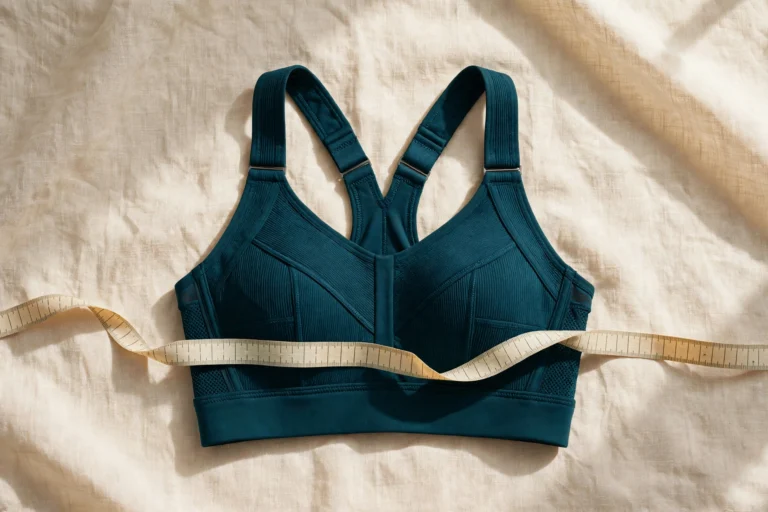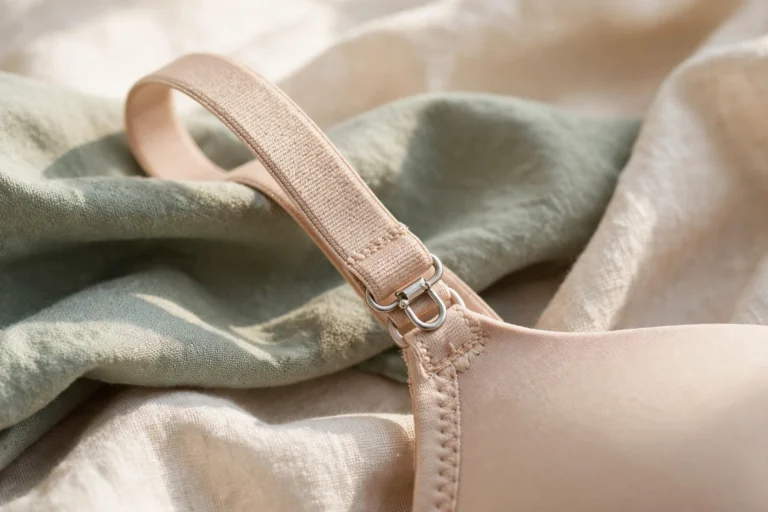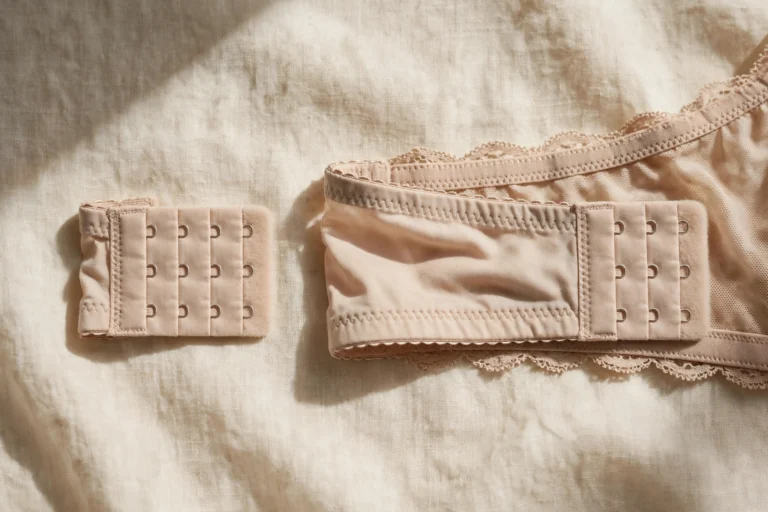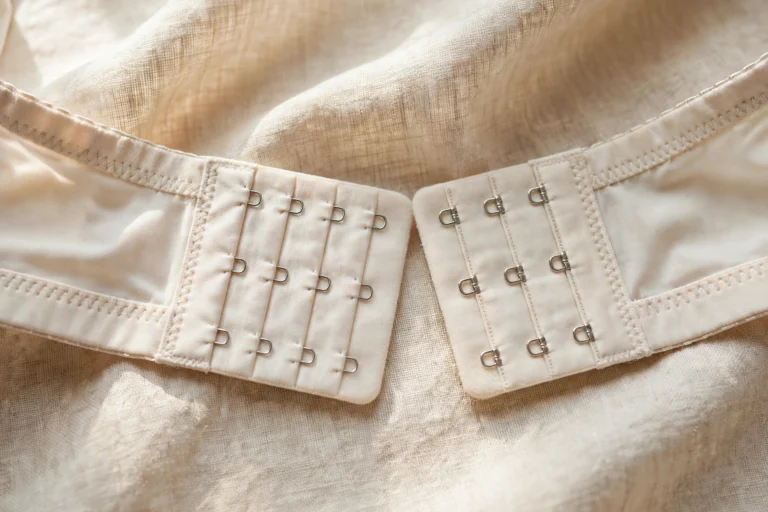
If you keep asking why does my bra size keep changing, the short answer is that your bra size is a measurement of your body right now, not a permanent label. It moves when your body moves, and it moves again when the brand or the style changes. A size that fit two years ago can be the wrong size today without anything being wrong with you or with the bra.
That is the normal pattern, not the exception. ThirdLove puts a number on it: on average, a woman’s breast size changes six times over the course of her life, whether from pregnancy, weight changes, or other factors. Brit + Co quotes the same figure from ThirdLove head of design Ra’el Cohen, who adds that the change can come from hormones, weight fluctuation, pregnancy, or simply a difference between designers and between US and European labels. A shifting size is something to track, not something to worry about.
This guide covers the five causes: weight change, your monthly cycle, pregnancy and nursing, menopause and age, and brand and style variation. It also covers a sixth cause that fools a lot of people: the bra itself wearing out. For each cause you will find why the size can shift and what to do about it. The measuring itself is not re-taught here. Our measurement guide and our bra size calculator carry the method, and the principles are in our guide on how bra sizing works.
Quick Answer
Your bra size changes because the two measurements behind it change: your underbust, which sets the band, and the difference between your bust and underbust, which sets the cup. When either measurement moves, the size moves with it. The five causes are weight change, your monthly cycle, pregnancy and nursing, menopause and age, and brand and style variation, plus a worn-out bra that has stretched out of its own size. The fix is the same every time: check the band first, re-measure from your current body, and try the sister size next to your old one before you buy. The rest of this guide is the detail behind that habit.
The Causes at a Glance
| Cause | What usually changes | What to do first |
|---|---|---|
| Weight change | Band, cup, or both | Re-measure, then check the band first |
| Monthly cycle | Temporary fullness for a few days | Wait a week, then recheck the fit |
| Pregnancy and nursing | Size rises, then settles after nursing ends | Recheck at each stage, and ask your clinician about individual concerns |
| Menopause and age | Slow shift in band, cup, or shape over years | Re-measure once a year and after any big change |
| Brand and style variation | The same label fits differently | Read that brand’s own chart and try the sister size |
| A worn-out bra | The band stretches and the cups lose shape | Replace the bra, not your size |
Weight Change and Your Bra Size
Weight change is the cause most people think of first, and it is the one most often misunderstood. A bra size is two measurements, not one: your underbust sets the band, and the difference between your bust and your underbust sets the cup. When your weight changes, either measurement can move, or both can move, and they do not have to move together.
There is no rule that turns a weight change into a size change. No chart can say that a certain number of pounds equals a certain cup, because bodies do not distribute weight the same way. Any guide that offers a per-pound or per-dress-size formula is guessing, and this guide will not do that.
What you can rely on is the fit itself. If your bra used to fit and now it does not, the size changed, whatever the scale says. The band rides up at the back, the cups spill or gape, or the straps slip no matter how you adjust them. Our guide on signs your bra does not fit lists each fault in full.
What to do: re-measure from your current body, using our measurement guide or the bra size calculator. Treat the result as a starting size, not a verdict, and try it on. Check the band first, because a band that is too loose makes every other fit check unreliable. If the new size feels close but not right, try the sister size next to it before you conclude the style is wrong. Do not buy three bras in a new size before you have worn one for a week, because a size that measures right can still fit wrong in a particular style.
Your Monthly Cycle and Temporary Size Shifts
Many people notice that their bust feels fuller in the days before a period, and that their bras feel tighter for a few days and then normal again. This is a temporary shift, not a new size. The measurement moves a little, the bra feels different, and then the measurement moves back. It is one of the most common reasons a bra that fit last week feels wrong today, and one of the most common reasons people buy a size they do not need.
The key word is temporary. A size change that lasts a few days and then reverses is your cycle, not your size. One that is still there two weeks later is something else.
What to do: do not buy a new size on the tightest day of the month. Wait a week, try the same bra again, and see whether the fit has settled. If a bra fits well for most of the month and feels snug for a few days, it is probably the right size. If you want a bra for those few days, a softer style in your usual size beats a bigger size you will only wear for part of the month. If a change in your cycle feels large, sudden, or worrying to you, talk to your clinician rather than trying to solve it with a new bra size.
Pregnancy and Nursing: Timing, Not a New Permanent Size
Pregnancy and nursing move bra size more than almost any other cause, and they move it in stages. Size often rises during pregnancy, changes again while nursing, and settles after nursing ends. ThirdLove lists pregnancy and hormonal changes first among the influences on breast size over time, noting that breasts often increase in size during pregnancy and then reduce after breastfeeding. The point for this guide is timing: the size at each stage is the size for that stage, and none of them is necessarily the size you will settle at afterwards.
That is why this section is about timing, not a permanent new size. A size that fits in the second trimester may not fit in the third, and a size that fits while nursing may not fit after nursing ends. Each stage deserves its own check: re-measure, try it on, and check the band first.
What to do: recheck your size at each stage instead of buying ahead for a stage you have not reached. Choose styles that forgive a little change, such as a band with several hook settings and cups that are not rigidly molded, and try the sister size next to your measured size if the first try feels off. For anything about your own body, your own pregnancy, or your own nursing experience, talk to your clinician. This guide covers size-change timing only, and it does not replace individual advice.
Menopause and Age: Slow Change Over Years
Age changes bra size slowly, which is exactly why it catches people by surprise. Nothing dramatic happens in a week. Instead, the size drifts a little over a few years, and one day a drawer full of bras that used to fit does not fit any more. ThirdLove names aging as one of the three main influences on breast size over time, alongside pregnancy and weight fluctuation, and notes that hormonal changes around perimenopause and menopause can shift breast size.
The shift is not only about size. Tissue softens with age, volume can move, and posture can change a little too. That is why an older bra can fail in a new way: the cups gap at the top where they used to lie smooth, or the band that used to sit level now rides up. The size on the label did not change. The body the label was measured for did.
What to do: re-measure at least once a year, and again after any big change, rather than assuming the size you wore in your thirties is still your size. Start from the current measurement, try it on, and check the band first. If the band fits but the cups gap at the top, the answer is often a different cup shape or a different style, not a smaller size, so try another construction before you size down. Our guides on band size vs cup size and cup sizes explained explain what each number and letter controls. If you have individual concerns about changes in your body, talk to your clinician. This guide covers size and fit timing only.
Why Does My Bra Size Keep Changing From One Brand to the Next?
This is the cause that surprises people most, because nothing about your body changed at all. You order your usual size from a new brand, and it does not fit. Or you buy the same size in two styles from the same brand, and one fits while the other does not. The size did not change. The ruler did.
Brands do not all grade their sizes the same way. Each brand writes its own size chart, cuts its own patterns, and decides for itself what a 34C means in its own bras. Wacoal states it plainly on its own size-chart page: bra fit may vary depending on bra style, construction, and body shape, and the chart is a fitting guide, not a guarantee. A 34C in one brand can fit like a 36B in another, and the only way to know is to look at that brand’s chart and try the bra on.
The letters themselves are part of the problem. US, UK, and European cup sequences do not line up past DD: a UK E is a US DDD, and a UK F is a US G, so a bra bought from a UK listing in your US size can arrive a full cup off. Our US bra size chart explains how the US system works, and our guide on how bra sizing works explains why the same letter means different things on different bands.
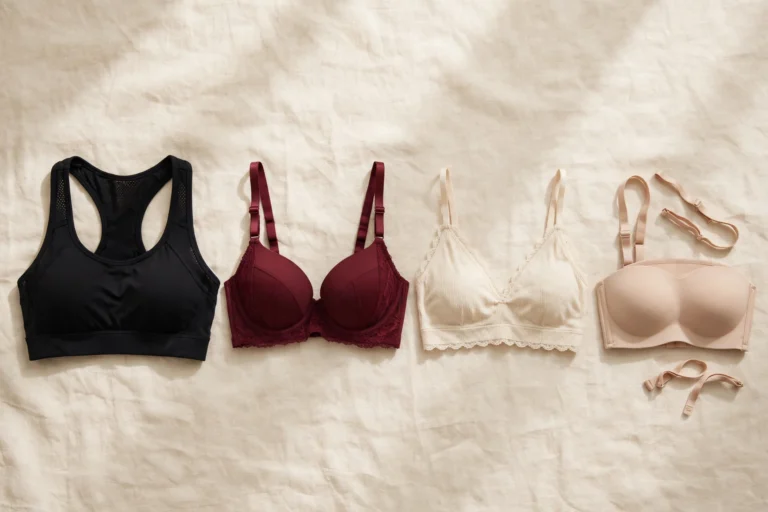
Style matters as much as brand. A lightly lined t-shirt bra, a full-coverage bra, and a plunge bra in the same size from the same brand can fit three different ways, because the cup shape, the wire length, and the gore height are all different. A gap or a spill in a new style is information about the style, not a verdict on your body, and it is not proof that your size changed.
What to do: never order from a brand whose size chart you have not read. Open the chart for that brand, compare it with your starting size, and order your size and the sister size next to it when returns are free, so you can test both at home. Judge the fit by the band, the cups, and the gore, not by the label. Our bra glossary defines the gore and every other part of a bra.
Your Bra Itself Can Change: Wear and Stretch
Sometimes your size did not change and your body did not change. The bra changed. Bands stretch with wear and washing, cups lose their shape, and straps lose their elasticity. A bra that fit on its loosest hook when it was new can feel a full size too loose a year later, and the label still says the same size it always said.
This is the cause that fools the most people, because it looks exactly like a body change. The band rides up, the cups gap, and the straps slip, and the natural conclusion is that your size moved. Often the bra simply wore out. A stretched band is not a new size. It is a finished bra.
What to do: check the bra before you blame your body. Fasten it on its tightest hook. If it feels snug there and used to feel snug on its loosest hook, the band has stretched, and the bra is done. Replace the worn bra with the same style in the same size if it is still made, and only re-measure if the new one in the old size does not fit either. Our guide on signs your bra does not fit covers the worn-out signs alongside the wrong-size signs, so you can tell the two apart.
What to Do Each Time Your Size Changes
Whatever caused the change, the response is the same five-step routine. It takes ten minutes.
1. Check the band first. The band does most of the support, so start there. Fasten the bra on its loosest hook. It should sit level all the way around and feel snug without digging. If the band rides up at the back, it is too loose, and no amount of strap tightening will fix it. A new bra belongs on the loosest hook, because the band will stretch with wear and the tighter hooks are your reserve for later. If your current bra only feels right on its tightest hook, the band has stretched, and the bra is worn out, not the wrong size.
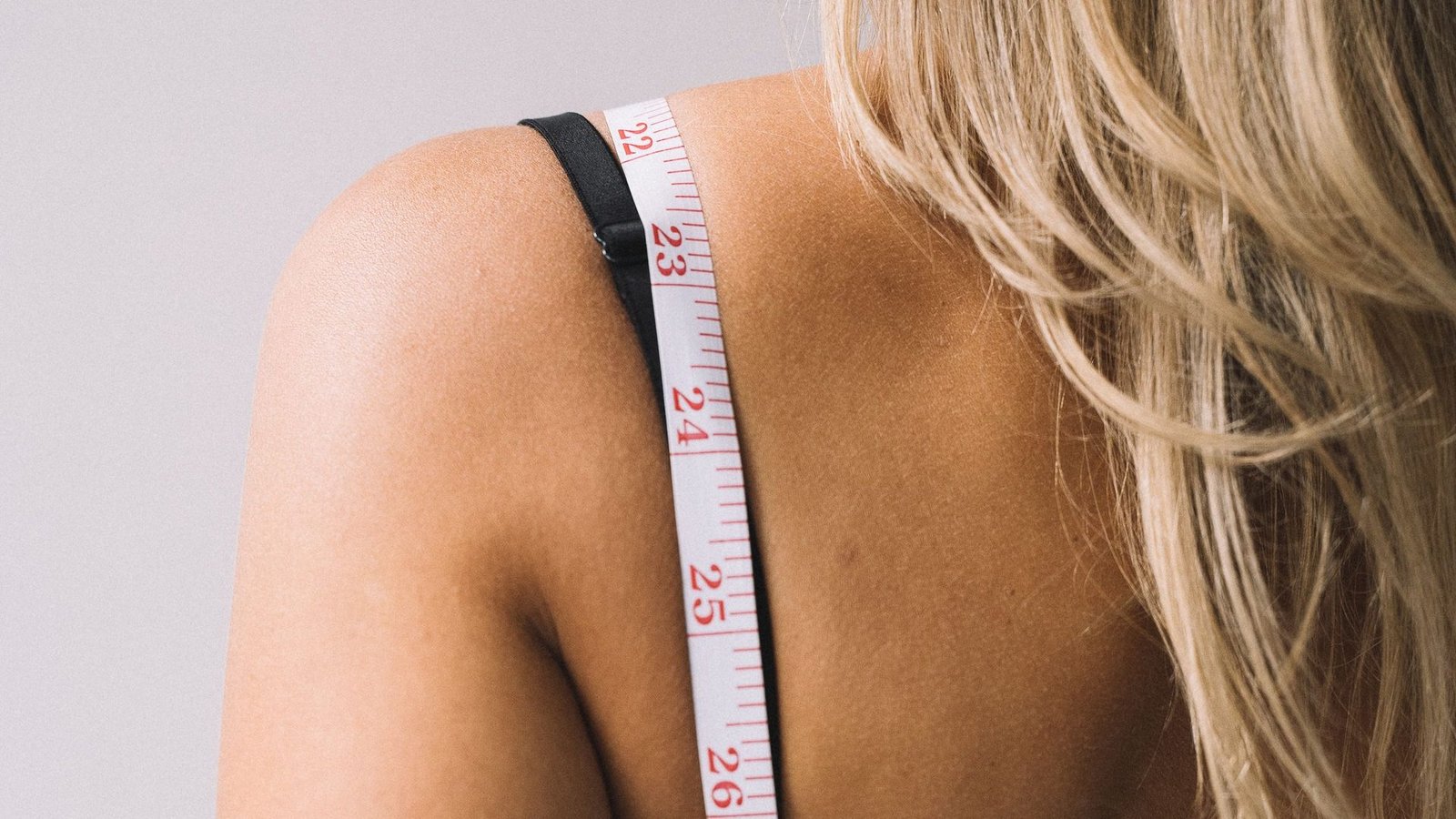
2. Re-measure from your current body. Do not guess from your old size, and do not adjust by feel alone. Use our measurement guide or the bra size calculator and write the result down. Treat that number as a starting point, not a final answer, because brands cut differently and the fitting room is where the number gets tested.
3. Try the sister size next to it. If your starting size feels close but not right, try the sister size next to it before you conclude the style is wrong. Going up a band and down a cup, or down a band and up a cup, keeps the same cup volume while changing the band, and it is the fastest way to find out whether the problem is the size or the style.
4. Test the style, not just the size. Try the same size in a different construction if the first one fails. If the band fits but the cups gap at the top, try another cup shape before you size down. Our guides on band size vs cup size and cup sizes explained explain what each number and letter controls, so you can change the right one.
5. Decide: resize, restyle, or replace. If the new size fits, buy it. If the size fits but the style fights you, keep the size and change the style. If the bra is worn out, replace it in the same size and only re-measure if the new one does not fit. Do not keep a bra that fails the fit checks because returning it feels like a chore. The chore takes ten minutes. Wearing a bra that does not fit takes all day, every day.
Frequently Asked Questions
How often should I check my bra size?
At least once a year, and again after any big change in your body: a weight change, a pregnancy, nursing, or menopause. ThirdLove puts it simply: check regularly, because your body changes over time, so a size that fit before may not fit now. A check takes ten minutes with our measurement guide or the bra size calculator.
Can my bra size change in a week?
Yes, temporarily. Many people notice their bust feels fuller for a few days before a period, and their bras feel tighter, then normal again. Wait a week and try the same bra again before you buy anything. If a change feels large, sudden, or worrying to you, talk to your clinician rather than trying to solve it with a new bra size.
Why does the same size fit in one brand and not another?
Because brands grade their sizes differently. Each brand writes its own size chart and cuts its own patterns, so a 34C in one brand can fit like a 36B in another. The letters do not line up across systems either: a UK E is a US DDD, and a UK F is a US G. Read the brand’s own chart before you order.
Do I need a new bra every time my size changes?
Not always. First check whether the bra is worn out, because a stretched band looks exactly like a size change. Then try the sister size, and then try a different style in the same size. Buy a new size only when it actually fits better in the fitting room, and buy one first.
My size changed after pregnancy. Will it go back?
It can settle after nursing ends, but not always to the old size. Size often rises during pregnancy, changes again while nursing, and settles afterwards, and where it settles is individual. Recheck your size at each stage instead of buying ahead. For anything about your own pregnancy or nursing experience, talk to your clinician. This guide covers size-change timing only.
Is it normal for my size to be different in a sports bra?
Yes. Sports bras are graded differently from everyday bras, and many use alpha sizing such as small, medium, and large instead of band and cup sizes. The two systems do not convert by a simple rule. Check the brand’s own sports-bra chart, and try the size on with the movement you will actually do in it.
The Short Version
Why does my bra size keep changing? Because the two measurements behind it keep changing, and because the ruler itself changes from brand to brand. Weight change moves the band, the cup, or both, and no formula can predict which. Your monthly cycle moves the bust for a few days and then moves it back. Pregnancy and nursing move the size in stages, and it settles after nursing ends, though not always to the old size. Menopause and age move it slowly over years. A new brand or a new style can change the fit without your body changing at all. On top of all that, a worn-out bra stretches out of its own size, which looks exactly like a body change.
The response never changes: check the band first, re-measure from your current body, and try the sister size next to your old one before you buy. Do it once a year and after every big change, and the shifting size stops being a mystery and becomes a routine. If you want the measuring method itself, our measurement guide and our bra size calculator carry it. If you want the principles behind the numbers, our guide on how bra sizing works explains them. And if your current bras are failing the fit checks in this guide, start with our guide on signs your bra does not fit before you shop at all.