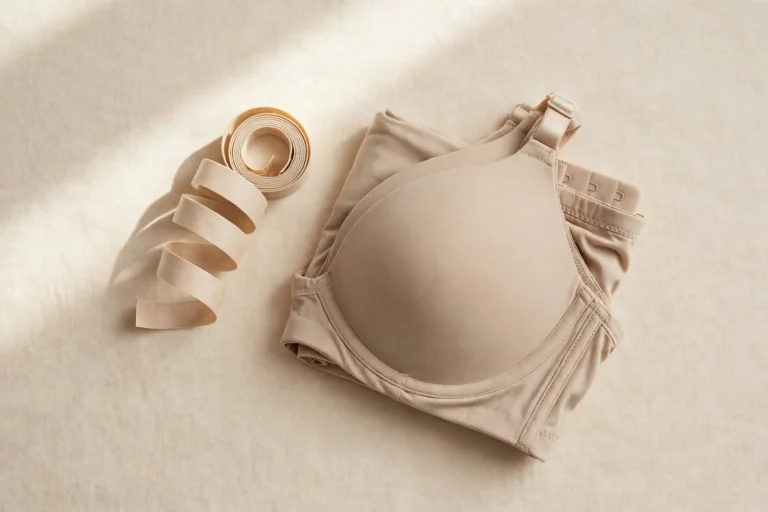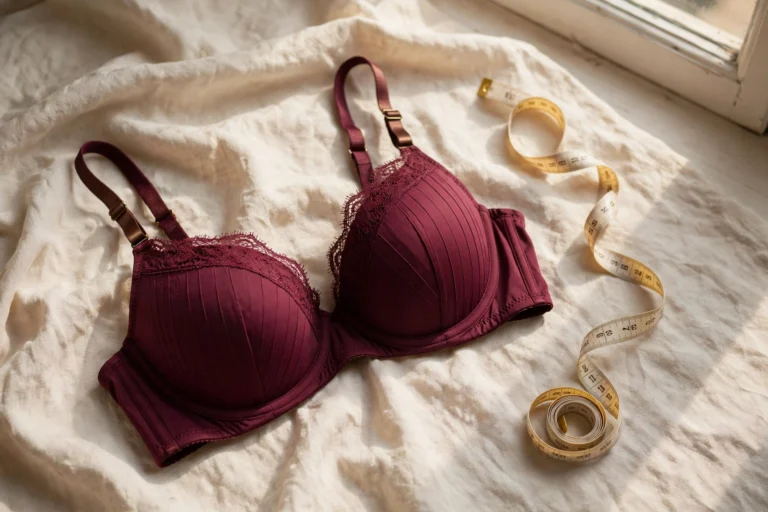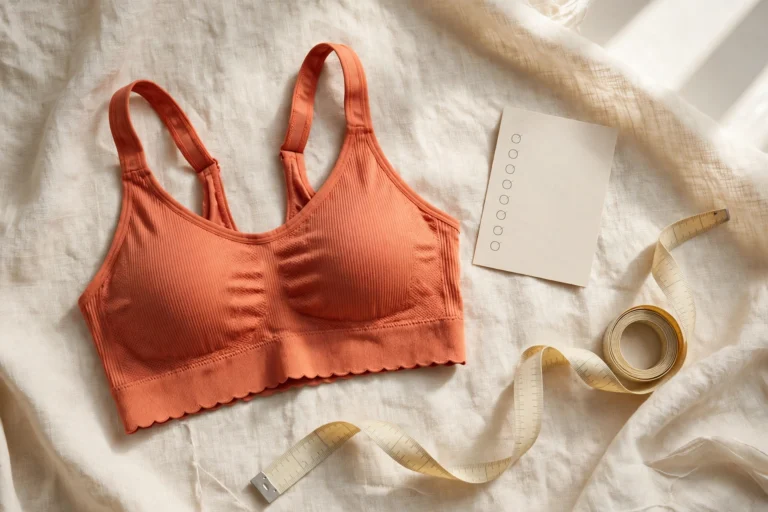
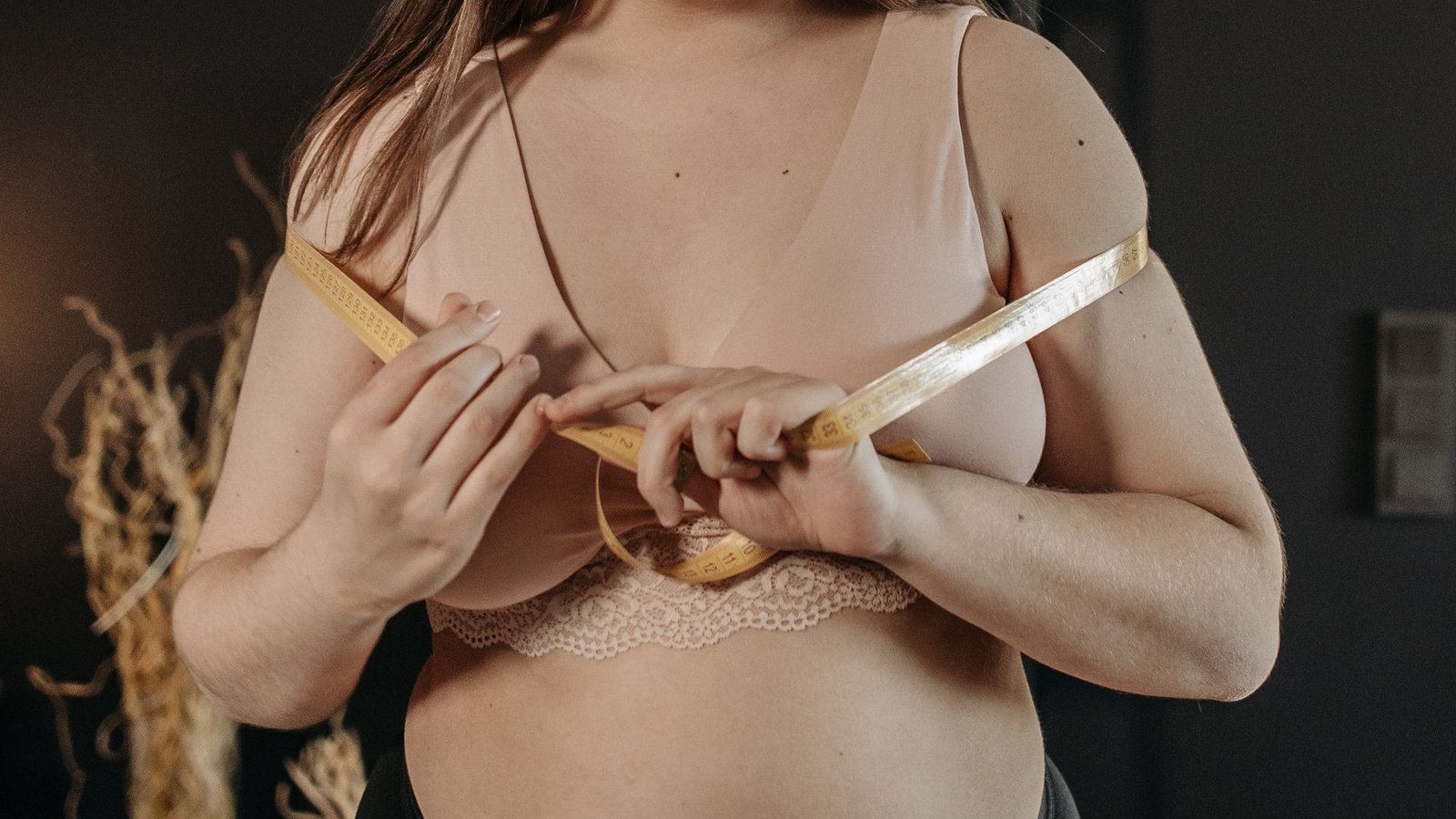
Bra size after weight loss is a question with a short answer and a longer one. The short answer is yes, your size can change, in the band, in the cup, or in both, and the only way to know your new size is to recheck your fit. The longer answer is that nobody can predict the change from a number on a scale, because breasts and ribcages do not change in the same way for every body. A bra that fitted six months ago can stop fitting without any single dramatic moment, and the fix is a fit check, not a formula.
This guide covers both directions, loss and gain, because the logic is the same either way. It will not tell you how to change your weight, and it will not convert pounds into a size. What it will do is explain why a size moves, show you the signs that yours has moved, and walk you through a recheck that takes ten minutes and a tape measure. Our measurement guide and our bra size calculator carry the measuring method itself, so this guide will not re-teach it.
Quick Answer
Bra size after weight loss can change in the band, the cup, or both, and the same is true after weight gain. The band usually moves first, because the ribcage and the tissue around it respond early, and the cup letter can change even when bust volume barely moves, because the cup letter is a ratio of bust minus band, not a fixed volume. There is no reliable pounds to cup size formula, so do not convert a weight change into a size. Instead, watch for the fit signs in this guide, then recheck your measurements and confirm the fit in a real bra. If your body is still changing, buy one or two bras in your current size and recheck again later, rather than replacing the whole drawer at once.
Why Your Bra Size Moves When Your Body Changes
A bra size is two numbers working together, and a body change can move either one. The band number describes the circumference of your ribcage just under your bust. The cup letter describes the difference between your bust measurement and your band measurement. Because the cup letter is a difference, not a volume on its own, a change in the band alone can change the cup letter. That is why a bra size after weight loss so often looks different on the label even when the change feels small.
Bravissimo puts the tissue point plainly: breasts are mostly made of fatty tissue, so losing body fat often means losing volume, especially at the top. The same logic runs in reverse. When the body gains volume, the bust measurement and the underbust measurement can both rise, and the cup letter moves with the difference between them. Neither direction follows a rule you can calculate in advance.
The band is usually the first thing to move. Bravissimo notes that as the back and ribcage slim down, bands start feeling loose, making bras less comfortable and secure, even if the cups seem fine. The band does most of the support work in a bra, so a band that has gone loose is the first fault to check. Our guide on band size vs cup size explains the two numbers in full, and our guide on how bra sizing works explains why the same cup letter means a different volume on a different band.
Shape can change as well as size. Bravissimo says it is totally normal for breasts to change in size, shape, and firmness after weight loss. A bra that fitted your shape a year ago can fail on shape even when the numbers look close. That is a style problem, not a size problem, and it is covered in the recheck section below.
Bra Size After Weight Loss: What Usually Changes First
After weight loss, the most common sequence is the band loosening first, then the cups showing the change. ThirdLove states it directly: “Your band size usually drops, and your cup volume changes too.” A band that used to sit level on the loosest hook starts to ride up at the back. Straps that used to stay put start to slip, because the loose band has handed their job to the straps. The cups may gape at the top edge, where volume has gone first, while still looking full lower down.
One trap is the sister-size shift. Suppose your old size was 34C. If your band drops to 32, the cup volume that matched 34C now sits in a 32D, because a 32D holds a similar cup volume on a smaller band. ThirdLove gives the same example the other way around: a 36C becomes a 34D. This is why buying the same cup letter on a smaller band so often disappoints. The letter stayed, but the volume did not. Our sister sizes guide explains these swaps in full, and the worked example later in this guide uses the calculator-verified 34C, with sisters 32D and 36B.
Another trap is timing. The change rarely announces itself on one day. Bras stretch a little with wear, so a band that has gone a size loose can feel almost normal until you try a new bra in your old size and it feels obviously wrong. That is a useful test in itself. If a brand-new bra in your usual size feels loose on the loosest hook, your band has moved.
Bra Size After Weight Gain: The Same Logic in Reverse
After weight gain, the same two numbers move, in the other direction. The band can tighten first, because the underbust measurement rises. The cups can spill at the top or at the sides, because the difference between bust and band has grown. Straps can start digging, because a tight band is pulling the whole bra down and the straps are carrying more than they should.
The signs mirror the loss side, and the response is the same: recheck, do not guess. A bra that feels tight is not always a band problem. If the cups are too small, they push the band away from the body and make the band feel tighter than it is. That is why the recheck starts with the band and the cups separately, not with one number. Our guide on signs your bra does not fit lists the full set of fit faults, and this guide’s table below narrows them to the ones a body change produces.
One point worth stating plainly: a size change after weight gain is not a failure, and a size change after weight loss is not a reward. Sizes are measurements of your body on a given day, in a given brand’s system. The number on the label has no opinion about you. If the bra that fits today has a different label from the bra that fitted last year, the label is the thing that changed, not your worth.
Six Signs It Is Time to Recheck Your Fit
These six signs are the ones a body change produces most often. One sign on its own is a hint. Two or three together mean it is time to recheck.
| Sign | What it usually means | What to try first |
|---|---|---|
| Band rides up at the back | Band too loose, often after weight loss | Go down a band size and up a cup letter to hold the volume, for example 34C to 32D |
| Cups gape or wrinkle at the top | Lost volume at the top of the cup, often after weight loss | Try a smaller cup, or a shallower style such as a demi or balconette |
| Straps slip off the shoulders | Loose band has handed support to the straps | Check the band first, not the straps |
| Straps dig in and leave marks | Band too tight or cups too small, often after weight gain | Check the band and the cups separately before tightening anything |
| Centre gore floats away from the breastbone | Cups too small or too deep for the new shape | Try a larger cup, or a different cup shape |
| Tissue spills at the top or sides | Cups too small for the current volume | Go up a cup and check the band again |
The band row deserves emphasis. A riding band is a band problem, and Wacoal warns against the usual rescue attempt: “Do not try to rescue a moving band by shortening the straps until they feel tight. The straps help position the cups, but they should not be doing all the work of keeping the bra in place.” Tightening the straps on a loose band only moves the discomfort to your shoulders. The strap check itself is simple: one finger should pass comfortably between the strap and your shoulder.
The gaping row deserves a second look too. Gaping at the top edge after weight loss is often a shape change, not just a size change. The volume that left was often at the top of the breast, and a full, tall cup will still stand away from the body even in a smaller size. A shallower cup, a demi, or a balconette can close that gap where a smaller full cup cannot. Our cup sizes guide explains the cup sequence, and our breast shape and bra fit guide maps shapes to styles.
There Is No Formula That Turns Pounds Into a Size
This is the section to read before you search for one. There is no reliable pounds to cup size formula. Bra-Calculator.com states it directly: “There is no reliable pounds-to-cup-size formula, so begin with current measurements and then confirm fit in a real bra.” The same site adds, on its weight-change page, “Do not predict cups from pounds.”
You will find numbers if you look for them. Some blogs claim a loss of 10 to 15 pounds shifts a band by one size, or roughly a cup step per 10 to 15 pounds. Those are editorial rules of thumb, not verified formulas, and they fail often enough to be useless as a buying guide. Two people can lose the same amount and change in different places, one in the band and one in the cup, and a third can change in neither. A rule of thumb that is wrong a third of the time is not a rule.
What does exist is a trigger for a recheck. The National Breast Cancer Foundation and Dillard’s bra fit guide advise that when a woman gains or loses 10 pounds or more, it is time to be fitted for a new bra, and they also recommend an annual fitting. Treat the 10 pound figure as a reminder to check, not as a prediction of a size. The fitting itself, not the number, tells you the size.
How to Recheck Your Fit
A recheck has three steps, and none of them is a new measuring recipe. The measuring method lives in our measurement guide, and our bra size calculator turns the numbers into a starting size. This section explains how to use them after a body change.
Step 1: remeasure, and write the numbers down. Measure the underbust and the bust as the guide describes, and write both numbers down with the date. Do not rely on the size you wore last year. Wacoal advises remeasuring when your regular bras start fitting differently, when a previously stable band begins moving, or when you repeatedly experience cup and strap problems across several bras. All three are common after a body change.
Step 2: run the five fit checks on a bra you own. Fasten it on the loosest hook. The band should sit level and feel snug, with two fingers sliding underneath. The cups should hold you smoothly, with no spilling and no gaping at the top edge. The centre gore should lie flat against your breastbone. The straps should stay put without digging in. If the band fails the check, the size has moved, whatever the cups are doing.
Step 3: try the sister size before you try a different cup. A worked example makes this concrete. Take a starting size of 34C, the calculator-verified example our guides use, with sister sizes 32D and 36B. If the 34 band has gone loose but the cups still hold your volume, try 32D: a smaller band with a larger cup letter, holding a similar cup volume. If the 34 band has gone tight but the cups still fit, try 36B: a larger band with a smaller cup letter, again holding a similar volume. Sister sizes change the band while keeping the volume, and that is exactly what a body change usually asks for. Our sister sizes guide and our US bra size chart carry the full tables.
If the sister size still fails, change the style, not just the size. A demi or balconette for lost top volume, a fuller cup for gained volume, a wider band for a band that keeps riding. Try one change at a time, band first, then cup, then style, so you know which change fixed it.
Buying Bras While Your Size Is Still Changing
If your body is still changing, the buying strategy matters as much as the size. ThirdLove gives the practical rule: “If you’re still losing weight, re-check your bra size every few sizes you lose. Buy one or two bras in your current size instead of a full drawer, then re-measure as you go.” The same rule works in the other direction. A full drawer in a size you may outgrow in a few months is money spent on bras you will not wear.
Buy one or two bras that pass the five fit checks today. Keep the tags on until you have worn one around the house for an hour, because a bra that feels fine for five minutes can still ride up or dig in by the afternoon. When those bras start showing the signs in the table above, recheck again. This is a cycle, not a single purchase, and it ends when your size settles.
Two small points save money here. First, buy the same style in the new size before you try a new style, because a known style isolates the size change. Second, keep one bra from your old size until the new size is confirmed across two styles, in case the first new bra was a brand-grading quirk rather than a real size change. Brands do not all grade their sizes the same way, so the same label can fit differently from one brand to the next.
What to Do With Bras That No Longer Fit
A bra that no longer fits is not a bra to keep “just in case.” A loose band will not tighten again, and a cup that gapes will not fill again. Keeping it in the drawer only guarantees you will reach for it on a laundry day and spend the day adjusting it.
Retire bras that fail the five checks. If a bra is still in good condition but the wrong size, pass it on through a bra recycling program or a donation route that accepts used bras, and keep only the sizes that pass the checks today. Our bra care and washing guide covers how to keep the bras you do keep in good shape, and our guide on when and why bra size changes covers the other causes, from the monthly cycle to age, that can move a size without any weight change at all.
Frequently Asked Questions
Does losing weight always change your bra size?
No. Some bodies change mostly in the band, some mostly in the cup, and some barely at all. Bravissimo says it is totally normal for breasts to change in size, shape, and firmness after weight loss, and the same site notes that a band can go loose even when the cups seem fine. The only way to know is the fit check, not the scale. If your bras still pass the five checks, your size has not changed, whatever the scale says.
How much weight change should prompt a recheck?
Use the 10 pound figure from the National Breast Cancer Foundation and Dillard’s guide as a reminder to check, not as a prediction. A gain or loss of 10 pounds or more is a good moment to be fitted again, and an annual fitting is a sensible habit even without a weight change. The fit signs in the table above matter more than any number: if the band rides up or the cups gape, recheck now, whatever the scale says.
Do I need a new size, or a new style?
Start with size, then style. Run the five fit checks, then try the sister size. If the sister size fixes the band but the cups still gape at the top, that is a style problem, and a shallower cup such as a demi or balconette is the next thing to try. If several sizes in one style all fail, the style is wrong for your new shape. Our breast shape and bra fit guide maps shapes to styles, and our bras for different body types guide covers frame and proportion.
Can I just tighten the straps instead of buying a new size?
No, and this is the most common mistake after a body change. Wacoal warns against it directly: do not try to rescue a moving band by shortening the straps until they feel tight. Straps position the cups. They do not carry the bra. A loose band tightened at the straps will dig into your shoulders and still ride up at the back.
Will my old size come back if my weight returns?
Not necessarily, and not in the same way. Bodies do not always return along the path they left, and shape can settle differently even when the numbers match. Treat a return to a previous weight as another recheck moment, not as a reason to dig out the old bras. Run the five checks again and let the fit decide.
The Short Version
Bra size after weight loss can change in the band, the cup, or both, and the same is true after weight gain. The band usually moves first, and the cup letter can change even when bust volume barely moves, because the cup letter is a ratio of bust minus band. There is no reliable pounds to cup size formula, so do not convert a weight change into a size. Watch for the six signs, a riding band, gaping or wrinkling cups, slipping or digging straps, a floating gore, and spilling tissue, then remeasure and confirm the fit in a real bra. Use sister sizes to hold the volume while the band moves, for example 34C to 32D or 36B, and if your body is still changing, buy one or two bras and recheck again later. The label is a measurement of today, not a verdict on you.