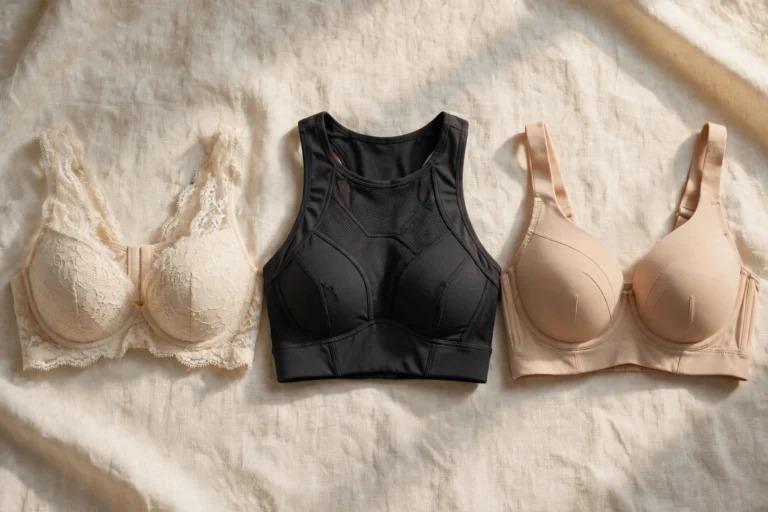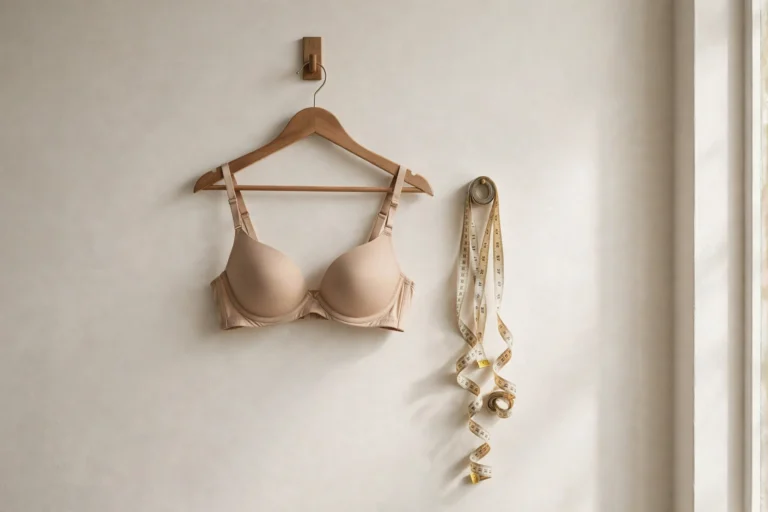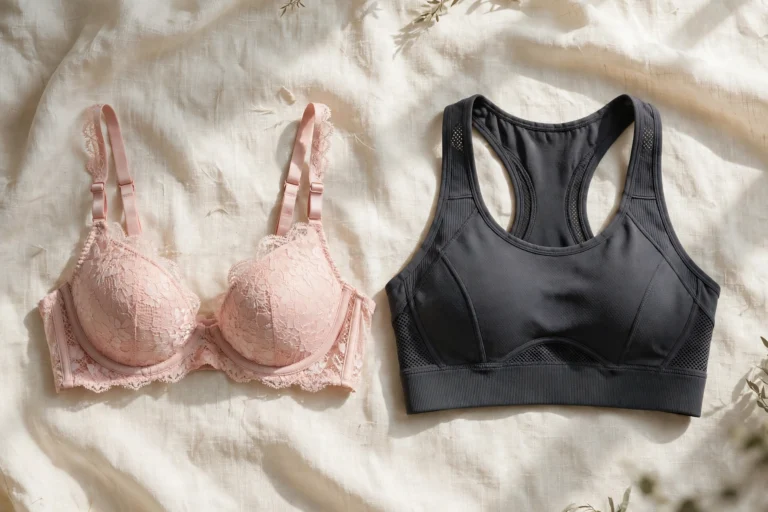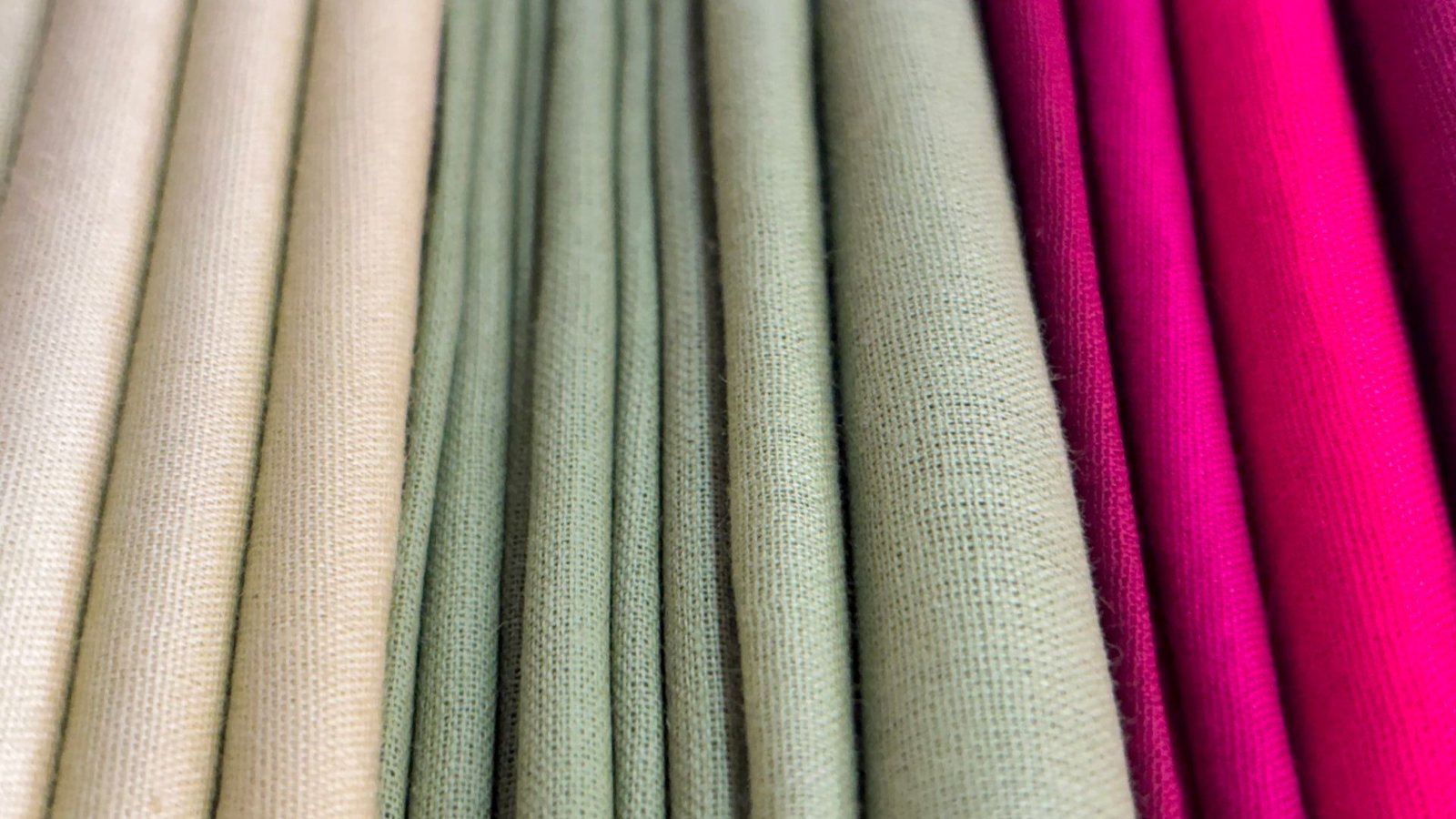
A cotton first bra is the default choice for most families, and for good reason. Cotton feels soft against skin, lets air move through, and does not ask a girl who is still getting used to wearing a bra to tolerate a fabric she dislikes. But not every label that says cotton means the same thing, and the difference between 100 percent cotton, a cotton blend, and a synthetic that merely looks soft is the difference between a bra she forgets she is wearing and one she takes off the moment she gets home.
This guide is about fabric only. It will not tell you which style to buy, because that ground is covered in our guides on bralettes for tweens and how to buy the first bra for a tween. What it will do is teach you and your daughter to read a fabric label, feel the difference in the shop, and choose breathable comfort for school and everyday wear.
Quick Answer
For everyday wear, a cotton first bra, meaning 100 percent cotton or a cotton blend with a little stretch, is the safest first choice. Cotton breathes, absorbs moisture, and is gentle on skin, which is why it suits school days and sensitive skin. The label matters more than the brand name: “cotton” on the front of the packaging can mean a blend, so check the fiber content on the back before you buy. For sport, cotton is the wrong call, because it holds sweat and dries slowly, and a moisture-wicking synthetic is the better tool for that job.
Why a Cotton First Bra Breathes Better
Breathability is not a marketing word. It is a simple, physical fact about how a fabric handles air and moisture, and cotton handles both well. CottonWorks, the technical resource from Cotton Incorporated, describes cotton as a fiber that absorbs moisture, wicks it away, and helps regulate temperature through its natural breathability. For a first bra, which sits close to the skin for a whole school day, that matters more than it does for almost any other garment.
Here is what cotton does, in plain terms. The fiber takes in moisture from the skin, which keeps the skin feeling dry at first touch. Air moves through the open weave of a cotton knit, which lets heat escape instead of building up under a school shirt. And cotton is, in CottonWorks’ words, “clinically proven to be naturally hypoallergenic”, which is why it is the usual recommendation for skin that reacts easily. That claim belongs to cotton the fiber, not to every cotton bra on a rack, because dyes, finishes, and blended fibers can change how a garment behaves on skin.
Cotton also has an honest weakness, and a parent should know it before buying. Cotton absorbs a lot of moisture and holds on to it, so once it is properly wet, through sweat, it dries slowly. That is why a cotton first bra is a wonderful everyday bra and a poor sports bra. The same property that makes it comfortable at a desk makes it clammy on a PE field. There is no contradiction here. It is one fiber doing one job well and another job badly, and the shopping decision is simply to match the fabric to the day.
100 Percent Cotton vs Cotton Blends
Most first bras are not 100 percent cotton. They are blends, and blends are not a trick. They are a trade, and the trade is usually worth making.
| Fabric | What it feels like | What it does well | What to watch for |
|---|---|---|---|
| 100% cotton | Soft, matte, no stretch | Breathes best, gentle on skin, easy to wash | Can shrink, holds sweat, loses shape over time |
| Cotton with spandex (usually 90 to 95% cotton, 5 to 10% spandex) | Soft with a little give | Keeps the breathability, adds stretch and shape retention | Check the percentage, more spandex means less cotton behavior |
| Cotton with polyester | Smoother, dries faster | Holds its shape, shrugs off wrinkles | Less breathable as the polyester share rises |
| Cotton with modal | Silky, very soft | Extra softness, drapes well | Modal is a processed wood-pulp fiber, not cotton, so read the label |
The blend to look for first is cotton with a little spandex. A small amount of stretch, usually 5 to 10 percent, lets the bra move with her and hold its shape through the wash, while the cotton still does the breathing. A blend that is mostly polyester with a little cotton is a synthetic bra wearing a cotton label, and it will behave like a synthetic one, so the percentage on the label is the fact that matters, not the word on the front of the packet.
Fruit of the Loom describes its Beyond Soft cotton bra in exactly the terms a parent should look for: “The soft cotton fabric is light, breathable and perfect for everyday wear.” That is a manufacturer describing its own product, and it is a useful benchmark. If a bra’s own description cannot say anything like that about its fabric, the fabric is probably not its selling point.
What About Synthetics
Synthetic fabrics are not the enemy. They are the right tool for the wrong job if you buy them for everyday wear, and the right tool for the right job if you buy them for sport.
Polyester and nylon are the two synthetics you will meet most often. Both are strong, hold their shape, and dry fast. Both are also poor at absorbing moisture. CottonWorks puts it plainly: microfiber fabrics are tightly constructed, which limits airflow compared to more open, breathable cotton fabrics, and polyester absorbs virtually no moisture, so humidity stays close to the skin. That is why a synthetic bra can feel fine for the first hour and clammy by the third, and why it is a bad choice for a full school day.
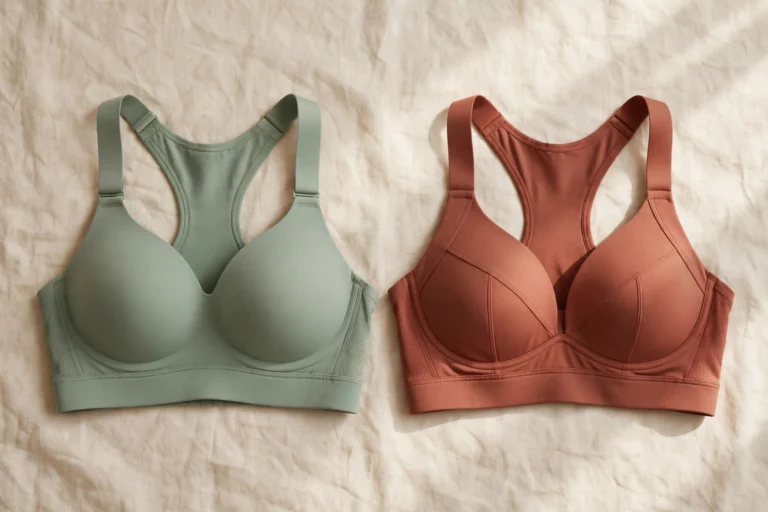
The exception is sport. A moisture-wicking synthetic, the kind sold as a sports bralette, is designed to move sweat off the skin and dry quickly, and cotton cannot do that job. So the rule is simple: cotton for the classroom, wicking synthetic for the PE lesson. Our comparison of training bras, bralettes, and sports bras explains the style side of that split, and the fabric side follows the same logic.
One more synthetic to know by name is mesh. Mesh is not a fiber, it is a construction, an open net weave that can be made from polyester or nylon. A mesh panel in a bra lets air through, which is genuinely useful in warm weather, but a whole bra made of mesh is a sports or summer garment, not an everyday first bra.
Modal, Bamboo and TENCEL
Three more names appear on first-bra labels, and all three deserve a short, honest note. Modal is a soft fiber made from beech wood pulp, often blended with cotton to make a bra feel softer than cotton alone. It is a reasonable choice for everyday wear. It is not cotton, though, so a “modal” bra should not be sold to you as a cotton one, and its breathability depends on the blend, not on the name. Bamboo is usually bamboo viscose, a processed fiber like modal, marketed as soft and breathable; the softness is real, but the “bamboo” on the label is a source material, not a guarantee of performance. TENCEL is a brand name for lyocell, another wood-pulp fiber known for smooth softness and moisture handling. None of these three is a reason to pay more on its own. The fabric has to feel right and wash well, and the label has to say what it is, before the name means anything.
Our guide to sustainable and eco-friendly bras covers the environmental side of these fibers in the adult range, if that matters to your family. For a first bra, the practical question is simpler: does it breathe, does it feel soft, and does it survive the wash.
How to Read the Label
The label is the whole game, and it takes ten seconds. Here is how to read it in the shop.
Find the fiber content, not the product name. The fiber content is usually printed on a small tag inside the bra, or on the back of the packaging. It lists percentages, such as “95% cotton, 5% spandex”. That line is the truth about the fabric. The words on the front of the packet, “cotton comfort” or “cotton feel”, are advertising, and they can appear on a bra that is mostly polyester.
Know what “cotton-rich” means. It means cotton is the largest single fiber, but it does not mean the bra is mostly cotton. A “cotton-rich” bra can be 55 percent cotton and 45 percent polyester. That is not a bad bra, but it is not a cotton bra, and it will not breathe like one.
Look for certification where it is claimed. If a bra claims to be organic cotton, the claim worth trusting is GOTS certification, the Global Organic Textile Standard, which certifies the fiber and the processing. If a bra claims to be gentle on sensitive skin, the OEKO-TEX Standard 100 label certifies that the finished textile has been tested for harmful substances. A certification mark is a checkable fact. A word like “natural” or “pure” on a packet is not, and neither is an eco label taken from a brand name alone.
Check the care label at the same time. The care label tells you whether the bra can go in the washing machine, what temperature to use, and whether it can be tumble dried. If the care instructions are more complicated than your laundry routine, that bra will not get washed properly, and it will not last. The care label is also where shrinkage warnings live, and shrinkage is the subject of the next section but one.
Show-Through Under Light Shirts
Cotton has one visible weakness that matters at school: thin cotton shows through. A white cotton bralette under a white school shirt can show its outline, and a dark cotton bralette under a pale top can show its color. This is not a flaw in the cotton. It is a property of a thin, matte fabric, and it is easy to manage once you know to look for it.
Match the bra to the shirt, not to her skin. A nude or beige bra disappears under a white shirt far better than a white bra does, because white fabric glows against skin while nude blends with it. Under a dark shirt, the color hardly matters. Under a pale or thin shirt, nude is the practical choice, and it is worth owning one nude cotton bralette even if her favorite colors are pink and lilac.
Feel the weight before you buy. Hold the fabric up to the light in the shop. If you can see your hand clearly through it, her classmates will be able to see the outline through her shirt. A slightly heavier cotton knit, or a double-layer front, solves this without giving up breathability. Do not solve show-through by buying a padded bra she does not want. Solve it with color and fabric weight, and let her keep the soft, unpadded style she is comfortable in.
Washing Cotton So It Keeps Its Fit
Cotton bras do not need special treatment, but they do punish hot water and high dryer heat. The rule is short: wash cold, dry flat or on the line, and follow the care label when it disagrees with this guide.
Cotton shrinks because its fibers relax and tighten when they are wetted and heated. HouseDigest puts the safe range plainly: cold water, at 60 to 80 degrees Fahrenheit, is the safest option for preventing shrinkage, while hot water over 120 degrees causes the fibers to tighten and shrink. That is why a cotton first bra that fit on Monday can feel a size smaller after a hot wash on Sunday, and why the first wash is the one that matters most.
Here is the routine that works. Fasten any hooks before washing, so they do not snag other clothes. Wash in cold water on a gentle cycle, inside a mesh laundry bag if you have one. Skip fabric softener, which coats cotton fibers and reduces their absorbency over time. Line dry or lay flat, and keep the bra out of the tumble dryer when you can. If it must go in the dryer, use the lowest heat setting and take it out while it is still slightly damp, because the last minutes of high heat are when most shrinkage happens.
Our sports bra care guide covers the same wash method in more detail, and its advice applies to cotton first bras too. The short version is that cold water and air drying are what keep a cotton bra fitting the way it did when you bought it.
When Cotton Is the Right Call, and When It Is Not
Cotton is the right call for most first-bra days. School, home, weekends, sleepovers where she wants a soft layer under her pajamas, and any day when comfort matters more than performance. It is also the right call for sensitive skin. Our guide on bras for sensory issues and sensitive skin starts from the same place: soft, breathable, tag-free fabrics with as little irritation as possible, and cotton is usually the first fabric it recommends.
Cotton is the wrong call in three situations. The first is sport, where it holds sweat and dries slowly. The second is a very hot, humid day outdoors, where a light wicking fabric will keep her drier. The third is swimming, where cotton absorbs water and stays heavy. None of these is a reason to stop buying cotton first bras. Each is a reason to own one other style for that one job, and to let cotton do what it does best the rest of the time.
There is also a comfort question that only she can answer. Some girls find cotton too plain, or too warm under a heavy school jumper, or they simply prefer the smooth feel of a microfiber bralette. That is a real preference, not a wrong answer. If she has tried cotton and dislikes it, a cotton blend with modal, or a soft microfiber with a cotton lining, is a reasonable second choice. The goal is a bra she will actually wear, and fabric she hates will sit in the drawer no matter how sensible it is.
Choosing in the Shop
You do not need a laboratory to choose a cotton first bra. You need your hands and ten seconds.
Do the feel test. Rub the fabric between your fingers. It should feel soft, not scratchy, and it should not feel stiff or papery. Then hold it against the inside of your wrist, which is sensitive skin, and leave it there for a few seconds. If it itches your wrist, it will itch her more.
Do the stretch test. Pull the band gently and let it go. It should spring back to its shape. If it stays stretched out, the elastic is weak or the cotton has no recovery, and the bra will bag out quickly. A cotton blend with a little spandex should pass this test easily. A 100 percent cotton bra with no stretch will not, and that is the trade you are making for pure cotton.
Check the seams and the tags. Run a finger along the inside seams. They should lie flat, with no rough edge or raised stitching. Look for a printed label rather than a sewn-in tag if she is sensitive to tags, and check that any hook-and-eye fastening, if the style has one, lies flat and does not poke.
Let her decide the color. The fabric choice is yours to guide. The color is hers. A cotton first bra she chose in her favorite color is one she will wear, and a sensible beige one she dislikes is one she will leave in the drawer. Fabric is the parent’s job. Color is hers, and giving her that choice costs nothing.
Frequently Asked Questions
Is 100 percent cotton better than a cotton blend for a first bra?
For breathability and softness, yes, pure cotton is the best of the fabrics in this guide. For everyday practicality, a cotton blend with 5 to 10 percent spandex is usually the better buy, because it holds its shape, survives the wash better, and still breathes like cotton. The blend to avoid is one where cotton is the minority fiber, because then you are buying a synthetic bra with a cotton name.
Does cotton cause sweating?
Cotton does not cause sweating. It absorbs sweat, which is why it feels comfortable at first and clammy later if it stays wet. On a normal school day, that absorbency is a benefit, because it pulls moisture away from the skin. On a sports day, it is a drawback, because the fabric stays damp. That is why the same cotton bra can be perfect on Monday and wrong on PE day.
How many cotton first bras does she need?
Three is a practical starting number: one to wear, one in the wash, and one in the drawer. Cotton dries slowly, so a single cotton bra will not be ready the next morning if it was washed the night before. Our guide on how many bras a tween needs covers the rotation in full, and the same count applies here.
Can she wear a cotton first bra to sleep?
She can, if she wants a light layer at night, and cotton is the most comfortable fabric for it. A soft, wirefree cotton bralette is the usual choice. If she finds it warm or restrictive, sleeping without one is also fine, and there is no rule that says she must wear one. The choice is hers, and it is about comfort, not about what anyone else does.
The Short Version
A cotton first bra is the best everyday choice for a first bra because cotton breathes, absorbs moisture, and is gentle on skin. Read the fiber content on the label, not the words on the front of the packet, and look for 100 percent cotton or a cotton blend with a little spandex. Avoid cotton for sport, where it holds sweat and dries slowly, and use a wicking synthetic for that job instead. Wash cotton cold, skip the dryer when you can, and choose nude under pale shirts to stop show-through. Let her pick the color, and let the fabric do the quiet work of keeping her comfortable all day.
If you are still choosing the style itself, start with our guide on how to buy the first bra for a tween, which covers the shopping trip step by step, and our bralettes for tweens guide, which explains the styles she is most likely to meet. If she wants a layering style rather than a first bra, our crop top bras for girls and tweens guide covers camisoles and crop tops, which only touch on fabric in passing. Fabric is a small decision, but it is the one she will feel every day, so it is worth the ten seconds the label takes.