
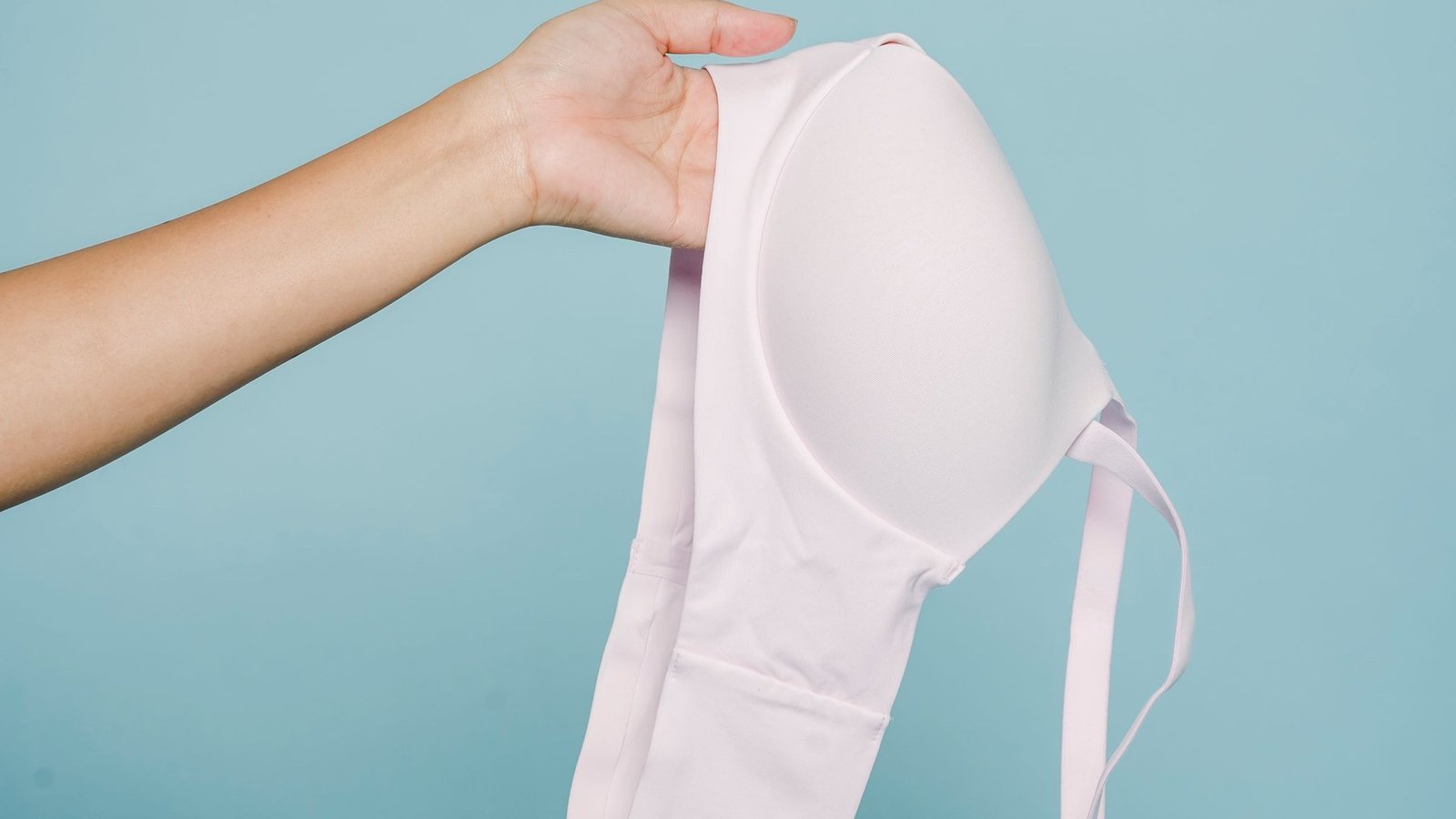
Bra fit FAQs answered briefly is what this page is for. Thirty questions, each with a short answer and a link to the full guide that covers it properly. If you want the short answer, read the answer under the question. If you want the detail, follow the link. Nothing here re-answers a guide that already exists: this page is the index, and the guides are the detail. If the question behind your question is a myth you have heard somewhere, our guide on bra myths debunked takes eight of them apart with the evidence.
Most of these questions come down to the same three fit checks. Band level and snug on the loosest hook, cups flat with no gaping or spillage, straps staying put without carrying the weight. If a bra passes those three, it fits, whatever the label says. If it fails one of them, the answer to your question is usually in that check.
Bra Fit FAQs About Finding Your Size
How do I know my correct bra size?
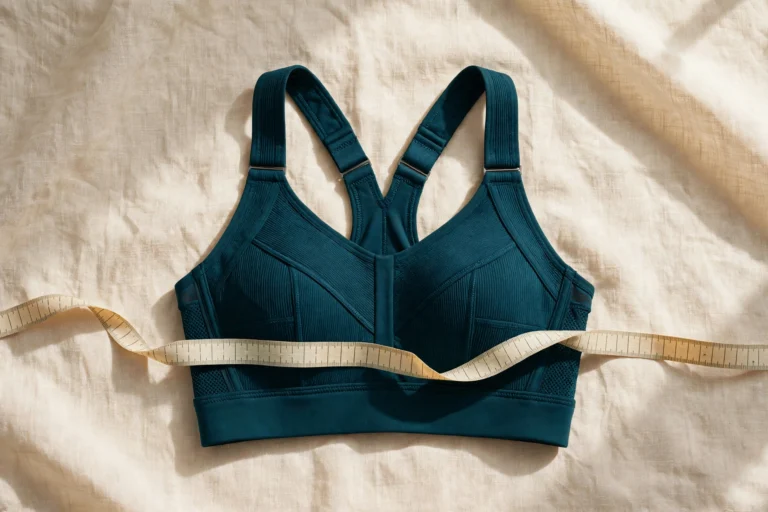
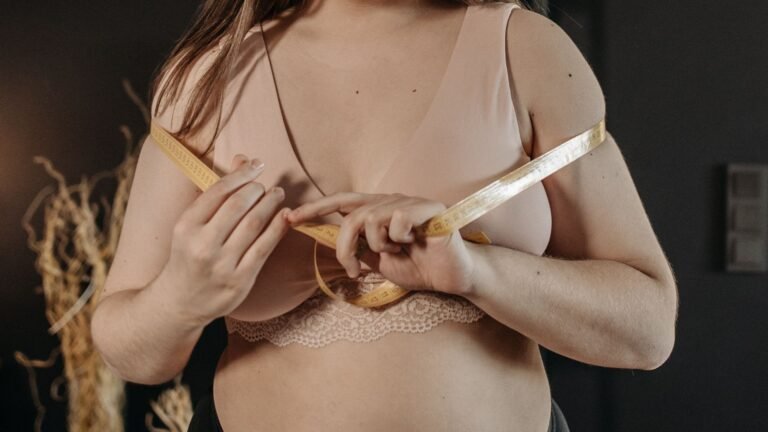
Measure for a starting size, then let the fit checks decide. Our measurement guide gives the method, and our bra size calculator gives the starting estimate. Try that size first, then run the three fit checks: band level and snug, cups flat, straps staying put. The size that passes the checks is your size, even if it is not the size you expected.
What is my true bra size?
There is no single true size. Brands grade sizes differently, so the same body can be a 34C in one brand and a 32D in another, and both can fit. Your true size is the size that passes the fit checks in the brand and style you are wearing. Our guide on how bra sizing works explains why the label is a starting point and the fit checks are the verdict.
What does the number and letter mean in bra sizes?
The number is the band, the measurement around your ribcage under your bust, in inches. The letter is the cup, which is the difference between your bust measurement and your band measurement, not a volume on its own. A D cup on a 32 band holds much less volume than a D cup on a 40 band. Our guide on band size vs cup size explains both numbers with a worked example.
What is a sister size in bras?
A sister size is a size with the same cup volume on a different band. If the cups fit but the band is too loose, you go down a band and up a cup: a 34C becomes a 32D. If the band is too tight, you go up a band and down a cup: a 34C becomes a 36B. Our sister sizes guide gives the full table and when a sister size helps and when it does not.
What is the difference between bra sizes 32B and 34A?
They are sister sizes, so they hold the same cup volume on different bands. A 32B has a firmer, smaller band and the same cup volume as a 34A, which has a looser band. If a 34A feels right in the cups but the band rides up, try a 32B. If a 32B feels right in the cups but the band digs in, try a 34A. Our sister sizes guide explains the swap in full.
Why do different bra brands fit differently?
Because there is no standard bra sizing system. Each brand grades its sizes from its own fit model, so one brand’s C cup is slightly different from another brand’s C cup, and cup sequences past DD differ from brand to brand. That is why the same labelled size can feel different in a T-shirt bra, a full cup bra, and a non-wired bra. Our guides on band size vs cup size and cup sizes explain the two numbers and the sequence from AA upward.
Why are bra sizes so confusing?
Three reasons: there is no standard sizing system, brands grade differently, and the cup letter means nothing without its band. A 34C, a 36C, and a 32D are three different bras, and a D cup in one brand can be a DD in another. Add the US, UK, and EU systems, which use different letters past DD, and confusion is the normal result. Our guide on how bra sizing works untangles the three systems and the cup sequence.
Why is it so hard to find my bra size?
Usually one of two reasons: the size you need is outside the range most shops stock, or the brand you tried grades its sizes differently from the last one. Shops often stop at 38D, so anyone outside that range has to shop online or in a specialist store. Our guide to affordable bra brands that actually fit well covers brands with wider ranges, and our bra shopping tips explain how to shop when your size is hard to find.
Bra Fit FAQs About How a Bra Should Fit
How should a bra fit properly?
Five checks, in order. The band sits level all the way around and feels snug on the loosest hook, with two fingers sliding underneath. The cups lie flat with no gaping and no spillage. The centre gore sits flat against your chest. The straps stay put without digging in. And the bra stays in place when you raise your arms. Our guide on signs your bra does not fit lists every fault with its fix.
Should bra band be tight or loose?
Snug, not tight and not loose. The band should feel firm enough to stay level all the way around, with two fingers sliding underneath, and it should not ride up at the back. A band that is too loose hands the support job to the straps, which cannot do it, and a band that is too tight digs in and leaves marks. Our guide on band size vs cup size explains why the band, not the straps, does most of the support work.
How tight should a bra band be?
Tight enough to pass the two finger test and no tighter. Fasten a new bra on the loosest hook, slide two fingers under the band at the back, and check that it sits level. If two fingers slide in easily and the band stays put, it is right. If you can pull it several inches away from your body, it is too loose. If you cannot get a finger underneath, it is too tight. Our guide on band size vs cup size gives the full band check.
Why does my bra ride up in the back?
The band is too loose, or it has stretched out with wear. A band that rides up has stopped doing its job, and no strap adjustment will fix it, because the straps cannot hold the bra down from above. Go down a band size and up a cup letter to hold the volume, and if the bra is old, check whether it still holds on the tightest hook. Our guide on signs your bra does not fit lists ride-up with its fix, and our guide on band size vs cup size explains the band check.
Why are my bra straps always falling?
Usually narrow or sloping shoulders, or a band that is too loose. When the band cannot hold the bra, the straps take the weight and slide off. Check the band first: if it rides up, go down a band and up a cup. If the band is right and the straps still slip, look for centre-pull straps, which attach toward the middle of the back, or use a racerback clip to draw the straps together. Our guide on signs your bra does not fit covers slipping straps with the fix.
Why do I have back fat with my bra?
The band is usually too small or too tight, so it squeezes the skin around it and the skin bulges above and below the band. It is a fit issue, not a body issue, and it is one of the most common signs of a band that is too tight. Try a wider band, or a smoother style with a wider band and no elastic edge digging in. Our guide on signs your bra does not fit covers it, and our guide on bras for different body types maps frames to styles.
Why is my bra uncomfortable after a few hours?
A bra that feels fine for five minutes and hurts by the afternoon is the wrong fit, not a bra that needs breaking in. The usual causes are a band that is too tight, straps carrying weight the band should carry, or cups that are the wrong shape for you. Check the band first, then the straps, then the cup shape. Our guide on signs your bra does not fit lists each cause with its fix, and our guide on how many bras you should own explains rotation, which gives each bra a rest day and keeps the elastic working longer.
Is it bad to wear a bra that is too small?
It is uncomfortable, and it is a sign to change the size, not a health verdict. A too small bra digs in, leaves marks, spills over the cups, and rides up, and wearing it all day will leave you sore by the evening. If pain persists after you change to a bra that fits, talk to a clinician rather than keep trying sizes. Our guide on signs your bra does not fit lists the too small signs with their fixes.
Bra Fit FAQs About Size Changes
Why does my bra size keep changing?
Because bodies change, and brands change too. Weight change, the monthly cycle, pregnancy and nursing as timing, age, and a brand changing its cut are the usual causes, and none of them means you measured wrong the first time. Recheck your size whenever your bras start to misbehave, when you move to the tightest hook, or after a noticeable body change. Our guide on when and why bra size changes lists each cause with what to do.
Does weight loss affect bra size?
Yes, it can change both the band and the cup, because weight loss can change the ribcage measurement and the bust measurement in different amounts. There is no weight to size formula and no per pound rule, so the only way to know is to recheck. Our guide on bra size after weight loss and gain covers the weight change case in full, with the recheck trigger and no diet or weight management advice.
What causes bra size to increase?
The same causes as any size change, in the other direction: weight gain, the monthly cycle, pregnancy and nursing as timing, menopause as timing, and a brand changing its cut. A bra that fitted last year and does not fit now is usually telling you one of those things happened, not that you bought the wrong size. Our guide on when and why bra size changes lists each cause. If a change comes with pain or anything that worries you, talk to a clinician.
Is it normal for bra sizes to change during puberty?
Yes. Sizes change through the teen years as the body grows, and that is normal, not a problem to fix. There is no age at which a particular size should appear, and no size should be predicted from age. For parents, our guide on when a daughter wants a bra too early covers the conversation, and our guide on how many bras a tween needs covers the starter wardrobe. For chart reading only, our training bra size chart explains how to read a chart without a measuring method.
Bra Fit FAQs About Buying, Wearing, and Caring
Can wearing the wrong bra size cause pain?
A wrong size can leave you sore by the end of the day, usually from a band that digs in or straps carrying weight they should not carry. That soreness is a fit signal, not a diagnosis. Persistent pain is a reason to talk to a clinician, not to keep trying sizes. Our guide on signs your bra does not fit lists the fit faults that cause discomfort and their fixes.
Should I wear a bra to bed?
It is a comfort choice, not a health rule. Sleeping in a bra will neither prevent sagging nor cause it, and it is not bad for your health. A soft, wireless sleep bra or bralette is comfortable for some readers, especially those who prefer light support overnight, and others sleep better without one. Our guide on sleeping in a bra covers the pros, the cons, and what a sleep bra actually is.
How many bras should a teenager have?
Three to five, as editorial guidance from rotation logic, not a study. Three is the floor: one to wear, one in the wash, one resting. Five gives a full school week with a rest day for each bra. Our guide on how many bras a tween needs explains the count and the rotation, and our guide on best bras for school covers everyday school comfort.
When to switch from training bra?
When the training bra no longer covers comfortably, or when the wearer wants more structure than a training bra gives. There is no age rule and no size rule for the switch, and the wearer should be part of the decision. Our guide on training bra vs bralette vs sports bra compares the three next steps, and our training bra size chart explains chart reading only. For the conversation itself, our guide on how to ask your mom for a bra covers it from the teen side.
Can you alter a bra that does not fit?
Minor alterations are possible: a tailor can shorten straps, take in a band, or move a hook. But an alteration costs money and cannot fix the wrong cup shape or the wrong size, so exchanging the bra for the right size is usually cheaper and better. If nothing on the rack fits, a professional fitting is the better next step than an alteration, because a fitter can tell you whether the problem is size, shape, or style.
When should I get professionally fitted?
When nothing on the rack fits the way it used to, after a noticeable body change, when your size has changed and you do not know your new one, or before a big occasion where the bra has to work under a particular dress. A fitting is also worth it the first time you shop outside the size range most shops stock. Our guide on professional bra fitting explains what happens in the appointment and what to bring.
How often should I replace my bras?
Every 6 to 12 months with rotation, or sooner when the band no longer holds on the tightest hook. Rotation matters: a bra that rests a day between wears keeps its elastic longer than one worn every day. Our bra care and washing guide gives the replacement signs, and our guide on how many bras you should own explains the capsule that makes rotation work.
Do bras stretch out over time?
Yes. Elastic relaxes with wear and washing, which is why a new bra should fit on the loosest hook and move inward one hook at a time as it ages. When the tightest hook no longer holds the band level, the bra is worn out. Heat speeds the process up, so never put bras in the dryer. Our bra care and washing guide gives the full method.
What is the most common bra size in America?
There is no single agreed figure. Sources disagree: an Intimacy survey from 2013 put the average at 34DD, while Bedbible puts it at 40C. Neither figure is settled, and an average tells you nothing about your own size. Our guide on cup sizes explains the sequence from AA upward and why the same letter fits differently across brands and bands.
What bra size is considered average?
The same answer as above: there is no single agreed average. The two figures most often quoted are 34DD, from an Intimacy survey in 2013, and 40C, from Bedbible, and they disagree with each other. Treat any average as a curiosity, not a target. Your size is the one that passes the fit checks, not the one a survey reports. Our guide on cup sizes explains the sequence, and our guide on how bra sizing works explains why the label is a starting point.
The Short Version
Bra fit FAQs come down to the same three checks. Band level and snug on the loosest hook, cups flat with no gaping or spillage, straps staying put without carrying the weight. Measure for a starting size, try the sister size when the band is wrong, recheck after any body change, and replace a bra when the tightest hook no longer holds. When a question here touches something clinical, like persistent pain or a size change that worries you, the answer is to talk to a clinician, not to keep trying sizes. For everything else, follow the link under the question. The full guide is where the detail lives.


One Comment